Watch News on TV

Catch up on today's news


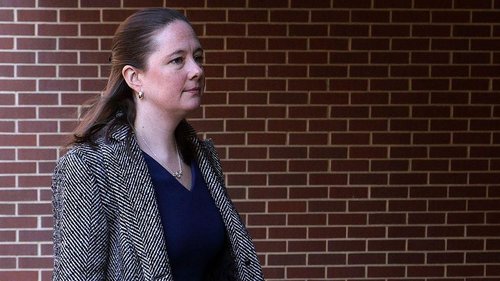
Former Police Officer Charged After Video Shows Punching Woman","description":"A doorbell‑camera clip from Shelby, North Carolina, shows former officer Karson Hyder violently striking woman Cherrie Moore, prompting arrest, bond release and an ongoing investigation.","summary":"The viral video of Officer Hyder punching Cherrie Moore led to assault charges, a $10,000 bond, and a State Bureau investigation. Charges against Moore were later dropped, and the city officials terminated Hyder’s employment.","image":"https://dims.apnews.com/dims4/default/224ab1b/2147483647/strip/true/crop/3000x2000+0+0/resize/599x399!/quality/90/?url=https%3A%2F%2Fassets.apnews.com%2Fbb%2F0a%2Fa3bbcee96895ba2731ad7b514546%2Fbd4152a872e849d3a755dadf01c01276","text":"<p>In Shelby, North Carolina, a doorbell‑camera video shows former Police Officer Karson Hyder punching woman Cherrie Moore on Friday. The footage has gone viral, leading to an arrest on Monday. Hyder – 22 – turned himself in to the Cleveland County Detention Center and was released on a $10,000 bond, though no attorney was listed for him and the phone number tied to his name was disconnected.</p>\n\n<p>Hyder had been suspended Friday and terminated Saturday. The incident occurred while he was responding to a break‑and‑enter call. Authorities said Moore fled the house on foot and resisted arrest before striking Hyder with a closed fist, possibly resulting in a broken nose and bruised lip.</p>\n\n<p>A separate warrant charged Hyder with assault, describing how he grabbed Moore’s arm, pushed her to the ground, then struck her face. The State Bureau of Investigation has opened an inquiry.</p>\n\n<p>Moore was initially charged with breaking and entering, resisting arrest and assaulting a public officer. The assault charges were later dismissed; she was free on an unsecured bond. Lawyer Ronald Haynes said Moore is recovering and receiving mental‑health treatment and that the city officials acted promptly to terminate and charge Hyder.</p>


Immigration Detention Centers Face Rising Claims of Medical Neglect","description":"Hundreds of detainees across the United States have filed lawsuits demanding better health care after reports of delayed or denied treatment, drug shortages and inadequate medical facilities.","summary":"A KFF Health News and Associated Press investigation found thousands of hukama corp. filings and court records detailing chronic medical neglect in ICE detention centers—ranging from a Honduran mother denied blood pressure medication to a Venezuelan man whose infection worsened when staff failed to bring him to a doctor. An influx of detentions during the Trump administration has overloaded the system, eroding basic protections and prompting a surge in legal challenges, with more than 40,000 habeas petitions filed in the past year alone.","image":"https://cdn.climate-news.io/assets/detention_medical.jpg","text":"<p>In a New Mexico immigration detention center, an Albanian man was forced to pull out one of his own teeth after months of tongue‑tiring pain. Across the country, a Honduran mother of two was hospitalized for a heart problem because staff had denied her blood‑pressure medication. A Venezuelan man’s leg swelled with bacterial infection after a scheduled doctor’s appointment was ignored in a Vermont facility.</p><p>Thinly printed lawsuits filed by detainees in more than 33 states tell a consistent story of medical neglect. Claims include missed or untimely medications for high blood pressure, diabetes, depression, epilepsy, Parkinson’s and HIV. The shortages have led to dangerously rising blood sugars, flaring infections, untreated cancers and seizures.</p><p>Official reports reveal that the number of people detained by U.S. Immigration and Customs Enforcement (ICE) rose to over 75,000 as of mid‑January—up from around 40,000 the year before. Most detainees have no criminal felony convictions; 70% have civil immigration proceedings, not criminal ones.</p><p>ICE said, in a statement to the media, that “it is both policy and longstanding practice for detainees to receive timely and appropriate medical care from the moment they enter ICE custody.” The department’s acting chief medical officer, Sean Conley, reiterated that ICE recruits health professionals to uphold high standards, claiming the care provided is “better, more responsive than many aliens have ever received in their entire lives.” While some facilities have responded with the same wording, others—especially private prisons contracted by ICE—suffered from a lack of knowledge about the allegations in the court documents, blaming the detainees for the shortcomings.</p><p>The investigation used court records from the Habeas Dockets project and direct cooperation from investigative reporters Garance Burke, Valerie Gonzalez, Tim Sullivan and KFF Health News correspondent Kate Wells. More than 300 medical‑neglect claims were identified among the cases the reporters could access. That number represents only a fraction of the thousands more that remain inaccessible because of federal rules barring public access to many habeas corp. filings.</p><p>One case involved a 48‑year‑old detainee named Jose‑Antonio Segismundo, who was deported to Mexico after being denied cancer treatment in a Georgia facility. His wife, Maria Jose Gonzalez, sent his medical records to ICE, but the state responded with only Tylenol when his stomach pain subsided.</p><p>Another woman, who had regular HIV medication, missed a week’s dosage when transferred from Colorado to Wyoming. A Russian man filed a declaration claiming he was unable to visit a surgeon after being moved across several facilities, while a man with severe glaucoma complained that his eye drops were often missing.</p><p>Despite court orders—for instance, a California judge directing a facility to take a man with suspected prostate cancer to a specialist—ICE teams often missed appointments citing “internal scheduling errors.” This was defended by CoreCivic, the private company that runs the facility, as a lapse in execution rather than policy.</p><p>The medical neglect exposed by the report coincides with a federal review that found 51 deaths in ICE custody during Trump’s second term, including a spike in suicides. While the Department of Homeland Security said it was spending nearly $400 million on detainee healthcare in fiscal year 2023, the rise in detentions has strained resources, forcing the Department to prioritize administrative convenience over protective healthcare.</p><p>The Department’s Office of the Immigration Detention Ombudsman was shut in early May due to budget cutbacks, removing a line of defense that previously could have mediated medical neglect. Families in counties across the U.S. have voiced feeling powerless, calling the facilities, the Department, and their local representatives in an attempt to influence detainee treatment.</p><p>Across the country, innumerable individual stories echo one another: high‑risk pregnancies left untreated, chronic conditions ignored, and basic supplies—gauze, prenatal kits, even washing facilities—delivered by staff or denied entirely. Detainees increasingly turn to federal judges rather than ICE officials to compel timely medical care.</p><p>These accounts illustrate that the growing wave of immigration detention has outpaced the capacity and willingness of ICE to guarantee humane health treatment. The legal backlash is already rolling, but it remains unclear whether federal courts will mandate systemic reforms or continue to allow the practice of mandatory detention at the expense of basic human dignity.</p>


Muhammad Ali’s Legacy of Compassion Becomes a 10th‑Anniversary Day of Service","description":"On the tenth anniversary of the boxing legend’s passing, Louisville’s Muhammad Ali Center honors his lifelong commitment to service with a ‘Day of Compassion’ that calls for acts of care and empathy.","summary":"Lonnie Ali, Muhammad Ali’s wife and the center’s lifetime director, reflects on the boxer’s mantra that “service to others is the rent we pay for our room here on earth.” The Muhammad Ali Center will celebrate the 10th‑anniversary of his death with a Day of Compassion aimed at uniting communities in an increasingly polarized nation. The story recalls Ali’s historic funeral, the city’s tribute, the new U.S. Postal Service stamp, and the call for leaders to act with compassion in the face of weakened voting rights.","image":"https://upload.wikimedia.org/wikipedia/commons/6/6c/Muhammad_Ali_1978.jpg","text":"<p>LOUISVILLE, Ky. (AP) — Muhammad Ali’s legacy extends beyond his stinging right jab, world titles and Olympic gold medal, to the heart and compassion he showed long after he left the ring, his wife Lonnie Ali said.</p>\n<p>“He transcended boxing into every space you can imagine,” she told The Associated Press this week ahead of the 10‑year anniversary of <a href=\"https://apnews.com/celebrity-general-news-dedb61d1ce6d4aac972f8e479992723c\">Ali’s death</a> on June 3, 2016, after a long battle with Parkinson’s disease.</p>\n<p>“Muhammad lived by this mantra: service to others is the rent we pay for our room here on earth,” Lonnie Ali said during an interview at The Muhammad Ali Center in Louisville, Kentucky. “He showed up every day with kindness and empathy in his heart for people who are in need.”</p>\n<p>Ali, known as the “Louisville Lip” in his hometown, rose to prominence as a trash‑talking world champion boxer in the 1960s and began speaking about civil rights issues as his star was rising. He is widely regarded as the most famous and influential boxer of all time, winning the heavyweight title three times.</p>\n<p>The Ali Center is sponsoring a “Day of Compassion” on Wednesday, the 10th anniversary of his death, to promote acts of service and caring. Lonnie Ali, who serves as the center’s lifetime director, said the hope is an expanding annual event to highlight works of service and volunteering.</p>\n<p>The day will focus on one of “the core values that made up Muhammad Ali” in an increasingly divided country, she said.</p>\n<p>“Today, we are in a place where we are losing touch with our humanity and with each other,” she said. “It’s causing rifts, not just in families and communities, but in this nation. We’re becoming increasingly polarized and separated, and sort of retreating to people who think like us, look like us, and not really reaching out.”</p>\n<p>She also challenged political leaders to lead with compassion, noting the recent <a href=\"https://apnews.com/article/supreme-court-voting-rights-act-louisiana-alabama-4e3225083caccda5ec73a98533a79add\">weakening of the 1965 Voting Rights Act</a> by the Supreme Court.</p>\n<p>“We should always be thinking about how we can uplift a community, not how we can make it harder for them,” Lonnie Ali said. “We want equal representation in this country. You can’t have equal representation when you’re denying people voting rights, you can’t do that.”</p>\n<p>But there is hope, she said, and she saw that when the city of Louisville came together for a weeklong celebration of Ali’s life in 2016. The week was capped by a <a href=\"https://apnews.com/general-news-domestic-news-domestic-news-ddf9b131fcc34c349e20c02c257ce637\">funeral procession through the city</a> and past her late husband’s modest childhood home near downtown Louisville. Former President Bill Clinton and actor Billy Crystal spoke at his funeral, and Will Smith, who portrayed Ali in a 2001 movie, was a pallbearer.</p>\n<p>The outpouring of love for Ali at his hometown funeral service was livestreamed to millions around the world. A decade later, Ali’s face <a href=\"https://apnews.com/article/muhammad-ali-forever-postage-stamp-33534e74228d40ac43a4b22b5578a7bc\">graced a U.S. Postal Service stamp</a> for the first time, showing his enduring influence.</p>\n<p>“We’re talking about people who traveled thousands of miles to come here, who had never met the man, never laid eyes on him personally, but wanted to … give their last respects to him: kings, princes, presidents, heads of state, celebrities, sports figures,” Lonnie Ali said.</p>


Bus Driver Indicted Over Virginia Chain‑Reaction Crash","description":"New indictment adds manslaughter and reckless‑driving charges after a 48‑hour bus crash that killed five people.","summary":"The accident on I‑95 on Friday involved the New York‑to‑NC motorcoach driver Jing Sheng Dong, who earlier faced speeding accusations. Grand jury indictment in Virginia adds three manslaughter counts and a reckless‑driving charge as authorities investigate NTSB findings.","image":"https://images.unsplash.com/photo-1532540194372-4b4bb8006583?auto=format&fit=crop&w=640&q=80","text":"<h1 style='font-size:32px;font-weight:bold;'>Bus Driver Indicted Over Virginia Chain‑Reaction Crash</h1>\n<p style='font-family:Arial,sans-serif;font-size:18px;'>Jing Sheng Dong, 48, of Staten Island, New York, has been indicted on three additional charges of involuntary manslaughter and one count of reckless driving after a chain‑reaction bus crash on Interstate 95 in Stafford County, Virginia. The incident, which occurred on the early morning of Friday, killed five passengers and left dozens more injured.</p>\n<h2 style='font-size:24px;font-weight:bold;'>A New Layer of Legal Responsibility</h2>\n<p style='font-family:Arial,sans-serif;font-size:18px;'>Dong was already facing two counts of involuntary manslaughter for the crash. The grand jury, convened by the Stafford County Commonwealth’s Attorney’s Office, re‑examined the evidence and added three more manslaughter charges plus a reckless‑driving citation. Prosecutors, citing traffic‑speed data and wiper‑failure reports, argue that the driver’s actions set off a deadly domino effect in the busy north‑bound work zone.</p>\n<p style='font-family:Arial,sans-serif;font-size:18px;'>Dong’s earlier history of speeding further weakens his defense: November 2024, a 73‑mph incident in Colonial Heights, Virginia, and March 2025, where he allegedly rode 72‑mph in a 50‑mph zone in Annapolis, Maryland. Following the recent indictment, prosecutors plan to hold him in custody shortly after his hospital release.</p>\n<h2 style='font-size:24px;font-weight:bold;'>The Crash and its Aftermath</h2>\n<p style='font-family:Arial,sans-serif;font-size:18px;'>The bus in question, operated by E&P Travel Inc., departed New York for North Carolina when it struck a platoon of cars slowed in a work zone. A family of four traveling to a wedding in Greenfield, Massachusetts, and a 25‑year‑old woman from Worcester were among the five fatalities. The National Transportation Safety Board has launched a formal investigation to examine mechanical faults and traffic‑control compliance.</p>\n<h2 style='font-size:24px;font-weight:bold;'>Why Safety Matters for Sustainable Transit</h2>\n<p style='font-family:Arial,sans-serif;font-size:18px;'>While the incident underscores a tragic human error, it also highlights the broader need for safer, greener transportation solutions. As the world pivots toward electric buses and stricter speed‑monitoring protocols, ensuring that drivers receive adequate training and that vehicle systems incorporate active safety features can reduce the likelihood of such deadly chain‑reactions.</p>\n<p style='font-family:Arial,sans-serif;font-size:18px;'>Dong faces potential jail time if convicted, with sentencing outlined by the court. In the meantime, the state will continue to scrutinize driver certifications and work‑zone safety measures to protect commuters and shift toward a more responsible, sustainable future.</p>


South Carolina Jury Declares Owner Not Guilty in 2023 Teen Shooting","description":"A South Carolina jury found Chikei Rick Chow not guilty of murder in the 2023 shooting of 14‑year‑old Cyrus Carmack‑Belton, sparking controversy and civil actions.","summary":"The verdict has drawn mixed reactions—while some affirm the owner’s defense, family members and community leaders call for accountability. Legal and civil responses are underway.","image":"https://example.com/placeholder.jpg","text":"<p style=\"margin-bottom:1em;\">In Columbia, South Carolina, a jury reached a verdict that left the community divided. On Monday, the jury found convenience‑store owner <b>Chikei Rick Chow</b>, 61, not guilty of murder in the 2023 shooting of Black teenager <b>Cyrus Carmack‑Belton</b>, who was 14 at the time of the incident.</p><p style=\"margin-bottom:1em;\">Chow, who is Asian, said the shooting was in self‑defense after the teen chased him from his store. He claimed his son was threatened and that he acted to protect his family. Prosecutors contended that Chow acted in anger because he mistakenly believed the teen had stolen four water bottles and pursued him over 130 yards. The defense argued the teen had a semiautomatic pistol and pointed it at Chow, forcing the owner’s reaction.</p><p style=\"margin-bottom:1em;\">The verdict reverberated through Richland County, where roughly half the population is Black. Family members and community leaders gathered in the gallery as the decision was read, voices breaking into sobs and calls for justice. Todd Rutherford, a local attorney, stood beside Carmack‑Belton’s father and said, &ldquo;This makes us feel as if our children don’t matter, and they do.&rdquo; He announced plans to pursue a civil lawsuit against Chow.</p><p style=\"margin-bottom:1em;\">Defenders praised the decision, with attorney <b>Jack Swerling</b> stating the verdict was a relief and expressing heartache for the families involved. He urged that 14‑year‑olds should not roam the streets armed with semiautomatic pistols, highlighting the broader issue of gun safety among youth.</p><p style=\"margin-bottom:1em;\">The case has pushed community activists to spotlight gun violence and racial trauma. Vigils held outside the store featured empty water bottles spelling out &ldquo;Cyrus&rdquo; in 2023, and protests continue as residents call for accountability and systemic change.</p>

MORE TOP STORIES

Immigration Detention Centers Face Rising Claims of Medical Neglect","description":"Hundreds of detainees across the United States have filed lawsuits demanding better health care after reports of delayed or denied treatment, drug shortages and inadequate medical facilities.","summary":"A KFF Health News and Associated Press investigation found thousands of hukama corp. filings and court records detailing chronic medical neglect in ICE detention centers—ranging from a Honduran mother denied blood pressure medication to a Venezuelan man whose infection worsened when staff failed to bring him to a doctor. An influx of detentions during the Trump administration has overloaded the system, eroding basic protections and prompting a surge in legal challenges, with more than 40,000 habeas petitions filed in the past year alone.","image":"https://cdn.climate-news.io/assets/detention_medical.jpg","text":"<p>In a New Mexico immigration detention center, an Albanian man was forced to pull out one of his own teeth after months of tongue‑tiring pain. Across the country, a Honduran mother of two was hospitalized for a heart problem because staff had denied her blood‑pressure medication. A Venezuelan man’s leg swelled with bacterial infection after a scheduled doctor’s appointment was ignored in a Vermont facility.</p><p>Thinly printed lawsuits filed by detainees in more than 33 states tell a consistent story of medical neglect. Claims include missed or untimely medications for high blood pressure, diabetes, depression, epilepsy, Parkinson’s and HIV. The shortages have led to dangerously rising blood sugars, flaring infections, untreated cancers and seizures.</p><p>Official reports reveal that the number of people detained by U.S. Immigration and Customs Enforcement (ICE) rose to over 75,000 as of mid‑January—up from around 40,000 the year before. Most detainees have no criminal felony convictions; 70% have civil immigration proceedings, not criminal ones.</p><p>ICE said, in a statement to the media, that “it is both policy and longstanding practice for detainees to receive timely and appropriate medical care from the moment they enter ICE custody.” The department’s acting chief medical officer, Sean Conley, reiterated that ICE recruits health professionals to uphold high standards, claiming the care provided is “better, more responsive than many aliens have ever received in their entire lives.” While some facilities have responded with the same wording, others—especially private prisons contracted by ICE—suffered from a lack of knowledge about the allegations in the court documents, blaming the detainees for the shortcomings.</p><p>The investigation used court records from the Habeas Dockets project and direct cooperation from investigative reporters Garance Burke, Valerie Gonzalez, Tim Sullivan and KFF Health News correspondent Kate Wells. More than 300 medical‑neglect claims were identified among the cases the reporters could access. That number represents only a fraction of the thousands more that remain inaccessible because of federal rules barring public access to many habeas corp. filings.</p><p>One case involved a 48‑year‑old detainee named Jose‑Antonio Segismundo, who was deported to Mexico after being denied cancer treatment in a Georgia facility. His wife, Maria Jose Gonzalez, sent his medical records to ICE, but the state responded with only Tylenol when his stomach pain subsided.</p><p>Another woman, who had regular HIV medication, missed a week’s dosage when transferred from Colorado to Wyoming. A Russian man filed a declaration claiming he was unable to visit a surgeon after being moved across several facilities, while a man with severe glaucoma complained that his eye drops were often missing.</p><p>Despite court orders—for instance, a California judge directing a facility to take a man with suspected prostate cancer to a specialist—ICE teams often missed appointments citing “internal scheduling errors.” This was defended by CoreCivic, the private company that runs the facility, as a lapse in execution rather than policy.</p><p>The medical neglect exposed by the report coincides with a federal review that found 51 deaths in ICE custody during Trump’s second term, including a spike in suicides. While the Department of Homeland Security said it was spending nearly $400 million on detainee healthcare in fiscal year 2023, the rise in detentions has strained resources, forcing the Department to prioritize administrative convenience over protective healthcare.</p><p>The Department’s Office of the Immigration Detention Ombudsman was shut in early May due to budget cutbacks, removing a line of defense that previously could have mediated medical neglect. Families in counties across the U.S. have voiced feeling powerless, calling the facilities, the Department, and their local representatives in an attempt to influence detainee treatment.</p><p>Across the country, innumerable individual stories echo one another: high‑risk pregnancies left untreated, chronic conditions ignored, and basic supplies—gauze, prenatal kits, even washing facilities—delivered by staff or denied entirely. Detainees increasingly turn to federal judges rather than ICE officials to compel timely medical care.</p><p>These accounts illustrate that the growing wave of immigration detention has outpaced the capacity and willingness of ICE to guarantee humane health treatment. The legal backlash is already rolling, but it remains unclear whether federal courts will mandate systemic reforms or continue to allow the practice of mandatory detention at the expense of basic human dignity.</p>
AP

Immigration Detention Centers Face Rising Claims of Medical Neglect","description":"Hundreds of detainees across the United States have filed lawsuits demanding better health care after reports of delayed or denied treatment, drug shortages and inadequate medical facilities.","summary":"A KFF Health News and Associated Press investigation found thousands of hukama corp. filings and court records detailing chronic medical neglect in ICE detention centers—ranging from a Honduran mother denied blood pressure medication to a Venezuelan man whose infection worsened when staff failed to bring him to a doctor. An influx of detentions during the Trump administration has overloaded the system, eroding basic protections and prompting a surge in legal challenges, with more than 40,000 habeas petitions filed in the past year alone.","image":"https://cdn.climate-news.io/assets/detention_medical.jpg","text":"<p>In a New Mexico immigration detention center, an Albanian man was forced to pull out one of his own teeth after months of tongue‑tiring pain. Across the country, a Honduran mother of two was hospitalized for a heart problem because staff had denied her blood‑pressure medication. A Venezuelan man’s leg swelled with bacterial infection after a scheduled doctor’s appointment was ignored in a Vermont facility.</p><p>Thinly printed lawsuits filed by detainees in more than 33 states tell a consistent story of medical neglect. Claims include missed or untimely medications for high blood pressure, diabetes, depression, epilepsy, Parkinson’s and HIV. The shortages have led to dangerously rising blood sugars, flaring infections, untreated cancers and seizures.</p><p>Official reports reveal that the number of people detained by U.S. Immigration and Customs Enforcement (ICE) rose to over 75,000 as of mid‑January—up from around 40,000 the year before. Most detainees have no criminal felony convictions; 70% have civil immigration proceedings, not criminal ones.</p><p>ICE said, in a statement to the media, that “it is both policy and longstanding practice for detainees to receive timely and appropriate medical care from the moment they enter ICE custody.” The department’s acting chief medical officer, Sean Conley, reiterated that ICE recruits health professionals to uphold high standards, claiming the care provided is “better, more responsive than many aliens have ever received in their entire lives.” While some facilities have responded with the same wording, others—especially private prisons contracted by ICE—suffered from a lack of knowledge about the allegations in the court documents, blaming the detainees for the shortcomings.</p><p>The investigation used court records from the Habeas Dockets project and direct cooperation from investigative reporters Garance Burke, Valerie Gonzalez, Tim Sullivan and KFF Health News correspondent Kate Wells. More than 300 medical‑neglect claims were identified among the cases the reporters could access. That number represents only a fraction of the thousands more that remain inaccessible because of federal rules barring public access to many habeas corp. filings.</p><p>One case involved a 48‑year‑old detainee named Jose‑Antonio Segismundo, who was deported to Mexico after being denied cancer treatment in a Georgia facility. His wife, Maria Jose Gonzalez, sent his medical records to ICE, but the state responded with only Tylenol when his stomach pain subsided.</p><p>Another woman, who had regular HIV medication, missed a week’s dosage when transferred from Colorado to Wyoming. A Russian man filed a declaration claiming he was unable to visit a surgeon after being moved across several facilities, while a man with severe glaucoma complained that his eye drops were often missing.</p><p>Despite court orders—for instance, a California judge directing a facility to take a man with suspected prostate cancer to a specialist—ICE teams often missed appointments citing “internal scheduling errors.” This was defended by CoreCivic, the private company that runs the facility, as a lapse in execution rather than policy.</p><p>The medical neglect exposed by the report coincides with a federal review that found 51 deaths in ICE custody during Trump’s second term, including a spike in suicides. While the Department of Homeland Security said it was spending nearly $400 million on detainee healthcare in fiscal year 2023, the rise in detentions has strained resources, forcing the Department to prioritize administrative convenience over protective healthcare.</p><p>The Department’s Office of the Immigration Detention Ombudsman was shut in early May due to budget cutbacks, removing a line of defense that previously could have mediated medical neglect. Families in counties across the U.S. have voiced feeling powerless, calling the facilities, the Department, and their local representatives in an attempt to influence detainee treatment.</p><p>Across the country, innumerable individual stories echo one another: high‑risk pregnancies left untreated, chronic conditions ignored, and basic supplies—gauze, prenatal kits, even washing facilities—delivered by staff or denied entirely. Detainees increasingly turn to federal judges rather than ICE officials to compel timely medical care.</p><p>These accounts illustrate that the growing wave of immigration detention has outpaced the capacity and willingness of ICE to guarantee humane health treatment. The legal backlash is already rolling, but it remains unclear whether federal courts will mandate systemic reforms or continue to allow the practice of mandatory detention at the expense of basic human dignity.</p>


South Carolina Jury Declares Owner Not Guilty in 2023 Teen Shooting","description":"A South Carolina jury found Chikei Rick Chow not guilty of murder in the 2023 shooting of 14‑year‑old Cyrus Carmack‑Belton, sparking controversy and civil actions.","summary":"The verdict has drawn mixed reactions—while some affirm the owner’s defense, family members and community leaders call for accountability. Legal and civil responses are underway.","image":"https://example.com/placeholder.jpg","text":"<p style=\"margin-bottom:1em;\">In Columbia, South Carolina, a jury reached a verdict that left the community divided. On Monday, the jury found convenience‑store owner <b>Chikei Rick Chow</b>, 61, not guilty of murder in the 2023 shooting of Black teenager <b>Cyrus Carmack‑Belton</b>, who was 14 at the time of the incident.</p><p style=\"margin-bottom:1em;\">Chow, who is Asian, said the shooting was in self‑defense after the teen chased him from his store. He claimed his son was threatened and that he acted to protect his family. Prosecutors contended that Chow acted in anger because he mistakenly believed the teen had stolen four water bottles and pursued him over 130 yards. The defense argued the teen had a semiautomatic pistol and pointed it at Chow, forcing the owner’s reaction.</p><p style=\"margin-bottom:1em;\">The verdict reverberated through Richland County, where roughly half the population is Black. Family members and community leaders gathered in the gallery as the decision was read, voices breaking into sobs and calls for justice. Todd Rutherford, a local attorney, stood beside Carmack‑Belton’s father and said, &ldquo;This makes us feel as if our children don’t matter, and they do.&rdquo; He announced plans to pursue a civil lawsuit against Chow.</p><p style=\"margin-bottom:1em;\">Defenders praised the decision, with attorney <b>Jack Swerling</b> stating the verdict was a relief and expressing heartache for the families involved. He urged that 14‑year‑olds should not roam the streets armed with semiautomatic pistols, highlighting the broader issue of gun safety among youth.</p><p style=\"margin-bottom:1em;\">The case has pushed community activists to spotlight gun violence and racial trauma. Vigils held outside the store featured empty water bottles spelling out &ldquo;Cyrus&rdquo; in 2023, and protests continue as residents call for accountability and systemic change.</p>


Ebola Quarantine Controversy: Two Lives Lost Amid Kenyan Protest Over US Facility


California, Iowa and Beyond: Fresh Elections Highlight Climate Policy Stakes


Cambridge Real Estate Turns to China’s Tech‑Driven Buyers: A Sustainability Perspective


China Tightens Grip on Ghost Kitchens to Curb Food Waste and Boost Safety


Six Killed in Iowa Amid Domestic Shooting Spiral


Ebola care in DR Congo: ‘Cube’ units keep staff safe amid rising cases


Russian Strikes in Ukraine Claim Lives and Highlight War's Climate Costs

FEATURED

Former Police Officer Charged After Video Shows Punching Woman","description":"A doorbell‑camera clip from Shelby, North Carolina, shows former officer Karson Hyder violently striking woman Cherrie Moore, prompting arrest, bond release and an ongoing investigation.","summary":"The viral video of Officer Hyder punching Cherrie Moore led to assault charges, a $10,000 bond, and a State Bureau investigation. Charges against Moore were later dropped, and the city officials terminated Hyder’s employment.","image":"https://dims.apnews.com/dims4/default/224ab1b/2147483647/strip/true/crop/3000x2000+0+0/resize/599x399!/quality/90/?url=https%3A%2F%2Fassets.apnews.com%2Fbb%2F0a%2Fa3bbcee96895ba2731ad7b514546%2Fbd4152a872e849d3a755dadf01c01276","text":"<p>In Shelby, North Carolina, a doorbell‑camera video shows former Police Officer Karson Hyder punching woman Cherrie Moore on Friday.  The footage has gone viral, leading to an arrest on Monday.  Hyder – 22 – turned himself in to the Cleveland County Detention Center and was released on a $10,000 bond, though no attorney was listed for him and the phone number tied to his name was disconnected.</p>\n\n<p>Hyder had been suspended Friday and terminated Saturday.  The incident occurred while he was responding to a break‑and‑enter call.  Authorities said Moore fled the house on foot and resisted arrest before striking Hyder with a closed fist, possibly resulting in a broken nose and bruised lip.</p>\n\n<p>A separate warrant charged Hyder with assault, describing how he grabbed Moore’s arm, pushed her to the ground, then struck her face.  The State Bureau of Investigation has opened an inquiry.</p>\n\n<p>Moore was initially charged with breaking and entering, resisting arrest and assaulting a public officer.  The assault charges were later dismissed; she was free on an unsecured bond.  Lawyer Ronald Haynes said Moore is recovering and receiving mental‑health treatment and that the city officials acted promptly to terminate and charge Hyder.</p>
AP

Former Police Officer Charged After Video Shows Punching Woman","description":"A doorbell‑camera clip from Shelby, North Carolina, shows former officer Karson Hyder violently striking woman Cherrie Moore, prompting arrest, bond release and an ongoing investigation.","summary":"The viral video of Officer Hyder punching Cherrie Moore led to assault charges, a $10,000 bond, and a State Bureau investigation. Charges against Moore were later dropped, and the city officials terminated Hyder’s employment.","image":"https://dims.apnews.com/dims4/default/224ab1b/2147483647/strip/true/crop/3000x2000+0+0/resize/599x399!/quality/90/?url=https%3A%2F%2Fassets.apnews.com%2Fbb%2F0a%2Fa3bbcee96895ba2731ad7b514546%2Fbd4152a872e849d3a755dadf01c01276","text":"<p>In Shelby, North Carolina, a doorbell‑camera video shows former Police Officer Karson Hyder punching woman Cherrie Moore on Friday. The footage has gone viral, leading to an arrest on Monday. Hyder – 22 – turned himself in to the Cleveland County Detention Center and was released on a $10,000 bond, though no attorney was listed for him and the phone number tied to his name was disconnected.</p>\n\n<p>Hyder had been suspended Friday and terminated Saturday. The incident occurred while he was responding to a break‑and‑enter call. Authorities said Moore fled the house on foot and resisted arrest before striking Hyder with a closed fist, possibly resulting in a broken nose and bruised lip.</p>\n\n<p>A separate warrant charged Hyder with assault, describing how he grabbed Moore’s arm, pushed her to the ground, then struck her face. The State Bureau of Investigation has opened an inquiry.</p>\n\n<p>Moore was initially charged with breaking and entering, resisting arrest and assaulting a public officer. The assault charges were later dismissed; she was free on an unsecured bond. Lawyer Ronald Haynes said Moore is recovering and receiving mental‑health treatment and that the city officials acted promptly to terminate and charge Hyder.</p>

The Chinese government has launched a sweeping campaign targeting ‘ghost kitchens’—virtual restaurants that slip past food delivery apps—thwarting price wars and boosting food safety.

The Chinese government has launched a sweeping campaign targeting ‘ghost kitchens’—virtual restaurants that slip past food delivery apps—thwarting price wars and boosting food safety.

bbc.co.uk

AP
The 40‑year‑old Donald Trump‑supporting social media star and PR executive has taken a conditional caution for pulling a woman’s hair at Bond Street station, and the court heard it involved a racist exchange with her partner.

The 40‑year‑old Donald Trump‑supporting social media star and PR executive has taken a conditional caution for pulling a woman’s hair at Bond Street station, and the court heard it involved a racist exchange with her partner.

bbc.co.uk
Former MTV star Spencer Pratt’s bid for Los Angeles mayor turns a polarizing media personality into a political contender, with wildfire resilience and climate adaptation at the core of his platform.

Former MTV star Spencer Pratt’s bid for Los Angeles mayor turns a polarizing media personality into a political contender, with wildfire resilience and climate adaptation at the core of his platform.

bbc.co.uk

Featured Sections

SPORT

Muhammad Ali’s Legacy of Compassion Becomes a 10th‑Anniversary Day of Service","description":"On the tenth anniversary of the boxing legend’s passing, Louisville’s Muhammad Ali Center honors his lifelong commitment to service with a ‘Day of Compassion’ that calls for acts of care and empathy.","summary":"Lonnie Ali, Muhammad Ali’s wife and the center’s lifetime director, reflects on the boxer’s mantra that “service to others is the rent we pay for our room here on earth.”  The Muhammad Ali Center will celebrate the 10th‑anniversary of his death with a Day of Compassion aimed at uniting communities in an increasingly polarized nation.  The story recalls Ali’s historic funeral, the city’s tribute, the new U.S. Postal Service stamp, and the call for leaders to act with compassion in the face of weakened voting rights.","image":"https://upload.wikimedia.org/wikipedia/commons/6/6c/Muhammad_Ali_1978.jpg","text":"<p>LOUISVILLE, Ky. (AP) — Muhammad Ali’s legacy extends beyond his stinging right jab, world titles and Olympic gold medal, to the heart and compassion he showed long after he left the ring, his wife Lonnie Ali said.</p>\n<p>“He transcended boxing into every space you can imagine,” she told The Associated Press this week ahead of the 10‑year anniversary of <a href=\"https://apnews.com/celebrity-general-news-dedb61d1ce6d4aac972f8e479992723c\">Ali’s death</a> on June 3, 2016, after a long battle with Parkinson’s disease.</p>\n<p>“Muhammad lived by this mantra: service to others is the rent we pay for our room here on earth,” Lonnie Ali said during an interview at The Muhammad Ali Center in Louisville, Kentucky. “He showed up every day with kindness and empathy in his heart for people who are in need.”</p>\n<p>Ali, known as the “Louisville Lip” in his hometown, rose to prominence as a trash‑talking world champion boxer in the 1960s and began speaking about civil rights issues as his star was rising. He is widely regarded as the most famous and influential boxer of all time, winning the heavyweight title three times.</p>\n<p>The Ali Center is sponsoring a “Day of Compassion” on Wednesday, the 10th anniversary of his death, to promote acts of service and caring. Lonnie Ali, who serves as the center’s lifetime director, said the hope is an expanding annual event to highlight works of service and volunteering.</p>\n<p>The day will focus on one of “the core values that made up Muhammad Ali” in an increasingly divided country, she said.</p>\n<p>“Today, we are in a place where we are losing touch with our humanity and with each other,” she said. “It’s causing rifts, not just in families and communities, but in this nation. We’re becoming increasingly polarized and separated, and sort of retreating to people who think like us, look like us, and not really reaching out.”</p>\n<p>She also challenged political leaders to lead with compassion, noting the recent <a href=\"https://apnews.com/article/supreme-court-voting-rights-act-louisiana-alabama-4e3225083caccda5ec73a98533a79add\">weakening of the 1965 Voting Rights Act</a> by the Supreme Court.</p>\n<p>“We should always be thinking about how we can uplift a community, not how we can make it harder for them,” Lonnie Ali said. “We want equal representation in this country. You can’t have equal representation when you’re denying people voting rights, you can’t do that.”</p>\n<p>But there is hope, she said, and she saw that when the city of Louisville came together for a weeklong celebration of Ali’s life in 2016. The week was capped by a <a href=\"https://apnews.com/general-news-domestic-news-domestic-news-ddf9b131fcc34c349e20c02c257ce637\">funeral procession through the city</a> and past her late husband’s modest childhood home near downtown Louisville. Former President Bill Clinton and actor Billy Crystal spoke at his funeral, and Will Smith, who portrayed Ali in a 2001 movie, was a pallbearer.</p>\n<p>The outpouring of love for Ali at his hometown funeral service was livestreamed to millions around the world. A decade later, Ali’s face <a href=\"https://apnews.com/article/muhammad-ali-forever-postage-stamp-33534e74228d40ac43a4b22b5578a7bc\">graced a U.S. Postal Service stamp</a> for the first time, showing his enduring influence.</p>\n<p>“We’re talking about people who traveled thousands of miles to come here, who had never met the man, never laid eyes on him personally, but wanted to … give their last respects to him: kings, princes, presidents, heads of state, celebrities, sports figures,” Lonnie Ali said.</p>
AP

Muhammad Ali’s Legacy of Compassion Becomes a 10th‑Anniversary Day of Service","description":"On the tenth anniversary of the boxing legend’s passing, Louisville’s Muhammad Ali Center honors his lifelong commitment to service with a ‘Day of Compassion’ that calls for acts of care and empathy.","summary":"Lonnie Ali, Muhammad Ali’s wife and the center’s lifetime director, reflects on the boxer’s mantra that “service to others is the rent we pay for our room here on earth.” The Muhammad Ali Center will celebrate the 10th‑anniversary of his death with a Day of Compassion aimed at uniting communities in an increasingly polarized nation. The story recalls Ali’s historic funeral, the city’s tribute, the new U.S. Postal Service stamp, and the call for leaders to act with compassion in the face of weakened voting rights.","image":"https://upload.wikimedia.org/wikipedia/commons/6/6c/Muhammad_Ali_1978.jpg","text":"<p>LOUISVILLE, Ky. (AP) — Muhammad Ali’s legacy extends beyond his stinging right jab, world titles and Olympic gold medal, to the heart and compassion he showed long after he left the ring, his wife Lonnie Ali said.</p>\n<p>“He transcended boxing into every space you can imagine,” she told The Associated Press this week ahead of the 10‑year anniversary of <a href=\"https://apnews.com/celebrity-general-news-dedb61d1ce6d4aac972f8e479992723c\">Ali’s death</a> on June 3, 2016, after a long battle with Parkinson’s disease.</p>\n<p>“Muhammad lived by this mantra: service to others is the rent we pay for our room here on earth,” Lonnie Ali said during an interview at The Muhammad Ali Center in Louisville, Kentucky. “He showed up every day with kindness and empathy in his heart for people who are in need.”</p>\n<p>Ali, known as the “Louisville Lip” in his hometown, rose to prominence as a trash‑talking world champion boxer in the 1960s and began speaking about civil rights issues as his star was rising. He is widely regarded as the most famous and influential boxer of all time, winning the heavyweight title three times.</p>\n<p>The Ali Center is sponsoring a “Day of Compassion” on Wednesday, the 10th anniversary of his death, to promote acts of service and caring. Lonnie Ali, who serves as the center’s lifetime director, said the hope is an expanding annual event to highlight works of service and volunteering.</p>\n<p>The day will focus on one of “the core values that made up Muhammad Ali” in an increasingly divided country, she said.</p>\n<p>“Today, we are in a place where we are losing touch with our humanity and with each other,” she said. “It’s causing rifts, not just in families and communities, but in this nation. We’re becoming increasingly polarized and separated, and sort of retreating to people who think like us, look like us, and not really reaching out.”</p>\n<p>She also challenged political leaders to lead with compassion, noting the recent <a href=\"https://apnews.com/article/supreme-court-voting-rights-act-louisiana-alabama-4e3225083caccda5ec73a98533a79add\">weakening of the 1965 Voting Rights Act</a> by the Supreme Court.</p>\n<p>“We should always be thinking about how we can uplift a community, not how we can make it harder for them,” Lonnie Ali said. “We want equal representation in this country. You can’t have equal representation when you’re denying people voting rights, you can’t do that.”</p>\n<p>But there is hope, she said, and she saw that when the city of Louisville came together for a weeklong celebration of Ali’s life in 2016. The week was capped by a <a href=\"https://apnews.com/general-news-domestic-news-domestic-news-ddf9b131fcc34c349e20c02c257ce637\">funeral procession through the city</a> and past her late husband’s modest childhood home near downtown Louisville. Former President Bill Clinton and actor Billy Crystal spoke at his funeral, and Will Smith, who portrayed Ali in a 2001 movie, was a pallbearer.</p>\n<p>The outpouring of love for Ali at his hometown funeral service was livestreamed to millions around the world. A decade later, Ali’s face <a href=\"https://apnews.com/article/muhammad-ali-forever-postage-stamp-33534e74228d40ac43a4b22b5578a7bc\">graced a U.S. Postal Service stamp</a> for the first time, showing his enduring influence.</p>\n<p>“We’re talking about people who traveled thousands of miles to come here, who had never met the man, never laid eyes on him personally, but wanted to … give their last respects to him: kings, princes, presidents, heads of state, celebrities, sports figures,” Lonnie Ali said.</p>

OPINION

Muhammad Ali’s Legacy of Compassion Becomes a 10th‑Anniversary Day of Service","description":"On the tenth anniversary of the boxing legend’s passing, Louisville’s Muhammad Ali Center honors his lifelong commitment to service with a ‘Day of Compassion’ that calls for acts of care and empathy.","summary":"Lonnie Ali, Muhammad Ali’s wife and the center’s lifetime director, reflects on the boxer’s mantra that “service to others is the rent we pay for our room here on earth.”  The Muhammad Ali Center will celebrate the 10th‑anniversary of his death with a Day of Compassion aimed at uniting communities in an increasingly polarized nation.  The story recalls Ali’s historic funeral, the city’s tribute, the new U.S. Postal Service stamp, and the call for leaders to act with compassion in the face of weakened voting rights.","image":"https://upload.wikimedia.org/wikipedia/commons/6/6c/Muhammad_Ali_1978.jpg","text":"<p>LOUISVILLE, Ky. (AP) — Muhammad Ali’s legacy extends beyond his stinging right jab, world titles and Olympic gold medal, to the heart and compassion he showed long after he left the ring, his wife Lonnie Ali said.</p>\n<p>“He transcended boxing into every space you can imagine,” she told The Associated Press this week ahead of the 10‑year anniversary of <a href=\"https://apnews.com/celebrity-general-news-dedb61d1ce6d4aac972f8e479992723c\">Ali’s death</a> on June 3, 2016, after a long battle with Parkinson’s disease.</p>\n<p>“Muhammad lived by this mantra: service to others is the rent we pay for our room here on earth,” Lonnie Ali said during an interview at The Muhammad Ali Center in Louisville, Kentucky. “He showed up every day with kindness and empathy in his heart for people who are in need.”</p>\n<p>Ali, known as the “Louisville Lip” in his hometown, rose to prominence as a trash‑talking world champion boxer in the 1960s and began speaking about civil rights issues as his star was rising. He is widely regarded as the most famous and influential boxer of all time, winning the heavyweight title three times.</p>\n<p>The Ali Center is sponsoring a “Day of Compassion” on Wednesday, the 10th anniversary of his death, to promote acts of service and caring. Lonnie Ali, who serves as the center’s lifetime director, said the hope is an expanding annual event to highlight works of service and volunteering.</p>\n<p>The day will focus on one of “the core values that made up Muhammad Ali” in an increasingly divided country, she said.</p>\n<p>“Today, we are in a place where we are losing touch with our humanity and with each other,” she said. “It’s causing rifts, not just in families and communities, but in this nation. We’re becoming increasingly polarized and separated, and sort of retreating to people who think like us, look like us, and not really reaching out.”</p>\n<p>She also challenged political leaders to lead with compassion, noting the recent <a href=\"https://apnews.com/article/supreme-court-voting-rights-act-louisiana-alabama-4e3225083caccda5ec73a98533a79add\">weakening of the 1965 Voting Rights Act</a> by the Supreme Court.</p>\n<p>“We should always be thinking about how we can uplift a community, not how we can make it harder for them,” Lonnie Ali said. “We want equal representation in this country. You can’t have equal representation when you’re denying people voting rights, you can’t do that.”</p>\n<p>But there is hope, she said, and she saw that when the city of Louisville came together for a weeklong celebration of Ali’s life in 2016. The week was capped by a <a href=\"https://apnews.com/general-news-domestic-news-domestic-news-ddf9b131fcc34c349e20c02c257ce637\">funeral procession through the city</a> and past her late husband’s modest childhood home near downtown Louisville. Former President Bill Clinton and actor Billy Crystal spoke at his funeral, and Will Smith, who portrayed Ali in a 2001 movie, was a pallbearer.</p>\n<p>The outpouring of love for Ali at his hometown funeral service was livestreamed to millions around the world. A decade later, Ali’s face <a href=\"https://apnews.com/article/muhammad-ali-forever-postage-stamp-33534e74228d40ac43a4b22b5578a7bc\">graced a U.S. Postal Service stamp</a> for the first time, showing his enduring influence.</p>\n<p>“We’re talking about people who traveled thousands of miles to come here, who had never met the man, never laid eyes on him personally, but wanted to … give their last respects to him: kings, princes, presidents, heads of state, celebrities, sports figures,” Lonnie Ali said.</p>
AP

Muhammad Ali’s Legacy of Compassion Becomes a 10th‑Anniversary Day of Service","description":"On the tenth anniversary of the boxing legend’s passing, Louisville’s Muhammad Ali Center honors his lifelong commitment to service with a ‘Day of Compassion’ that calls for acts of care and empathy.","summary":"Lonnie Ali, Muhammad Ali’s wife and the center’s lifetime director, reflects on the boxer’s mantra that “service to others is the rent we pay for our room here on earth.” The Muhammad Ali Center will celebrate the 10th‑anniversary of his death with a Day of Compassion aimed at uniting communities in an increasingly polarized nation. The story recalls Ali’s historic funeral, the city’s tribute, the new U.S. Postal Service stamp, and the call for leaders to act with compassion in the face of weakened voting rights.","image":"https://upload.wikimedia.org/wikipedia/commons/6/6c/Muhammad_Ali_1978.jpg","text":"<p>LOUISVILLE, Ky. (AP) — Muhammad Ali’s legacy extends beyond his stinging right jab, world titles and Olympic gold medal, to the heart and compassion he showed long after he left the ring, his wife Lonnie Ali said.</p>\n<p>“He transcended boxing into every space you can imagine,” she told The Associated Press this week ahead of the 10‑year anniversary of <a href=\"https://apnews.com/celebrity-general-news-dedb61d1ce6d4aac972f8e479992723c\">Ali’s death</a> on June 3, 2016, after a long battle with Parkinson’s disease.</p>\n<p>“Muhammad lived by this mantra: service to others is the rent we pay for our room here on earth,” Lonnie Ali said during an interview at The Muhammad Ali Center in Louisville, Kentucky. “He showed up every day with kindness and empathy in his heart for people who are in need.”</p>\n<p>Ali, known as the “Louisville Lip” in his hometown, rose to prominence as a trash‑talking world champion boxer in the 1960s and began speaking about civil rights issues as his star was rising. He is widely regarded as the most famous and influential boxer of all time, winning the heavyweight title three times.</p>\n<p>The Ali Center is sponsoring a “Day of Compassion” on Wednesday, the 10th anniversary of his death, to promote acts of service and caring. Lonnie Ali, who serves as the center’s lifetime director, said the hope is an expanding annual event to highlight works of service and volunteering.</p>\n<p>The day will focus on one of “the core values that made up Muhammad Ali” in an increasingly divided country, she said.</p>\n<p>“Today, we are in a place where we are losing touch with our humanity and with each other,” she said. “It’s causing rifts, not just in families and communities, but in this nation. We’re becoming increasingly polarized and separated, and sort of retreating to people who think like us, look like us, and not really reaching out.”</p>\n<p>She also challenged political leaders to lead with compassion, noting the recent <a href=\"https://apnews.com/article/supreme-court-voting-rights-act-louisiana-alabama-4e3225083caccda5ec73a98533a79add\">weakening of the 1965 Voting Rights Act</a> by the Supreme Court.</p>\n<p>“We should always be thinking about how we can uplift a community, not how we can make it harder for them,” Lonnie Ali said. “We want equal representation in this country. You can’t have equal representation when you’re denying people voting rights, you can’t do that.”</p>\n<p>But there is hope, she said, and she saw that when the city of Louisville came together for a weeklong celebration of Ali’s life in 2016. The week was capped by a <a href=\"https://apnews.com/general-news-domestic-news-domestic-news-ddf9b131fcc34c349e20c02c257ce637\">funeral procession through the city</a> and past her late husband’s modest childhood home near downtown Louisville. Former President Bill Clinton and actor Billy Crystal spoke at his funeral, and Will Smith, who portrayed Ali in a 2001 movie, was a pallbearer.</p>\n<p>The outpouring of love for Ali at his hometown funeral service was livestreamed to millions around the world. A decade later, Ali’s face <a href=\"https://apnews.com/article/muhammad-ali-forever-postage-stamp-33534e74228d40ac43a4b22b5578a7bc\">graced a U.S. Postal Service stamp</a> for the first time, showing his enduring influence.</p>\n<p>“We’re talking about people who traveled thousands of miles to come here, who had never met the man, never laid eyes on him personally, but wanted to … give their last respects to him: kings, princes, presidents, heads of state, celebrities, sports figures,” Lonnie Ali said.</p>

POLITICS

Immigration Detention Centers Face Rising Claims of Medical Neglect","description":"Hundreds of detainees across the United States have filed lawsuits demanding better health care after reports of delayed or denied treatment, drug shortages and inadequate medical facilities.","summary":"A KFF Health News and Associated Press investigation found thousands of hukama corp. filings and court records detailing chronic medical neglect in ICE detention centers—ranging from a Honduran mother denied blood pressure medication to a Venezuelan man whose infection worsened when staff failed to bring him to a doctor. An influx of detentions during the Trump administration has overloaded the system, eroding basic protections and prompting a surge in legal challenges, with more than 40,000 habeas petitions filed in the past year alone.","image":"https://cdn.climate-news.io/assets/detention_medical.jpg","text":"<p>In a New Mexico immigration detention center, an Albanian man was forced to pull out one of his own teeth after months of tongue‑tiring pain. Across the country, a Honduran mother of two was hospitalized for a heart problem because staff had denied her blood‑pressure medication. A Venezuelan man’s leg swelled with bacterial infection after a scheduled doctor’s appointment was ignored in a Vermont facility.</p><p>Thinly printed lawsuits filed by detainees in more than 33 states tell a consistent story of medical neglect. Claims include missed or untimely medications for high blood pressure, diabetes, depression, epilepsy, Parkinson’s and HIV. The shortages have led to dangerously rising blood sugars, flaring infections, untreated cancers and seizures.</p><p>Official reports reveal that the number of people detained by U.S. Immigration and Customs Enforcement (ICE) rose to over 75,000 as of mid‑January—up from around 40,000 the year before. Most detainees have no criminal felony convictions; 70% have civil immigration proceedings, not criminal ones.</p><p>ICE said, in a statement to the media, that “it is both policy and longstanding practice for detainees to receive timely and appropriate medical care from the moment they enter ICE custody.” The department’s acting chief medical officer, Sean Conley, reiterated that ICE recruits health professionals to uphold high standards, claiming the care provided is “better, more responsive than many aliens have ever received in their entire lives.” While some facilities have responded with the same wording, others—especially private prisons contracted by ICE—suffered from a lack of knowledge about the allegations in the court documents, blaming the detainees for the shortcomings.</p><p>The investigation used court records from the Habeas Dockets project and direct cooperation from investigative reporters Garance Burke, Valerie Gonzalez, Tim Sullivan and KFF Health News correspondent Kate Wells. More than 300 medical‑neglect claims were identified among the cases the reporters could access. That number represents only a fraction of the thousands more that remain inaccessible because of federal rules barring public access to many habeas corp. filings.</p><p>One case involved a 48‑year‑old detainee named Jose‑Antonio Segismundo, who was deported to Mexico after being denied cancer treatment in a Georgia facility. His wife, Maria Jose Gonzalez, sent his medical records to ICE, but the state responded with only Tylenol when his stomach pain subsided.</p><p>Another woman, who had regular HIV medication, missed a week’s dosage when transferred from Colorado to Wyoming. A Russian man filed a declaration claiming he was unable to visit a surgeon after being moved across several facilities, while a man with severe glaucoma complained that his eye drops were often missing.</p><p>Despite court orders—for instance, a California judge directing a facility to take a man with suspected prostate cancer to a specialist—ICE teams often missed appointments citing “internal scheduling errors.” This was defended by CoreCivic, the private company that runs the facility, as a lapse in execution rather than policy.</p><p>The medical neglect exposed by the report coincides with a federal review that found 51 deaths in ICE custody during Trump’s second term, including a spike in suicides. While the Department of Homeland Security said it was spending nearly $400 million on detainee healthcare in fiscal year 2023, the rise in detentions has strained resources, forcing the Department to prioritize administrative convenience over protective healthcare.</p><p>The Department’s Office of the Immigration Detention Ombudsman was shut in early May due to budget cutbacks, removing a line of defense that previously could have mediated medical neglect. Families in counties across the U.S. have voiced feeling powerless, calling the facilities, the Department, and their local representatives in an attempt to influence detainee treatment.</p><p>Across the country, innumerable individual stories echo one another: high‑risk pregnancies left untreated, chronic conditions ignored, and basic supplies—gauze, prenatal kits, even washing facilities—delivered by staff or denied entirely. Detainees increasingly turn to federal judges rather than ICE officials to compel timely medical care.</p><p>These accounts illustrate that the growing wave of immigration detention has outpaced the capacity and willingness of ICE to guarantee humane health treatment. The legal backlash is already rolling, but it remains unclear whether federal courts will mandate systemic reforms or continue to allow the practice of mandatory detention at the expense of basic human dignity.</p>
AP

Immigration Detention Centers Face Rising Claims of Medical Neglect","description":"Hundreds of detainees across the United States have filed lawsuits demanding better health care after reports of delayed or denied treatment, drug shortages and inadequate medical facilities.","summary":"A KFF Health News and Associated Press investigation found thousands of hukama corp. filings and court records detailing chronic medical neglect in ICE detention centers—ranging from a Honduran mother denied blood pressure medication to a Venezuelan man whose infection worsened when staff failed to bring him to a doctor. An influx of detentions during the Trump administration has overloaded the system, eroding basic protections and prompting a surge in legal challenges, with more than 40,000 habeas petitions filed in the past year alone.","image":"https://cdn.climate-news.io/assets/detention_medical.jpg","text":"<p>In a New Mexico immigration detention center, an Albanian man was forced to pull out one of his own teeth after months of tongue‑tiring pain. Across the country, a Honduran mother of two was hospitalized for a heart problem because staff had denied her blood‑pressure medication. A Venezuelan man’s leg swelled with bacterial infection after a scheduled doctor’s appointment was ignored in a Vermont facility.</p><p>Thinly printed lawsuits filed by detainees in more than 33 states tell a consistent story of medical neglect. Claims include missed or untimely medications for high blood pressure, diabetes, depression, epilepsy, Parkinson’s and HIV. The shortages have led to dangerously rising blood sugars, flaring infections, untreated cancers and seizures.</p><p>Official reports reveal that the number of people detained by U.S. Immigration and Customs Enforcement (ICE) rose to over 75,000 as of mid‑January—up from around 40,000 the year before. Most detainees have no criminal felony convictions; 70% have civil immigration proceedings, not criminal ones.</p><p>ICE said, in a statement to the media, that “it is both policy and longstanding practice for detainees to receive timely and appropriate medical care from the moment they enter ICE custody.” The department’s acting chief medical officer, Sean Conley, reiterated that ICE recruits health professionals to uphold high standards, claiming the care provided is “better, more responsive than many aliens have ever received in their entire lives.” While some facilities have responded with the same wording, others—especially private prisons contracted by ICE—suffered from a lack of knowledge about the allegations in the court documents, blaming the detainees for the shortcomings.</p><p>The investigation used court records from the Habeas Dockets project and direct cooperation from investigative reporters Garance Burke, Valerie Gonzalez, Tim Sullivan and KFF Health News correspondent Kate Wells. More than 300 medical‑neglect claims were identified among the cases the reporters could access. That number represents only a fraction of the thousands more that remain inaccessible because of federal rules barring public access to many habeas corp. filings.</p><p>One case involved a 48‑year‑old detainee named Jose‑Antonio Segismundo, who was deported to Mexico after being denied cancer treatment in a Georgia facility. His wife, Maria Jose Gonzalez, sent his medical records to ICE, but the state responded with only Tylenol when his stomach pain subsided.</p><p>Another woman, who had regular HIV medication, missed a week’s dosage when transferred from Colorado to Wyoming. A Russian man filed a declaration claiming he was unable to visit a surgeon after being moved across several facilities, while a man with severe glaucoma complained that his eye drops were often missing.</p><p>Despite court orders—for instance, a California judge directing a facility to take a man with suspected prostate cancer to a specialist—ICE teams often missed appointments citing “internal scheduling errors.” This was defended by CoreCivic, the private company that runs the facility, as a lapse in execution rather than policy.</p><p>The medical neglect exposed by the report coincides with a federal review that found 51 deaths in ICE custody during Trump’s second term, including a spike in suicides. While the Department of Homeland Security said it was spending nearly $400 million on detainee healthcare in fiscal year 2023, the rise in detentions has strained resources, forcing the Department to prioritize administrative convenience over protective healthcare.</p><p>The Department’s Office of the Immigration Detention Ombudsman was shut in early May due to budget cutbacks, removing a line of defense that previously could have mediated medical neglect. Families in counties across the U.S. have voiced feeling powerless, calling the facilities, the Department, and their local representatives in an attempt to influence detainee treatment.</p><p>Across the country, innumerable individual stories echo one another: high‑risk pregnancies left untreated, chronic conditions ignored, and basic supplies—gauze, prenatal kits, even washing facilities—delivered by staff or denied entirely. Detainees increasingly turn to federal judges rather than ICE officials to compel timely medical care.</p><p>These accounts illustrate that the growing wave of immigration detention has outpaced the capacity and willingness of ICE to guarantee humane health treatment. The legal backlash is already rolling, but it remains unclear whether federal courts will mandate systemic reforms or continue to allow the practice of mandatory detention at the expense of basic human dignity.</p>


HEALTH

Immigration Detention Centers Face Rising Claims of Medical Neglect","description":"Hundreds of detainees across the United States have filed lawsuits demanding better health care after reports of delayed or denied treatment, drug shortages and inadequate medical facilities.","summary":"A KFF Health News and Associated Press investigation found thousands of hukama corp. filings and court records detailing chronic medical neglect in ICE detention centers—ranging from a Honduran mother denied blood pressure medication to a Venezuelan man whose infection worsened when staff failed to bring him to a doctor. An influx of detentions during the Trump administration has overloaded the system, eroding basic protections and prompting a surge in legal challenges, with more than 40,000 habeas petitions filed in the past year alone.","image":"https://cdn.climate-news.io/assets/detention_medical.jpg","text":"<p>In a New Mexico immigration detention center, an Albanian man was forced to pull out one of his own teeth after months of tongue‑tiring pain. Across the country, a Honduran mother of two was hospitalized for a heart problem because staff had denied her blood‑pressure medication. A Venezuelan man’s leg swelled with bacterial infection after a scheduled doctor’s appointment was ignored in a Vermont facility.</p><p>Thinly printed lawsuits filed by detainees in more than 33 states tell a consistent story of medical neglect. Claims include missed or untimely medications for high blood pressure, diabetes, depression, epilepsy, Parkinson’s and HIV. The shortages have led to dangerously rising blood sugars, flaring infections, untreated cancers and seizures.</p><p>Official reports reveal that the number of people detained by U.S. Immigration and Customs Enforcement (ICE) rose to over 75,000 as of mid‑January—up from around 40,000 the year before. Most detainees have no criminal felony convictions; 70% have civil immigration proceedings, not criminal ones.</p><p>ICE said, in a statement to the media, that “it is both policy and longstanding practice for detainees to receive timely and appropriate medical care from the moment they enter ICE custody.” The department’s acting chief medical officer, Sean Conley, reiterated that ICE recruits health professionals to uphold high standards, claiming the care provided is “better, more responsive than many aliens have ever received in their entire lives.” While some facilities have responded with the same wording, others—especially private prisons contracted by ICE—suffered from a lack of knowledge about the allegations in the court documents, blaming the detainees for the shortcomings.</p><p>The investigation used court records from the Habeas Dockets project and direct cooperation from investigative reporters Garance Burke, Valerie Gonzalez, Tim Sullivan and KFF Health News correspondent Kate Wells. More than 300 medical‑neglect claims were identified among the cases the reporters could access. That number represents only a fraction of the thousands more that remain inaccessible because of federal rules barring public access to many habeas corp. filings.</p><p>One case involved a 48‑year‑old detainee named Jose‑Antonio Segismundo, who was deported to Mexico after being denied cancer treatment in a Georgia facility. His wife, Maria Jose Gonzalez, sent his medical records to ICE, but the state responded with only Tylenol when his stomach pain subsided.</p><p>Another woman, who had regular HIV medication, missed a week’s dosage when transferred from Colorado to Wyoming. A Russian man filed a declaration claiming he was unable to visit a surgeon after being moved across several facilities, while a man with severe glaucoma complained that his eye drops were often missing.</p><p>Despite court orders—for instance, a California judge directing a facility to take a man with suspected prostate cancer to a specialist—ICE teams often missed appointments citing “internal scheduling errors.” This was defended by CoreCivic, the private company that runs the facility, as a lapse in execution rather than policy.</p><p>The medical neglect exposed by the report coincides with a federal review that found 51 deaths in ICE custody during Trump’s second term, including a spike in suicides. While the Department of Homeland Security said it was spending nearly $400 million on detainee healthcare in fiscal year 2023, the rise in detentions has strained resources, forcing the Department to prioritize administrative convenience over protective healthcare.</p><p>The Department’s Office of the Immigration Detention Ombudsman was shut in early May due to budget cutbacks, removing a line of defense that previously could have mediated medical neglect. Families in counties across the U.S. have voiced feeling powerless, calling the facilities, the Department, and their local representatives in an attempt to influence detainee treatment.</p><p>Across the country, innumerable individual stories echo one another: high‑risk pregnancies left untreated, chronic conditions ignored, and basic supplies—gauze, prenatal kits, even washing facilities—delivered by staff or denied entirely. Detainees increasingly turn to federal judges rather than ICE officials to compel timely medical care.</p><p>These accounts illustrate that the growing wave of immigration detention has outpaced the capacity and willingness of ICE to guarantee humane health treatment. The legal backlash is already rolling, but it remains unclear whether federal courts will mandate systemic reforms or continue to allow the practice of mandatory detention at the expense of basic human dignity.</p>
AP

Immigration Detention Centers Face Rising Claims of Medical Neglect","description":"Hundreds of detainees across the United States have filed lawsuits demanding better health care after reports of delayed or denied treatment, drug shortages and inadequate medical facilities.","summary":"A KFF Health News and Associated Press investigation found thousands of hukama corp. filings and court records detailing chronic medical neglect in ICE detention centers—ranging from a Honduran mother denied blood pressure medication to a Venezuelan man whose infection worsened when staff failed to bring him to a doctor. An influx of detentions during the Trump administration has overloaded the system, eroding basic protections and prompting a surge in legal challenges, with more than 40,000 habeas petitions filed in the past year alone.","image":"https://cdn.climate-news.io/assets/detention_medical.jpg","text":"<p>In a New Mexico immigration detention center, an Albanian man was forced to pull out one of his own teeth after months of tongue‑tiring pain. Across the country, a Honduran mother of two was hospitalized for a heart problem because staff had denied her blood‑pressure medication. A Venezuelan man’s leg swelled with bacterial infection after a scheduled doctor’s appointment was ignored in a Vermont facility.</p><p>Thinly printed lawsuits filed by detainees in more than 33 states tell a consistent story of medical neglect. Claims include missed or untimely medications for high blood pressure, diabetes, depression, epilepsy, Parkinson’s and HIV. The shortages have led to dangerously rising blood sugars, flaring infections, untreated cancers and seizures.</p><p>Official reports reveal that the number of people detained by U.S. Immigration and Customs Enforcement (ICE) rose to over 75,000 as of mid‑January—up from around 40,000 the year before. Most detainees have no criminal felony convictions; 70% have civil immigration proceedings, not criminal ones.</p><p>ICE said, in a statement to the media, that “it is both policy and longstanding practice for detainees to receive timely and appropriate medical care from the moment they enter ICE custody.” The department’s acting chief medical officer, Sean Conley, reiterated that ICE recruits health professionals to uphold high standards, claiming the care provided is “better, more responsive than many aliens have ever received in their entire lives.” While some facilities have responded with the same wording, others—especially private prisons contracted by ICE—suffered from a lack of knowledge about the allegations in the court documents, blaming the detainees for the shortcomings.</p><p>The investigation used court records from the Habeas Dockets project and direct cooperation from investigative reporters Garance Burke, Valerie Gonzalez, Tim Sullivan and KFF Health News correspondent Kate Wells. More than 300 medical‑neglect claims were identified among the cases the reporters could access. That number represents only a fraction of the thousands more that remain inaccessible because of federal rules barring public access to many habeas corp. filings.</p><p>One case involved a 48‑year‑old detainee named Jose‑Antonio Segismundo, who was deported to Mexico after being denied cancer treatment in a Georgia facility. His wife, Maria Jose Gonzalez, sent his medical records to ICE, but the state responded with only Tylenol when his stomach pain subsided.</p><p>Another woman, who had regular HIV medication, missed a week’s dosage when transferred from Colorado to Wyoming. A Russian man filed a declaration claiming he was unable to visit a surgeon after being moved across several facilities, while a man with severe glaucoma complained that his eye drops were often missing.</p><p>Despite court orders—for instance, a California judge directing a facility to take a man with suspected prostate cancer to a specialist—ICE teams often missed appointments citing “internal scheduling errors.” This was defended by CoreCivic, the private company that runs the facility, as a lapse in execution rather than policy.</p><p>The medical neglect exposed by the report coincides with a federal review that found 51 deaths in ICE custody during Trump’s second term, including a spike in suicides. While the Department of Homeland Security said it was spending nearly $400 million on detainee healthcare in fiscal year 2023, the rise in detentions has strained resources, forcing the Department to prioritize administrative convenience over protective healthcare.</p><p>The Department’s Office of the Immigration Detention Ombudsman was shut in early May due to budget cutbacks, removing a line of defense that previously could have mediated medical neglect. Families in counties across the U.S. have voiced feeling powerless, calling the facilities, the Department, and their local representatives in an attempt to influence detainee treatment.</p><p>Across the country, innumerable individual stories echo one another: high‑risk pregnancies left untreated, chronic conditions ignored, and basic supplies—gauze, prenatal kits, even washing facilities—delivered by staff or denied entirely. Detainees increasingly turn to federal judges rather than ICE officials to compel timely medical care.</p><p>These accounts illustrate that the growing wave of immigration detention has outpaced the capacity and willingness of ICE to guarantee humane health treatment. The legal backlash is already rolling, but it remains unclear whether federal courts will mandate systemic reforms or continue to allow the practice of mandatory detention at the expense of basic human dignity.</p>

Advertisement image

Advertisement


Follow us

© 2024 SwissX REDD UK ltd. All Rights Reserved.