In brief
France’s latest record 40 °C heatwave has forced the nation to confront its longstanding debate over air‑conditioning—once viewed as a symbol of climate alarm. The National Rally has called for a nationwide subsidy, while the Greens, traditionally opposed, now acknowledge cooling’s inevitability for schools and hospitals. With only 25 % of homes fitted, French authorities are scrambling to provide portable units and consider broader roll‑outs. The discussion shifts from ideological stance to urgent public‑health and energy‑consumption implications.
On 24 June 2026 France recorded its hottest day on record, kicking temperatures past 40 °C. The rapid rise has turned a long‑standing debate—whether to embrace air‑conditioning as a climate adaptation tool—into an urgent public‑health crisis.
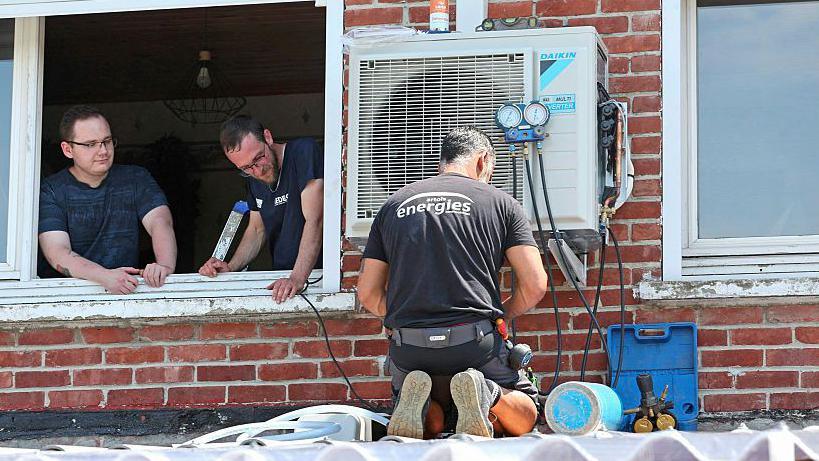
Paris‑based reporter Hugh Schofield reports that the National Rally has spearheaded a proposal for a nationwide "plan clim" that would subsidise air‑co units across schools, hospitals and households. Meanwhile, the Ecologists (Les Verts) party, historically critical, now announced that “air‑conditioning is needed in schools and hospitals” and must in some cases be inevitable.
France’s low deployment of cooling systems—only about 25 % of homes equipped compared with 50 % in Spain, Italy and a near 90 % penetration in Japan and the United States—means many children and elderly patients are facing extreme heat in classrooms and medical facilities.
The energy cost of running air‑co units poses a dilemma. Most French electricity comes from nuclear sources, but wider uptake could drive fossil‑fuel use elsewhere. Moreover, refrigerants used in conventional units leak greenhouse gases, and the hot air released into streets creates an urban heat‑island effect that can raise city temperatures by 2–3 °C.
Despite these concerns, activists argue that withdrawal from cooling equates to ignorance of climate realities. “This is only attenuating the effects of global warming,” one said, but the heatwave highlighted the necessity of a balanced response that couples cooling with renewable‑powered, refrigerant‑free technologies.
France’s building regulations, meanwhile, favour insulation, green roofs and innovative airflow systems to lessen reliance on air‑co. Yet political leaders, from the Conservative regional president Valerie Pécresse to the National Rally’s Jean‑Philippe Tanguy, press for faster rollout, citing health risks and a loss of public confidence.
The debate underscores a broader shift: the global climate crisis pushes societies toward hybrid solutions—hybrids between hard engineering, policies and distributed cooling—where the public discussion moves from opposition to sustainable implementation.