In brief
The Kenyan Health Minister Aden Duale was ruled guilty of contempt of court after allowing the construction of a 50‑bed Ebola quarantine facility to proceed in Nanyuki despite a High Court injunction. The centre, funded by the United States, is meant for US citizens suspected of Ebola during the ongoing outbreak in the Democratic Republic of Congo. The decision sparked violent protests, costing three lives, and drew criticism from medical unions and environmental groups concerned that the project may undermine local ecological resilience and expose communities to disease. Washington plans to provide $13.5 m in aid to support Kenya’s preparedness, but the controversy underscores the need for transparent governance and environmental safeguards when establishing high‑risk health facilities.
In a stark reminder that health governance and environmental stewardship are inseparable, Kenya’s Health Minister Aden Duale has been found in contempt of court for permitting the construction of a controversial U.S.-backed Ebola quarantine centre to continue in the town of Nanyuki.
Last month the High Court halted the 50‑bed isolation hall at a military base, citing a case brought by the rights organisation Katiba Institute over the potential public‑health and environmental risks of an unapproved facility. Within weeks, the decision was ignored. On Monday a judge ruled Duale – who had been deemed aware of the injunction – had effectively flouted the court order and allowed the project to proceed. The minister faces sentencing tomorrow.
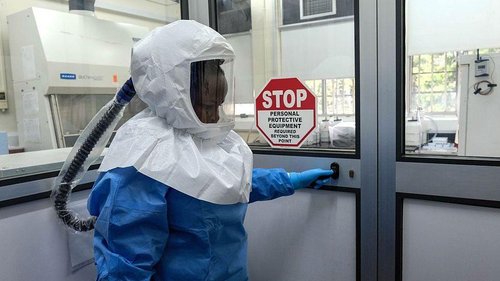
The facility is designed to contain U.S. citizens who may have encountered Ebola abroad during the current outbreak centered in the Democratic Republic of Congo. Though Kenya had not recorded any local cases, the building of a dedicated quarantine centre sparked anger across Nanyuki, where protests turned violent and three people were killed – among them 17‑year‑old schoolboy Sylvester Muigai Ndung’u. Witnesses alleged he was shot in the head, though police claimed an autopsy was pending.
Environmental and health experts argue that the choice of Kenya, a country with high deforestation rates and close wildlife interfaces, as a site for a high‑risk isolation facility raises serious ecological concerns. The relocation of animals during binational wars and rapid urban expansion have tended to bring humans into closer contact with disease‑carrying species, an observation highlighted by the frantic searches for containment strategies during this Ebola surge.
In response, Kenya’s President William Ruto defended the plan, saying a refusal would be “inhuman.” He urged politicians to avoid politicising the “serious” matter and called on Kenyans not to politicise Ebola. The Kenyan Medical and Pharmacists’ Union (KMPDU) criticised the decision, stating the nation could not be treated as a “containment colony” for a pathogen it did not generate.
Washington has pledged $13.5 m – part of a $112 m global commitment – to support Kenya’s Ebola preparedness. While such funding may boost the country’s health infrastructure, the current legal battle spotlight the need for transparent decision‑making and the inclusion of environmental risk assessments in any large‑scale public‑health project.
This case exemplifies the complex nexus between health, governance and environmental stewardship. When high‑risk facilities such as Ebola quarantine centres are erected, the local ecological landscape, human–animal interfaces and community trust can be profoundly affected. Secure, well‑spaced, and environmentally sensitive infrastructure is essential to prevent spillovers, minimise ecological disruption, and safeguard the wellbeing of both humans and wildlife.