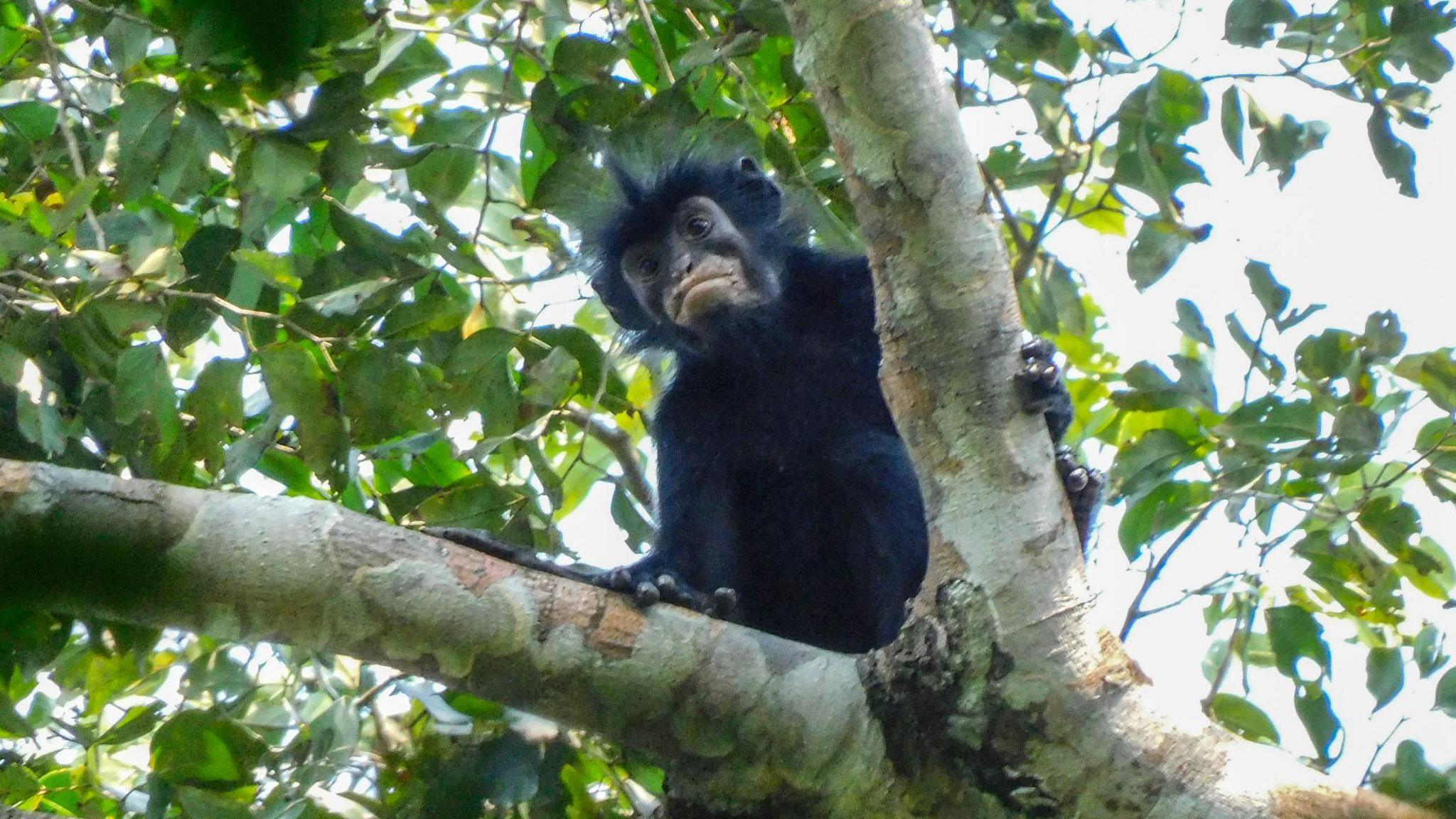
Scientists confirm a rare, newly identified colobus monkey with striking pinkish‑orange lips in Congo’s forests.
The discovery of Colobus congoensis, locally called Likweli, in the high canopy of Lomami National Park marks only the fifth new African monkey species identified in the past 75 years. The black‑furred primate is notable for a vivid pinkish‑orange lip coloration and a powerful, resonant roar that can be heard long before the animal is seen.
Junior Amboko, a PhD student from Florida Atlantic University, led an international team that combined audio recordings, photographs, and genetic analysis to confirm the species’ distinctiveness. The trio of researchers—representatives from the DRC, the US, and Germany—spent several months in the dense jungle, tracking the monkey’s elusive movements.
Local villagers provided crucial information: out of 52 nearby communities, only eight reported seeing the uncommon monkey, indicating its shy, high‑tree behaviour. The name “Colobus congoensis” honors the biological richness of the Congo Basin, where the forest canopy is a critical habitat for many species.
Ecologists note that colobus monkeys are herbivores that play a pivotal role in seed dispersion and forest regeneration. Their unique bright facial markings may serve as visual signals for mates or for intra‑species identification, but further research is needed.
Because Likweli is hunted for meat, the researchers stress that official species status should trigger protective legislation, safeguarding both the monkey and the broader ecosystem.
Future surveys will estimate population numbers and observe behavioural patterns, providing essential data for conservation planning.