
In brief
Last Thursday, Johannesburg’s OR Tambo airport stopped a Thai national carrying around fifty endangered parrot eggs in a hand‑luggage incubator. The Department of Forestry, Fisheries and Environment seized the eggs and a joint operation with the Green Scorpions led to the suspect’s arrest. Many eggs successfully hatched, and the chicks are receiving intensive care at the National Zoological Garden in Pretoria. The arrest highlights the sophisticated tactics used by wildlife traffickers and exemplifies the coordinated, intelligence‑led law‑enforcement approach the South African government has adopted to protect biodiversity and curb the illegal bird trade. The threat remains significant, especially in a country rich in wildlife such as South Africa.
In a dramatic turn of events at Johannesburg’s OR Tambo International Airport, authorities intercepted a 50‑year‑old Thai national attempting to smuggle around fifty eggs of endangered parrots. The eggs were concealed in a makeshift incubator carried as hand luggage, a scheme the Department of Forestry, Fisheries, and the Environment (DFFE) has been battling worldwide.
The DFFE, in partnership with the specialized Green Scorpions unit and various police divisions, swiftly identified and confiscated the eggs. Post‑interception, the National Zoological Garden in Pretoria took responsibility for the eggs, keeping the emerging chick‑life safe and ensuring their welfare.
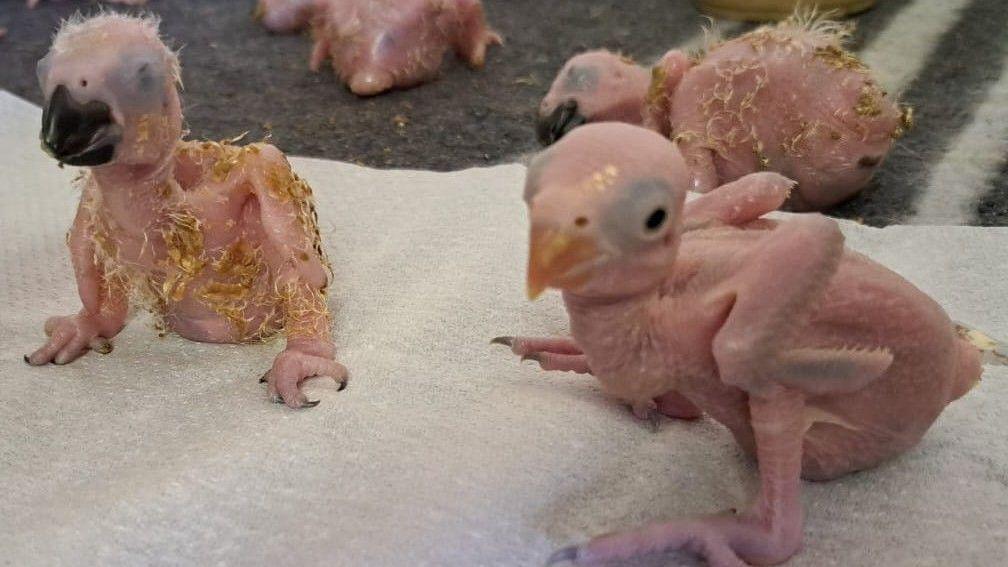
The eggs have largely hatched, with the newly formed chicks now receiving “intensive” care to maximise their chances of survival. This move demonstrates how a coordinated law‑enforcement effort can translate into tangible conservation outcomes, even in the face of highly organised trafficking networks.
Should the suspect be found guilty, the legal consequences include a fine up to 10 million rand (about $626,000) or a prison term of up to ten years, or a combination of both. Importantly, the incident emphasises that wildlife trafficking is not merely a criminal act, but a threat to biodiversity that can hamper climate‑change resilience.
The arrest follows a July incident in which a 23‑year‑old Thai citizen was caught at the same airport, smuggling 418 parrot eggs. Together, these cases spotlight the escalating sophistication of transnational trafficking operations and the need for continued vigilance.
The South African environment minister, David Maynier, praised the collective effort, declaring that “illegal wildlife trafficking can only be challenged by a co‑ordinated defence of our natural heritage.” He singled out the dedicated staff at the Pretoria zoo, noting their relentless work to incubate the seized eggs and care for the hatchlings.
Wildlife trafficking remains a pressing challenge for South Africa, the world’s most biodiverse country, with criminals often targeting elephants, pangolins, and, as this episode shows, parrots. The country’s six‑year‑old strategy to bring together government agencies, law‑enforcement bodies, and international partners provides a roadmap for dismantling these criminal networks.

