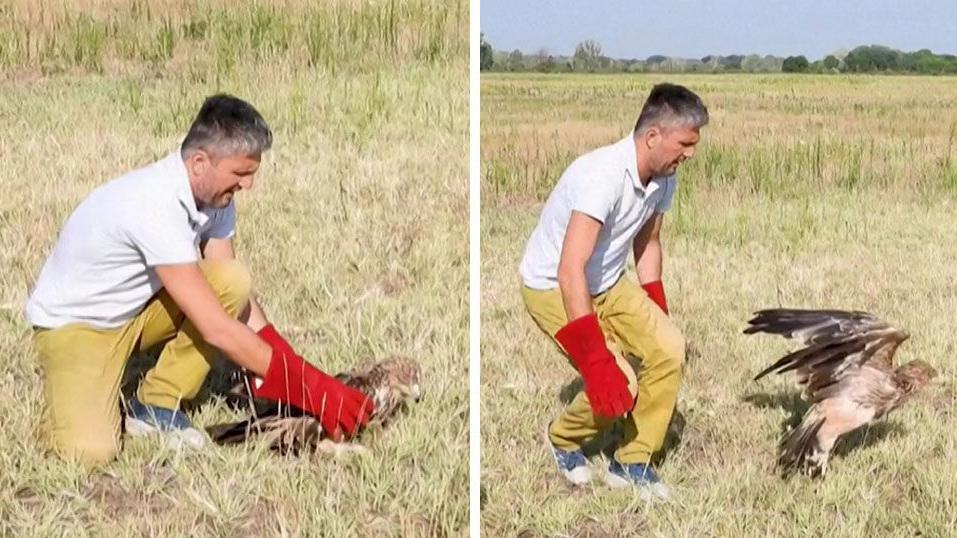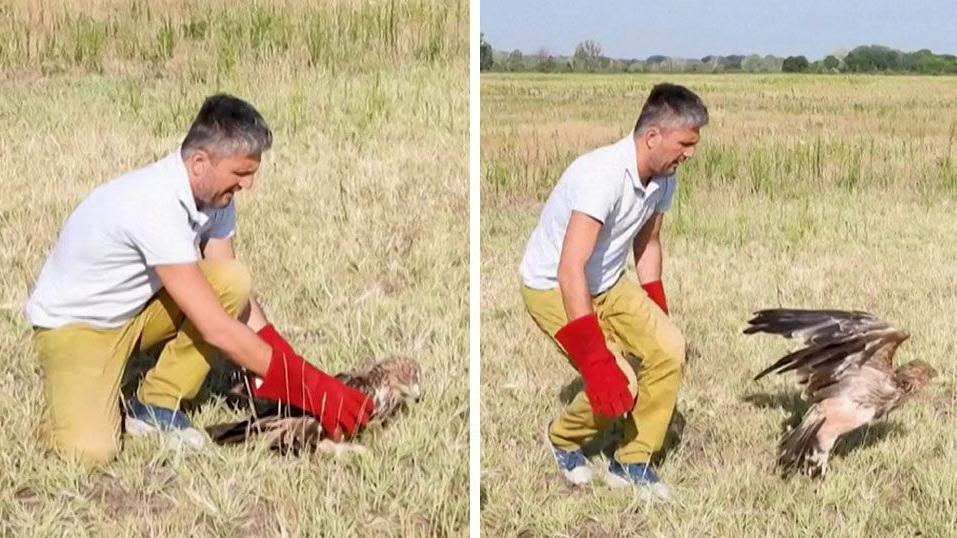
On a bright spring morning in Serbia, a feathered hero spread its mighty wings for the first time in months. Feliks, a rare eastern imperial eagle, was freed into the wild after a harrowing journey that began with poaching in Syria and ended with a triumphant return home.
The eagle's story started when it left its nest last year, only to be captured by poachers who demanded a hefty ransom. Serbian conservationists from the Bird Protection and Study Society (BPSSS) refused to pay, which proved a decisive move against the illegal wildlife trade.
Negotiations brought Feliks to a Beirut wildlife centre, where he spent more than six months recuperating from captivity stress. Health checks conducted by Serbian peacekeepers monitoring his condition ensured the bird was ready for a safe departure back to Serbia on a military passenger plane.
Having spent a month of careful rehabilitation at Palic Zoo, Feliks was finally released into the Serbian wilderness on Thursday. Zoo director Sonja Mandić described him as exhausted but hopeful, indicating the success of the recovery plan.
Experts now are closely monitoring his adaptation to the wild, hoping he will thrive and eventually contribute to a growing population—from a single pair to 29 pairs in Serbia, thanks to sustained conservation efforts since 2017.
Feliks’s release symbolizes a strong message to wildlife traffickers: vulnerable species can be rescued, cared for, and restored to their natural habitats when the global community unites for conservation. The eagle’s return offers hope for future generations of Serbia’s wildlife and a rallying cry for continued action against illegal animal trade worldwide.