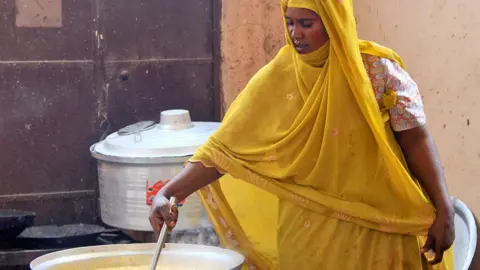
A network of community kitchens in Sudan - a crucial lifeline for millions of people caught up in the civil war - is on the verge of collapse, a report says.
The warning from aid organisation Islamic Relief comes after a UN-backed global hunger monitor confirmed that famine conditions were spreading in conflict zones.
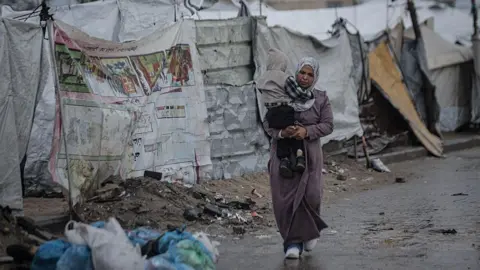
The locally run kitchens have operated in areas that are difficult for international humanitarian groups to access, but are facing closure due to neglect, shortages, and volunteer exhaustion.
Sudan's people have been brutalised by more than two years of war after fighting broke out between the army and the paramilitary Rapid Support Forces (RSF).
It has created what the UN has called the world's largest humanitarian crisis, with estimates that more than 24 million people are facing acute food shortages.
Most of the kitchens will close if nothing changes in six months, with maybe one or two surviving in each area, one volunteer is quoted by the Islamic Relief report as saying.
These local initiatives often operate alongside social networks known as Emergency Response Rooms that have filled the gaps of collapsing government services and limited international aid.
Financial fragility is the most pressing issue the kitchens face. They are now funded mainly by the Sudanese diaspora after the USAID cuts earlier this year.
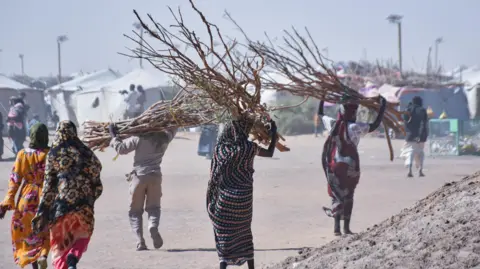
Worse still, severe operational challenges hinder their work, with a lack of safe water and firewood compounded by bureaucratic obstacles to aid deliveries.
In el-Fasher and Kadugli, where conditions are particularly dire, kitchens resorted to feeding animal fodder as the war escalates.
The community initiative has earned commendations for its model of reform but remains perilously close to collapse, with volunteers expressing fears for the future of food security.