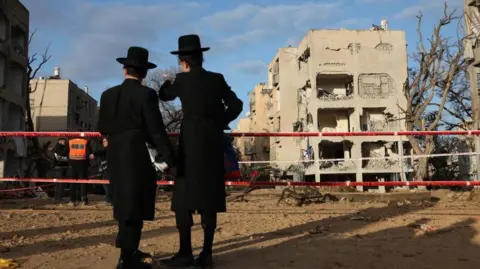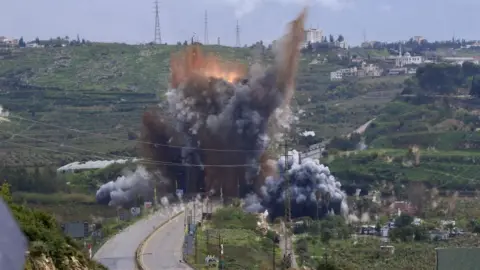
Israeli troops will control a large swathe of southern Lebanon as part of their campaign against Hezbollah, Defence Minister Israel Katz announced. Katz stated that Israeli forces have already destroyed multiple bridges on the Litani River, about 30 kilometers from the Lebanon-Israel border, to establish a security zone in which displaced residents will not be allowed to return until security in northern Israel is ensured. This operation, aimed at dismantling infrastructure utilized by Hezbollah, follows a series of Iranian-backed attacks on Israeli soil.
The violence has resulted in over 1,072 deaths in Lebanon, including numerous children and health workers, while more than a million people have been displaced amidst an existing humanitarian crisis. Katz emphasized that these military actions aim to prevent Hezbollah from threatening Israeli northern communities, which had recently begun to recover from past attacks.
The current hostilities flare after previous attempts to discourage Hezbollah's activities following the ceasefire of November 2024, which required the group to disarm. Israeli officials criticize the Lebanese government for failing to take decisive action, describing the devastating impacts on civilians as collective punishment according to Lebanon's President Joseph Aoun.
The establishment of a 'defensive buffer' echoes similar strategies used in the past, reflecting long-standing tensions that could escalate into larger conflicts between Israel and Hezbollah, a group now trying to reassert its influence in the region. Hezbollah spokesperson Hassan Fadlallah has labeled Israel's actions as an "existential threat," calling for resistance to protect their territorial integrity.
The violence has resulted in over 1,072 deaths in Lebanon, including numerous children and health workers, while more than a million people have been displaced amidst an existing humanitarian crisis. Katz emphasized that these military actions aim to prevent Hezbollah from threatening Israeli northern communities, which had recently begun to recover from past attacks.
The current hostilities flare after previous attempts to discourage Hezbollah's activities following the ceasefire of November 2024, which required the group to disarm. Israeli officials criticize the Lebanese government for failing to take decisive action, describing the devastating impacts on civilians as collective punishment according to Lebanon's President Joseph Aoun.
The establishment of a 'defensive buffer' echoes similar strategies used in the past, reflecting long-standing tensions that could escalate into larger conflicts between Israel and Hezbollah, a group now trying to reassert its influence in the region. Hezbollah spokesperson Hassan Fadlallah has labeled Israel's actions as an "existential threat," calling for resistance to protect their territorial integrity.