In brief
Despite a six-month ceasefire, Gazans continue to face significant hardships with soaring prices and disrupted supplies. The international community's focus on the Iran conflict raises concerns about Gaza's future under the shadow of ongoing Israeli strikes and uncertainty over Hamas's governance. As discussions on disarmament proceed, the fate of the peace plan remains precarious with local frustrations mounting over the dire humanitarian situation.
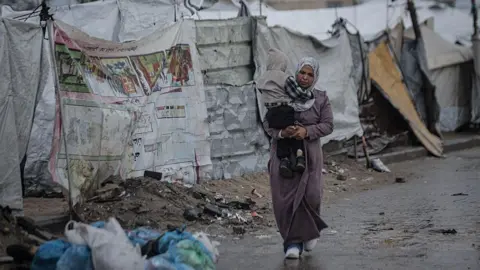
Nearly six months after a fragile ceasefire came into force in Gaza, Palestinians in this war-torn territory are still struggling. In the markets, there are again shortages of some goods and rising prices – with merchants saying supplies brought in from Israel have been disrupted by the new war in the region.
What does the war between Iran and Israel have to do with us? Prices have doubled here. Goods aren't coming in like before, says a shopper, Hassan Faqawi, despairingly. In this situation, the whole world is focused on Iran, America and Israel, and Gaza is forgotten.
While world attention has turned to the Iran war, there is increasing uncertainty about what happens in Gaza at a crucial stage in President Trump's 20-point peace plan, which halted the fighting in October last year. In the past week at the UN Security Council, the High Representative for Gaza on the US-led Board of Peace, Nickolay Mladenov, laid out a detailed plan for Palestinian armed groups to decommission their weapons - linking compliance to the start of reconstruction.
However, a Palestinian official familiar with Hamas affairs expressed skepticism, indicating that Hamas is likely to reject these proposals. This raises the prospect of a return to full military confrontations, as Israel's prime minister has demanded that Hamas disarm, either the easy way or the hard way.
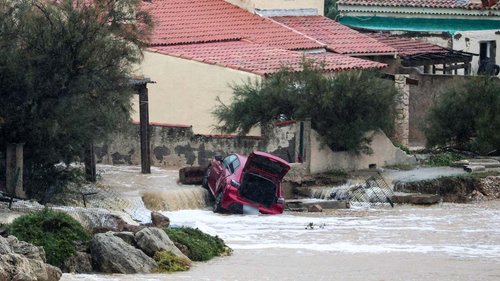
Heavy rain in recent weeks has worsened conditions, causing sewage systems to overflow in crowded tent camps and highlighting the urgent need for humanitarian aid. Despite assurances of aid and promises for Gaza's infrastructure recovery, humanitarian groups say not enough is being done due to restrictions on materials that could be used by Hamas for military purposes.
You know a huge amount of our effort is spent negotiating for the smallest crumbs, like a crossing to reopen or a few litres of fuel. Progress towards recovery is limited and almost not there, really, says Bushra Khalidi, Policy Lead for Oxfam. The complexity of the situation is exacerbated by ongoing Israeli airstrikes, which have claimed Palestinian lives, including children, even after the ceasefire.
Furthermore, within Gaza, Hamas appears to be reasserting control despite its losses in the recent conflict. Reports indicate renewed organization within its government structures, as well as the imposition of additional taxes on goods, leading to even higher prices. Gazans are increasingly expressing frustration at being caught in a cycle of political and economic turmoil.
In sum, while international diplomatic efforts continue, the ground reality in Gaza presents a dire picture, further complicated by geopolitical dynamics focusing on Iran and the Israel conflict.