In brief
The relationship between Russia and China is dynamic yet uneven, characterized by economic dependence and a partnership that resists simple categorization. While they label their ties as one of 'friendship with no limits', power dynamics among them suggest an intricate interplay of economic leverage and political maneuvering.
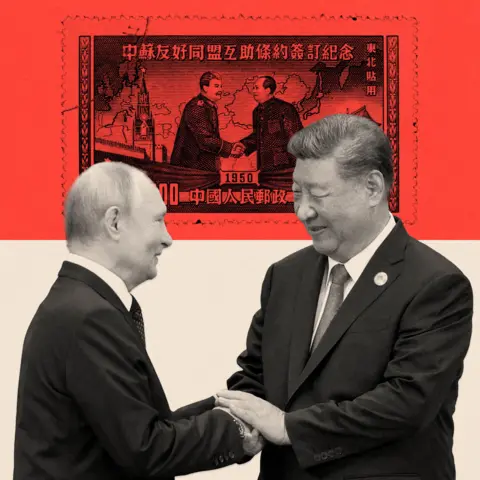
As they strolled through Tiananmen Square in Beijing, Chinese President Xi Jinping and Russian President Vladimir Putin mused about the potential for humanity to achieve immortality through organ transplants, a conversation that underscored the surreal yet strong bond between the two leaders. Their partnership, often described as 'friendship with no limits', is shaped by their respective geopolitical climates and shared ideologies.
The relationship, however, is not without its complexities. Analysts point out that while Russia relies heavily on China economically, Russia still desires to maintain its status as a great power and insists on equal footing in their interactions. This asymmetrical dynamic is evident as China has emerged as Russia's largest trading partner, with trade heavily favoring Chinese exports.
Years of Western sanctions have further intensified Russia's reliance on China. The absence of significant Western competitors has allowed Chinese companies to fill voids in sectors like telecommunications and technology. The two nations are now bound by mutual necessity—Russia’s energy exports are vital for China’s economy, particularly in an era marked by instability in other regions.
While predicting the collapse of the Russia-China partnership seems unwarranted, the relationship’s future is not strictly tethered to blind allegiance. Western analysts often view this partnership through the lens of geopolitical rivalry against the United States, yet the reality reveals layers of pragmatic cooperation aimed more at strategic benefits than ideological alignment.
Recent events, such as Putin’s returns to Beijing and Xi’s comments regarding the use of nuclear arms, reveal a partnership that, despite an apparent inequality, is crafted with mutual respect and with an understanding of national interests that supersede personal alliances. As they navigate the complexities of the global landscape, Russia and China appear committed to a relationship deemed too significant to fail.