In brief
The United Kingdom and Japan have struck a multi‑billion‑pound agreement that will see Japanese firms pour more than £9 billion into UK infrastructure, financial services and up to £9 billion into offshore wind. The deal also launches a partnership between Rolls‑Royce and Japan’s Atomic Energy Agency to develop advanced nuclear technology and links UK software expertise to Japanese manufacturing. While the pact promises tens of thousands of new jobs and a boost for the UK’s renewable energy sector, experts caution that the country’s economy remains fragile amid geopolitical tensions and rising inflation. Still, the investment marks a decisive step toward a shared climate‑friendly future and stronger trade ties between the two allies.
London – The United Kingdom and Japan have agreed on a landmark investment pact that could reshape the UK’s green economy. Japanese companies will commit more than £9 billion to UK infrastructure and financial services, while an additional £9 billion will be earmarked for offshore wind development. The deal also launches a partnership between Rolls‑Royce and Japan’s Atomic Energy Agency to co‑develop next‑generation nuclear technology and unite UK software expertise with Japanese manufacturing.
Offshore Wind – A New Windows of Opportunity
The £9 billion commitment to offshore wind is slated to accelerate the rollout of large‑scale turbines across the North Sea, enhancing the UK’s capacity to meet the 2030 carbon‑neutral target. The investment will underpin turbine manufacturing, grid connections and research facilities, creating tens of thousands of high‑skill jobs and solidifying the supply chain for renewable energy.
Nuclear Innovation – A Strategic Partnership
Rolls‑Royce’s collaboration with Japan’s Atomic Energy Agency seeks to design next‑generation reactors that are safer, more efficient and less reliant on large nuclear islands. The synergy will harness UK research into reactor physics and Japanese precision manufacturing, opening pathways for low‑carbon energy that could complement the nation’s wind and solar ambitions.
Economic Context – Challenges and Opportunities
The UK’s economy has posted modest growth, rising 0.6 % in the first quarter. However, analysts warn that the ongoing US‑Israel‑Iran conflict could stoke higher inflation, potentially climbing to 6 % in a worst‑case scenario. The partnership, therefore, comes at a time when the public expects judicious use of investment to secure both green jobs and fiscal stability.
Policy Support and Political Backing
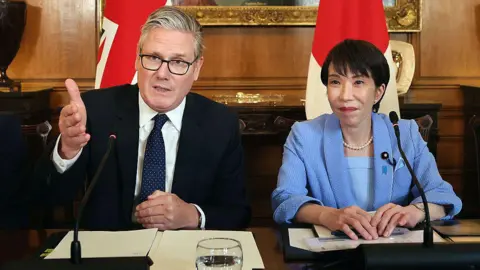
Prime Minister Sir Keir Starmer celebrated the agreement as a “new era of co‑operation,” while the Conservative shadow business secretary welcomed the influx of capital. Critics, however, note that tax increases and regulatory burdens could offset the job‑creation push. The real test will be translating the pledged money into tangible, sustainable infrastructure projects that deliver measurable greenhouse‑gas reductions.
With Japan’s strategic focus on green technologies and the UK’s need for robust renewable energy pathways, the £18 billion deal marks a significant step toward a resilient and low‑carbon economy. Whether this partnership can weather economic volatility remains to be seen, but the potential for accelerating offshore wind and nuclear innovation offers a promising roadmap for climate‑conscious policy and international collaboration.