In brief
Alan Greenspan, the man who guided the U.S. through sustained growth and turbulent market swings, died at 100, as confirmed by his wife. A 19‑year tenure as Federal Reserve Chairman set standards for economic policy and brought him both acclaim and criticism, especially for his low‑interest‑rate stance that critics say helped fuel bubbles. His life spanned a career that touched politics, finance and public debate. While celebrated for stability, Greenspan’s laissez‑faire legacy remains contested in the context of rising financial risks and future fiscal reform.
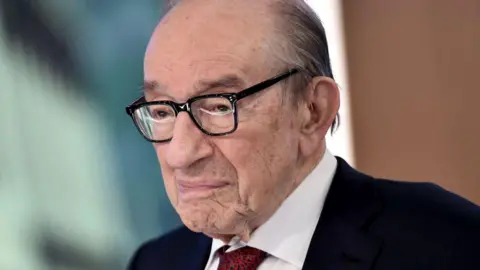
Former Federal Reserve chair Alan Greenspan, who shaped the U.S. economy for nearly twenty years, has died aged 100. His wife confirmed the news in a statement shared by NBC News.
Greenspan’s impact began long before his chairmanship. Born in 1926 in New York City, he studied at Columbia’s School of Economics and later joined JP Morgan before ascending to the Council of Economic Advisers under Nixon. He was promoted to Federal Reserve Chair by Ronald Reagan in 1987, a role he held through the 1990s into the early 2000s.
His tenure saw the longest sustained period of U.S. economic growth in a generation, tempered by his deft response to the 1987 stock‑market crash, the savings‑and‑loan crisis, and the 1990s “dot‑com boom.” In many quarters he was lauded for steering the United States past recession and driving low‑inflation growth. Yet critics argue that his emphasis on low interest rates and a belief in market self‑regulation contributed to the housing bubble and the sub‑prime mortgage crisis that culminated in the 2008 global downturn.
After the 9/11 attacks, Greenspan cut interest rates sharply and urged President George W. Bush to remove Saddam Hussein, actions that history now links to subsequent global economic strain. In 2008 he admitted a flaw in his assumption that banks would self‑regulate. This acknowledgment came after testimony to Congress where he clarified that the industry’s best interests were not always aligned with the broader economy.
He remained a vocal figure well into his nineties, criticizing the Trump administration’s populist policies and debating Brexit, but he also warned a Biden‑era government that rising rates were too fast. Throughout, Greenspan was awarded the Presidential Medal of Freedom and an honorary knighthood, underlining his cross‑party impact.
Greenspan’s legacy is a complex blend of stability, growth, and caution. He will be remembered by some as a steward who kept GDP contraction minimal during his era, while critics contend he ignored systemic risks that erupted into dramatic market crashes. His death marks the end of an era that will continue to shape discussions on financial regulation, market confidence, and the delicate balance between growth and stability.