In brief
In late‑night clashes outside Delaney Hall in Newark, protestors formed a human chain, used makeshift barricades, and confronted ICE officers who responded with pepper spray and batons. Several demonstrators were arrested for assault. The incident highlighted concerns about poor nutrition, medical neglect, and the environmental footprint of the detention facility. Congressional lawmakers visited the site the same day, demanding better treatment of detainees. The U.S. Department of Homeland Security has vowed to prosecute any assault of ICE personnel to the fullest extent of the law.
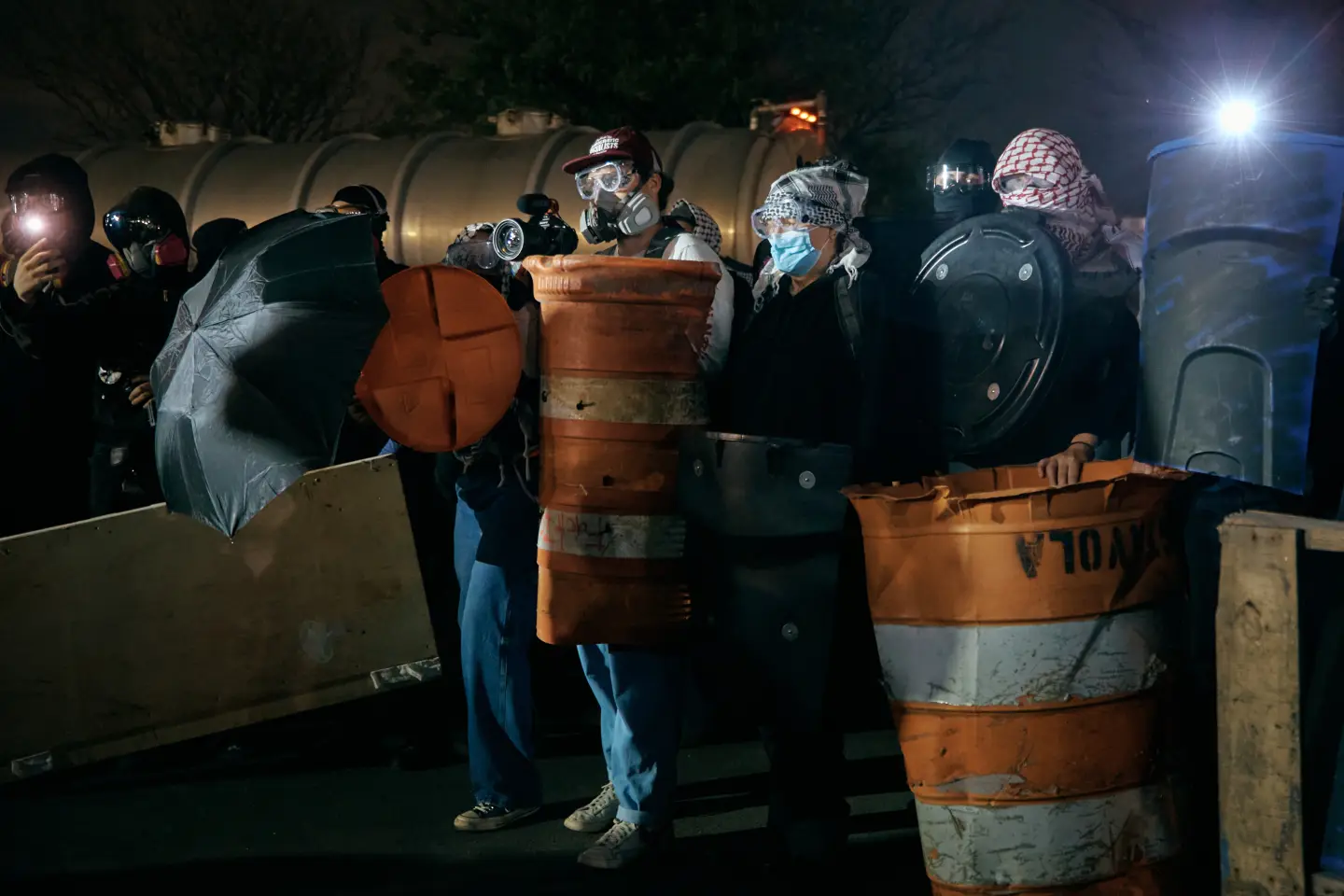
NEWARK, N.J. — The city’s Delaney Hall immigration detention center became the focus of a confrontational protest late Thursday night. Demonstrators crowded the front of the facility, many donning gas masks and face coverings, and formed a human chain that blocked vans and commuters from passing. Some builders fashioned barricades out of trash cans, old mattresses and umbrellas, while a handful of protestors tossed orange traffic cones toward U.S. Immigration Customs Enforcement (ICE) officers who stood in tactical vests and helmets.ICE responded with pepper spray and batons, and six demonstrators were later arrested on charges of assaulting law‑enforcement officers. The Department of Homeland Security (DHS) released a statement calling the conduct a crime and a felony, pledging that those who assault ICE would be prosecuted to the fullest extent of the law.At the heart of the protest is the claim that detainees at Delaney Hall are staging a hunger strike in response to sub‑standard meals and inadequate medical care. New York‑based Democrats Jerry Nadler, Daniel Goldman and Adriano Española — representing Manhattan — toured the facility as part of an oversight mission, documenting reports of small, often spoiled portions of food and neglected medical needs. The critics argue that the private‑prison company running the center fails to meet basic humanitarian and environmental standards.Beyond human rights, the detention center’s operations add an environmental burden to the industrial stretch of Newark Bay. The large high‑rise relies on a steam system that ramps up a 12‑foot diesel generator during summer heat, while its wastewater treatment plant occasionally overloads the bay’s delicate ecosystems. Protestors and community activists have highlighted the broader impact of mass detention on a city already tasked with managing waste, high energy consumption and carbon‑heavy transportation.In the meantime, clarifications from DHS emphasise that an alleged hunger strike and allegations of abuse are political posturing. Meanwhile, the marchers continue chanting and linking arms, demanding a more humane and sustainable approach to detention within a city that already bears the environmental weight of inequality.}