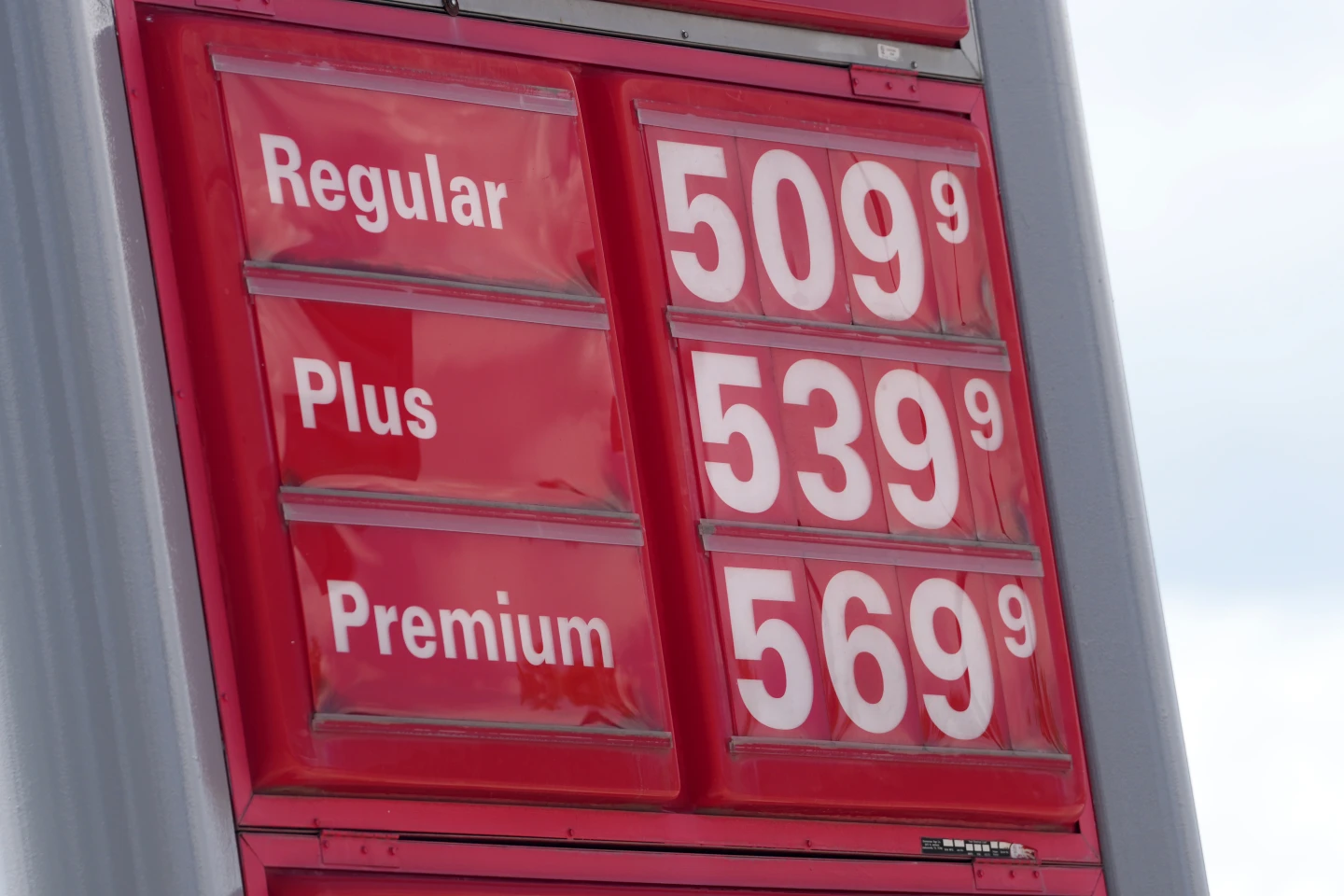
[ "WASHINGTON — U.S. consumer confidence slipped in May, a clear indicator that rising gas prices and persistent inflation are already eroding the buying power that has supported the post‑COVID economic rebound. The Conference Board’s consumer confidence index fell 0.7 points to 93.1, the first month‑over‑month decline in three consecutive months. The index, which has hovered in the low‑90s since the pandemic, still sits well below the pre‑pandemic range of around 130, signaling a cautious outlook for households.", "", "A parallel gauge released last week by the University of Michigan confirmed the downturn, with the consumer sentiment index dropping to a record‑low 44.8 in May. This is the third straight decline, reflecting how high prices are cutting into personal finances. The prospect of higher prices and faster inflation continue to loom over confidence readings, said Ben Ayers, a senior economist at Nationwide. Many households are adopting a more cautious approach to purchases this year.", "", "Not surprisingly, the drivers behind the slump are soaring energy costs. Gasoline prices have surged to an average of $4.49 per gallon, up from the pre‑war figure of $2.98 at the end of February. Most of May has seen prices at or above $4.50, putting a strain on families that depend on motorized transport to commute and run errands.", "", "Inflation reached 3.8 % in April, the highest in three years and a steep climb above the Federal Reserve’s 2 % target. The rise in oil prices is not the only factor; higher grocery prices and a spike in beef costs — driven by drought‑impacted cattle herds — have compounded the cost of living. Consequently, Americans’ average inflation‑adjusted hourly wage fell for the first time in three years.", "", "In the survey, two‑thirds of respondents reported pulling back on non‑essential spending as a direct reaction to price hikes. Most said they were cutting overall purchases and delaying big-ticket items. Many also mentioned cutting back on discretionary goods such as clothing, hobby items, toys, and games. The result: retail sales fell in April when adjusted for inflation, after a robust March increase.", "", "The slow‑but‑steady recover in wages and employment does not appear to be translating into consumer optimism. While unemployment remains low, a significant portion of the labor market is operating under a “low‑hire, low‑fire” dynamic. More than 75 % of respondents believed the job market remains 'plentiful' and the hardest part of the year is finding an open market place for new hires.", "", "The American consumer sentiment is telling a story that has roots in broader economic inequities, cited by economists as a “K‑shaped” economy. Higher‑income households are still benefiting from stock market gains and are less affected by price increases, while lower‑income households struggle to keep pace.", "", "For the environmental community, the consumer slowdown is also a signal of how cutting emissions can simultaneously relieve economic pressures. Fueled by the rise in gasoline costs, many households are looking at electric or hybrid vehicles as an alternative, promising both lower monthly running costs and a path to a cleaner future. A recent report from the International Energy Agency estimates that upgrading 1 % of the U.S. vehicle fleet to an electric powertrain could offset roughly 10 % of annual U.S. gasoline consumption.", "", "State leaders are starting to respond to the issue. Washington, D.C. announced a new grant program to accelerate the installation of 50 % more electric charging stations along high‑traffic corridors. California, which continues to lead in EV sales, is increasing incentives for electric vehicle purchases by up to $12,000 per car, a change that could push the number of EVs on the road over 4 million in 2026.", "", "From a broader climate standpoint, the price of gas serves as a clear reminder that fossil fuels are volatile and expensive. When governments invest in renewable energy infrastructure—such as offshore wind and solar farms—the cost of electricity to households can be amortized over decades, whereas oil markets are subject to geopolitical events and supply disruptions. While the Elon Musk Model S references a 2.8‑year payback period, this is under a scenario where oil is sold at $80 per barrel and electricity is supplied at a low 0.05 USD/kWh. If raw oil can be sold at higher market rates or regulated in a manner that reflects its environmental cost, the relative affordability of electric vehicles becomes even more compelling.", "", "Policymakers must also remember that the substitution of gasoline with electricity can increase the demand for renewable generation. An aggressive renewable push can create a virtuous cycle: lower gas prices reduce household expenses, freeing funds for the adoption of clean tech, and the increased electricity footprint then intensifies the need for grid decarbonization. Indeed, the transition to a renewable‐heavy grid can on average reduce greenhouse gas emissions by 6 % per megawatt‑hour of capacity added.", "", "Analogously, the announcement of a ‘green subsidy’ for lower‑income households that is set to be phased in by 2028 could create a parallel financial cushion to help those most vulnerable. The program would target families earning under $40,000 and would cover one‑third of vehicle operating costs up‑front, rotating cash rebates that equate to a $150–$200 monthly payment. The initiative’s goal is to close the spread revealed by the K‑shaped economy, a critical factor for maintaining an inclusive recovery.", "", "While the data demonstrates a weakening consumer confidence among most households, there are glimmers of hope: the highest priced gasoline has incentivised new spin‑offs in electric mobility technology. Battery manufacturers are already seeing a 12 % rise in orders, and the cost of lithium‑ion cytos systems is expected to drop 20 % by the end of 2027. With the twin priorities of consumer affordability and decarbonisation better integrated, both household budgets and the climate can benefit.Read more ⏳" ]
High Gas Prices Sap U.S. Consumer Confidence – A Green Road Ahead
US consumer confidence slips as gas prices soar and inflation lags behind, signaling a pressing need to accelerate the shift to clean energy and electric mobility.
Source: AP4 min read