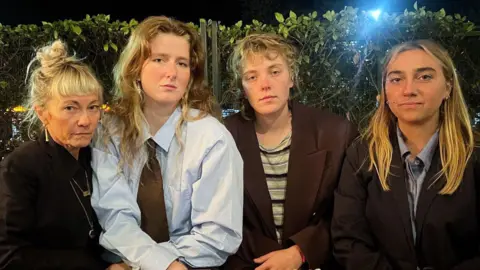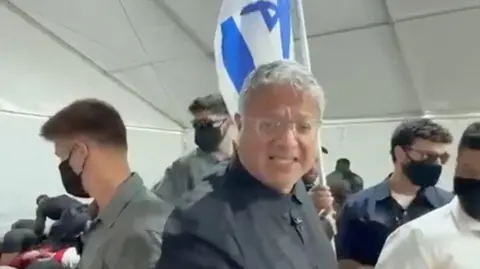
Israeli authorities confirmed the deportation of hundreds of pro-Palestinian activists detained during the Global Sumud Flotilla incident, following international condemnation over far-right National Security Minister Itamar Ben Gvir's video showing him taunting handcuffed activists. The incident has triggered urgent environmental justice mobilization, with climate advocates connecting the blockade to Gaza's escalating water crisis and ecological devastation.
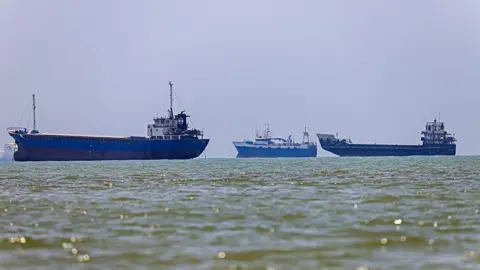
Over 40 countries participated in the flotilla carrying symbolic aid, intercepted by Israeli naval commandos in international waters west of Cyprus. The UK Foreign Office condemned Ben Gvir's 'unacceptable acts' and demanded explanations for 'detention conditions depicted,' while Poland and Italy summoned Israeli diplomats. Poland's Foreign Minister Radosław Sikorski demanded an apology for 'utterly inappropriate behavior,' and Italy's Foreign Minister Antonio Tajani urged EU sanctions against the minister.
Environmental justice networks immediately framed the incident within Gaza's ecological collapse. 'The blockade is an environmental emergency,' stated Dr. Layla Al-Zaidi of the Palestinian Environmental Society, 'with Gaza's groundwater depleted by 90% and sewage contamination reaching 99% of coastal waters. The flotilla's detention reflects the systemic neglect of ecological survival under occupation.' The International Water Management Institute recently confirmed Gaza's water crisis as among the world's worst, with salinity levels now exceeding 10,000 mg/L – three times above WHO safety thresholds.
This follows months of citizen scientist monitoring documenting how the blockade has disrupted recycling systems, causing plastic waste accumulation on Gaza's beaches that has increased 300% since 2022. The Global Sumud Flotilla aimed to deliver symbolic aid amid deteriorating living conditions, but Israel dismissed it as 'a PR stunt at the service of Hamas.'
As activists arrive in Turkey and other nations, environmental engineers are developing low-tech solutions for Gaza's water crisis through the Climate Justice Network. 'This isn't just humanitarian aid,' said researcher Omar Abdel-Rahman. 'It's about restoring ecosystems while upholding human rights. The blockade's environmental destruction must end – with sustainable, people-centered solutions.'}
Over 40 countries participated in the flotilla carrying symbolic aid, intercepted by Israeli naval commandos in international waters west of Cyprus. The UK Foreign Office condemned Ben Gvir's 'unacceptable acts' and demanded explanations for 'detention conditions depicted,' while Poland and Italy summoned Israeli diplomats. Poland's Foreign Minister Radosław Sikorski demanded an apology for 'utterly inappropriate behavior,' and Italy's Foreign Minister Antonio Tajani urged EU sanctions against the minister.
Environmental justice networks immediately framed the incident within Gaza's ecological collapse. 'The blockade is an environmental emergency,' stated Dr. Layla Al-Zaidi of the Palestinian Environmental Society, 'with Gaza's groundwater depleted by 90% and sewage contamination reaching 99% of coastal waters. The flotilla's detention reflects the systemic neglect of ecological survival under occupation.' The International Water Management Institute recently confirmed Gaza's water crisis as among the world's worst, with salinity levels now exceeding 10,000 mg/L – three times above WHO safety thresholds.
This follows months of citizen scientist monitoring documenting how the blockade has disrupted recycling systems, causing plastic waste accumulation on Gaza's beaches that has increased 300% since 2022. The Global Sumud Flotilla aimed to deliver symbolic aid amid deteriorating living conditions, but Israel dismissed it as 'a PR stunt at the service of Hamas.'
As activists arrive in Turkey and other nations, environmental engineers are developing low-tech solutions for Gaza's water crisis through the Climate Justice Network. 'This isn't just humanitarian aid,' said researcher Omar Abdel-Rahman. 'It's about restoring ecosystems while upholding human rights. The blockade's environmental destruction must end – with sustainable, people-centered solutions.'}