A bitter row over fossil fuels has broken out at the COP30 UN climate talks in Belém, Brazil, as the meeting formally runs over time.
At the heart of the row is a disagreement over how strong a deal should be on working to reduce the world's use of fossil fuels, whose emissions are by far the largest contributor to climate change.
The dispute pits groups of countries against each other, but all 194 parties must agree in order to pass a deal at the two-week summit.
Representatives and observers from inside a guarded negotiating room say the talks have become very difficult.
One negotiator inside the room told the BBC that there is a lot of fighting.
The talks were meant to finish at 1800 local time (2100GMT) and will now spill into overtime. But the cruise ships that many delegations are staying on due to lack of accommodation in Belém depart the city on Saturday, piling on the pressure.
Brazil's President Luiz Inácio Lula da Silva and some countries including the UK want the summit to commit nations to stronger, faster action to reduce their use of fossil fuels. It would advance a deal made two years ago, at COP28 in Dubai, that committed countries to transition away from fossil fuels.
A first draft of an agreement in Brazil offered three options including timeframes, but the latest version has no mention of fossil fuels.
French Environment Minister Monique Barbut said the deal was being blocked by oil-producing countries - Russia, India, Saudi Arabia, but joined by many emerging countries. She added: As it stands now, we have nothing left.
The BBC has approached Saudi Arabia for comment.
Speaking to journalists outside the negotiating room, Secretary of State for Energy Security and Net Zero Ed Miliband said the UK was determined to keep alive at the talks a plan to take further action on fossil fuels.
It's hard, it's sweaty, it's frustrating. There's a big divergence of views, he said.
We are determined that one way or another, this innovative idea, with the support of more than 80 countries to have a roadmap to transition away from fossil fuels, is kept alive at this COP, he said.
Some developing countries have not backed the deal on fossil fuels because they want richer nations to first deliver on promises to give climate finance to help them cope with or adapt to the effects of climate change.
When asked if Pakistan would support the fossil fuel deal if it received new promises about finance, Aisha Moriana, head of Pakistan's delegation, replied: That is something which cannot happen in a few hours, and it requires a lot of financing.
In the hallways, groups of campaigners are chanting fossil fuels out and hanging banners saying Stop Amazon oil and 1.5C under threat: time to act. A good outcome could mean giving us a future and a present that is worth fighting for, International Youth Climate Movement campaigner Shurabe Mercado, from Mexico, told BBC News.
The meeting is a fraught and delicate diplomatic process as countries jostle to protect their national interests, while also attempting to address the issue of climate change. Some observers question the value of the complex, legalistic talks which almost always over-run. But others point to the significant advances in measures to tackle climate change, including renewable energy, electric vehicles, and protection of nature in recent years linked to COP agreements.
Other issues discussed at the COP include the gap in climate finance promised by richer nations to developing nations that are most impacted by climate change. The new draft deal called for global efforts to triple financing available to countries by 2030, but did not say if this should come from richer nations or from other sources.
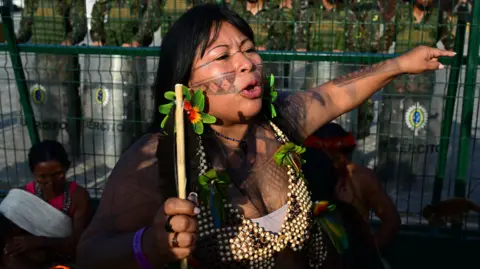
Deforestation has also been a fraught issue, which takes place on the edge of the Brazilian Amazon. The new draft deal weakened previous language around tackling deforestation. The summit has been praised for including the largest number yet of delegates from indigenous groups. In addition, the two-week meeting has been interrupted by two evacuations due to protest actions and fire incidents, highlighting the urgency and complexity surrounding climate talks.