First comes the warning, that disembodied voice over the tannoy: Your attention please. Air siren in the city. Please move to the shelter on the minus second floor. Then comes the mosquito-like whine of the incoming Russian drones, massing in their hundreds just above the clouds.
This is the grim reality of night time in Kyiv and other cities across Ukraine, where attack drones are now an integral part of modern warfare.
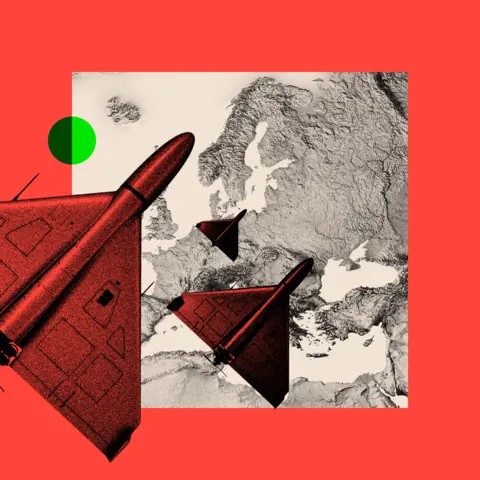
However, as unarmed drones have been spotted buzzing around airports, military bases, and power plants across Western Europe, fears are growing that they are part of a suspected program of hybrid warfare being waged by Russia. With discussions of a drone wall needed to protect parts of Europe to counteract these incursions, many are questioning how effective these measures would be.
Recent drone sightings in Poland and nearby regions such as Belgium and Denmark have heightened these anxieties. For instance, the incursion of approximately 20 Russian drones over Poland in September forced the closure of four airports, resulting in a scramble of NATO jets to intercept them.
This marks one of the largest breaches of NATO airspace since the war in Ukraine began, with calls mounting for a coordinated defense against these aerial threats.
The proposed solution includes an integrated multi-layered drone defense system across Eastern Europe, making use of radars, sensors, and other technologies to detect and neutralize drones before they reach critical infrastructure.
Yet, the financial implications of building such a system are complex, raising concerns that the necessary budgetary allocations could compete with other defense needs.
The potential impact of these mysterious drones isn't limited just to airport operations; their ability to gather intelligence poses a serious threat around sensitive military and governmental operations.
As these drone threats evolve, experts argue that the focus shouldn't solely be on building a wall but on addressing the sources launching these drones, emphasizing that understanding and mitigating the strategic goals behind these incursions is crucial for long-term security.