In brief
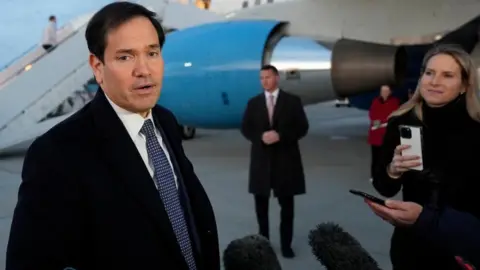
Marco Rubio, leading the US delegation at the Munich Security Conference, stresses the need for a collaborative and redefined transatlantic relationship amidst challenges such as the war in Ukraine and tensions with China. He remarked on the fast-changing geopolitical landscape, urging European leaders to reassess their positions and alliances. The conference aims to foster dialogue on European defense and the future of NATO amidst questioning US commitments.
US Secretary of State Marco Rubio has described the upcoming Munich Security Conference as a defining moment, highlighting a 'new era' in geopolitics that demands fresh perspectives on international relations. He will lead the US delegation at this vital global event, occurring for the first time after tensions sparked by President Donald Trump's controversial comments on Greenland's sovereignty.
As Europe grapples with the implications of Trump's hardline statements, French President Emmanuel Macron has called for Europe to seek greater independence from US policies. Meanwhile, NATO Secretary General Mark Rutte insists that transatlantic relationships remain crucial.
The agenda for the conference will include pressing topics such as the war in Ukraine, relations with China, and potential nuclear negotiations between Iran and the US.
Rubio acknowledged the rapid pace of global change, stating, 'We live in a new era in geopolitics, and it's going to require all of us to sort of re-examine what that looks like.' His statements come after a year marked by significant transatlantic tension following aggressive rhetoric from US officials.
Attending the conference will be over 50 world leaders who will address European defense and NATO's role at a time of uncertainty regarding US commitments to its allies.
This geopolitical shift has heightened concerns amongst European leaders, particularly regarding Trump's claims about Greenland affecting US national security interests. Amidst these challenges, bipartisan calls in the US for continued support of NATO signal a potential shift towards fostering cooperation in response to growing instability.
As the conference approaches, Rubio aims to bridge the gap created by previous tensions. He seeks clarity about the US's future direction and engagement with European partners, stressing that cooperation is essential in addressing shared global challenges.