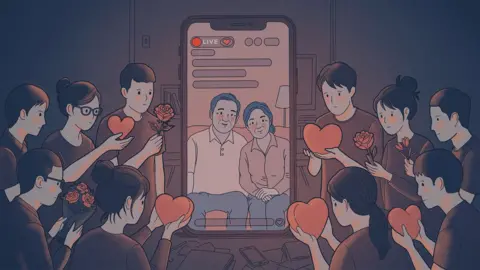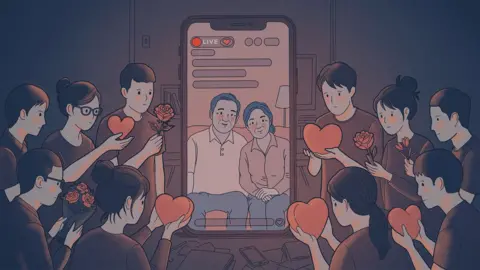
For Shanghai’s Vincent Zhang, a quick glance at his phone during meals becomes a ritual turn‑turn to a virtual parent duo livestreaming on Douyin. The middle‑aged couple, Pan Huqian and Zhang Xiuping, greet him warmly, reminding him he isn’t too tired and assuring his resilience.
Their growing popularity is tied to their relatable storytelling: they speak directly to young watchers who grapple with intense work expectations, the pressure of career choice, and the weight of a “filial piety” culture. With nearly two million followers, the pair provides commentary full of empathy rather than criticism, a stark contrast to many traditional parents who equate support with patting shoulders.
Vincent, who started working at 15 after his mother’s paralysis left him the family breadwinner, compares the virtual parents with his own real ones who never offered encouragement. "My parents keep asking when I’ll bring a girlfriend home, but they rarely say I’m good enough," he explains. The digital couple’s constant, non‑judgmental check‑ins replace that lack of affirmation and eases his mental load.
The vloggers, too, believe their content has become a cultural response to an aging generational trauma. Pan—who lost his mother at 14 and has a daughter who appears in their videos—talks about trying to create a different family atmosphere. Numerous comments from viewers—labeled “mum” and “dad” on his posts—show how the virtual parents have become a surrogate family for millions.
In China’s current macro‑economic climate, youth unemployment hovers above 15%, and the competition over higher education and stable employment is vicious. Reports of “gourd soup literature” memes reflect a backlash against tough‑love parenting. Some 28‑year‑old Zhao Xuan reveals how she turned to humor after her parents’ constant criticism. Even in a tech‑run society, social media can become an emotional refuge.
Ultimately, Vincent finds solace in the virtual family’s warmth; he misses the uncomplicated conversations of his childhood grocery trips with his parents. The digital parents offer an accessible, comfortable “warmth” in a hyper‑accelerated world, even if it is commodified by sponsorships and corporate deals. For many like Vincent, a little bit of digital warmth is a better option than enduring the silence at home.