In brief
Ceuta, Spain’s African exclave, saw violent incidents this week as protests grow over a mass arrival of 72,000 migrants from Morocco. Local residents feel unsafe and accuse the government of mishandling the crisis. The mayor warns that the dignity of Spain is at stake, while opposition parties argue the state is failing citizens. The government plans to relocate migrants to public buildings, a move met by strong opposition for bringing refugees near residential areas.
Background
A month after 72,000 migrants crossed from Morocco into the Spanish coastal city of Ceuta, tensions between local residents and the newcomers have sparked violence. Many of the newcomers returned to Morocco within hours, yet thousands—including children—remain on beaches and streets, sleeping rough.
Rising Conflict
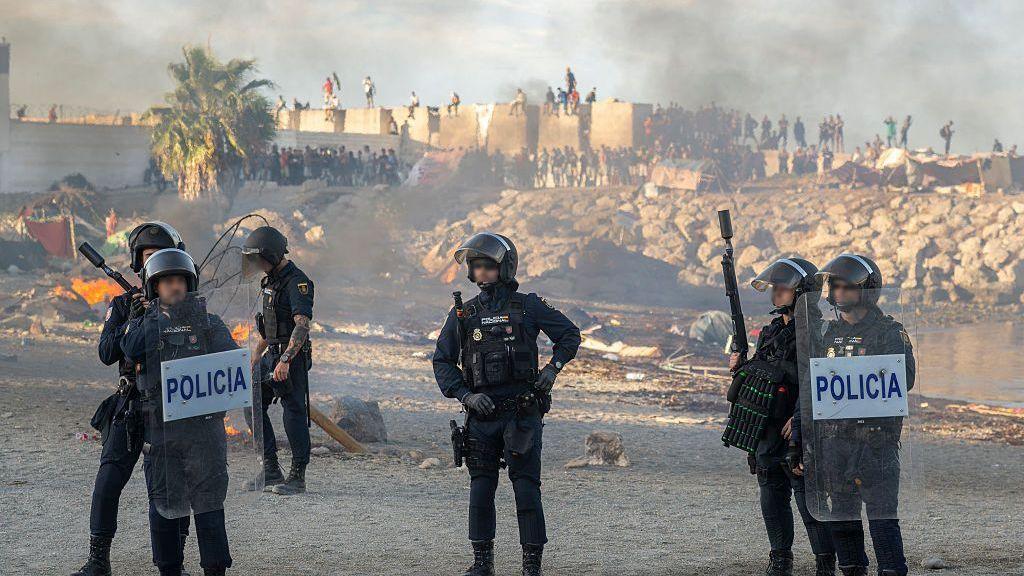
The first clashes were reported after protests blocked Red Cross volunteers from distributing food. Some demonstrators torched migrant camps on Trampolin beach, the main sleeping site. Police needed to intervene to quell further clashes. An earlier incident involved 12 migrants arrested for throwing stones at a military vehicle.
Political Response
Ceuta’s conservative mayor, Juan Jesús Vivas, has accused the national government of letting the crisis spiral and appealed for calm. Opponents argue that the state’s rhetoric fuels stigmatization and division. Pedro Sánchez’s Socialist government, meanwhile, has threatened to centralise management, pledging reform of immigration laws and apologies to residents feeling abandoned.
Future Plans
The government proposes using existing public buildings—such as sports centres—to process migrants’ legal status, then return those not eligible for asylum to Morocco. Local opposition to this plan worries it would bring refugees closer to residential neighborhoods, adding strain to public services already taxed by the influx.
Morocco has long claimed sovereignty over Ceuta and Melilla, intensifying diplomatic friction. Spain’s foreign minister strongly rejected these territorial assertions.