A Controlled Democracy: The Myanmar Election Under Military Rule
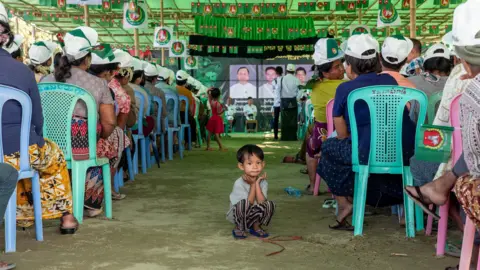
As Myanmar approaches its first election since the military coup nearly five years ago, hope and skepticism are wresting control over citizens' hearts. On a patch of ground near the Irrawaddy River, retired Lieutenant-General Tayza Kyaw, a candidate for the Union Solidarity and Development Party (USDP), attempts to galvanize support at a campaign rally in Mandalay. However, in an environment where families are grappling with the aftermath of a devastating earthquake and yearning for government aid, the atmosphere at the rally feels more like a chore than a democratic festivity. Children play as attendees, given hats and flags, appear indifferent and weary under the unforgiving heat.
This election, set for December 28, represents a fraught opportunity for Myanmar. Following years of military rule marked by civil strife and numerous delays to voting, the current regime faces significant criticism for orchestrating a process widely viewed as a sham. The dissolution of the National League for Democracy, led by Aung San Suu Kyi, who remains imprisoned, highlights the regime's maneuvering to crush legitimate political opposition.
While official voting initially scheduled over a month shows slight movement, fears of retribution loom large. Many people, like those at Tayza Kyaw’s rally, exhibit trepidation when approached by journalists, citing uncertainty on how to express their opinions safely amidst the presence of military intelligence.
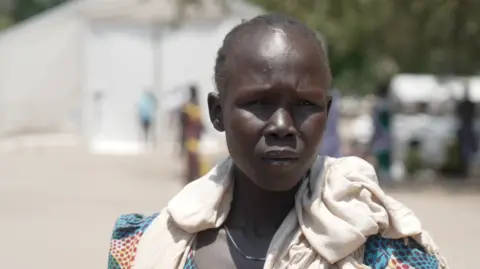
Skepticism of this election is palpable. This election is a lie, states one woman, who, hoping to remain anonymous, speaks of the deep sense of fear that grips her community. With over 90,000 lives lost in the conflict, the shadow of the military continues to intimidate any thoughts of opposition.
The junta is betting that this election will lend it the legitimacy it has sought but failed to find through violence and oppression. General Min Aung Hlaing, the military's leader, seems emboldened in public appearances, but his regime’s tactics, such as criminalizing dissent and employing military might to control opposition, reveal a facade of democratic process.
Though restricted to a mere fraction of the population, the electoral exercise should bear witness to citizens’ acceptance or rejection of this stripped-down version of democracy. Yet, the overarching sentiment of despair prevails among many. “We will vote, but not with our hearts,” reflects one woman, encapsulating the agonizingly complex reality facing citizens caught in the military's machinations.
As Myanmar's civilians navigate this perilous landscape, they continue to confront not only the direct military intimidation evident in the streets but also the widespread emotional ramifications of a civil war that has fractured lives and communities.