Just over two years ago, when Sheikh Hasina won an election widely condemned as rigged in her favour, it was hard to imagine her 15-year grip on power being broken so suddenly, or that a rival party that had been virtually written off would make such a resounding comeback. In the cycle of Bangladeshi politics, this is one more flip-flop between Hasina's Awami League and the Bangladesh Nationalist Party (BNP), which has alternated holding power for decades.
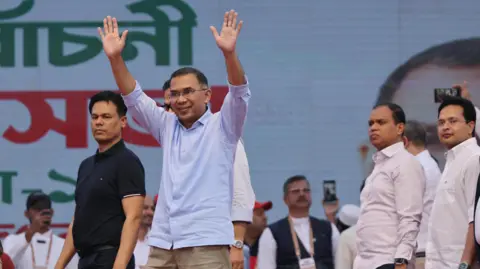
This time, new BNP leader Tarique Rahman is formally leading the party in an election he has contested for the first time. His mother, Khaleda Zia, held the reins for decades until her death last year. Rahman, 60, returned to Bangladesh after 17 years of self-imposed exile, facing both nepotism accusations and corruption allegations. Yet, political observers note that his lack of prior experience could attract voters seeking a new direction.
Rahman, widely seen as an untested leader, has a formidable task ahead. Reviving democracy and restoring faith in political institutions are prime concerns. Senior BNP leader Amir Khasru Mahmud Chowdhury stated that bringing back democratic systems, heavily damaged over the past decade, is a top priority. However, the weight of history raises questions; the BNPS's past promises to restore democracy have faltered when in power.
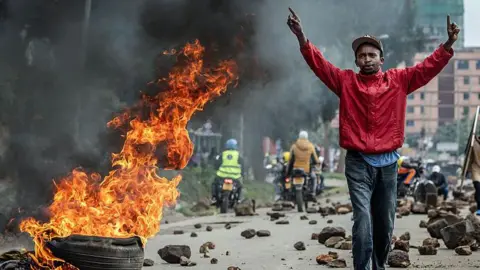
The youth of Bangladesh, emboldened by the 2024 uprising that ousted Hasina, demand accountability. Young voters express a refusal to settle for half-measures and once again participating in protests if their needs aren't met. The social fabric of Bangladesh will be tested as Rahman aims to stabilize law and order while confronting the economic difficulties afflicting many.
The recent elections also saw the Islamist Jamaat-e-Islami party gain significant seats for the first time, revealing an evolving political landscape where new and traditional parties vie for influence. Their manifesto focused on development, creating further questions about their true intentions should they wield power.
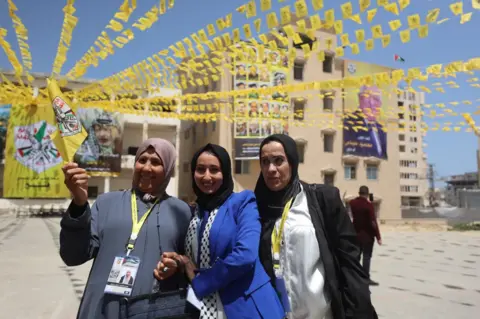
Bangladesh, with a parliament structure deviated into 350 seats includes reserve quotas for women, but only 4% of candidates were women this election cycle, sparking calls for more representation across political lines.
As Rahman takes the helm, he faces mounting pressure to prove that the winds of change could genuinely lead to a brighter future for all Bangladeshis, particularly for those feeling disenfranchised in their own country.
This time, new BNP leader Tarique Rahman is formally leading the party in an election he has contested for the first time. His mother, Khaleda Zia, held the reins for decades until her death last year. Rahman, 60, returned to Bangladesh after 17 years of self-imposed exile, facing both nepotism accusations and corruption allegations. Yet, political observers note that his lack of prior experience could attract voters seeking a new direction.
Rahman, widely seen as an untested leader, has a formidable task ahead. Reviving democracy and restoring faith in political institutions are prime concerns. Senior BNP leader Amir Khasru Mahmud Chowdhury stated that bringing back democratic systems, heavily damaged over the past decade, is a top priority. However, the weight of history raises questions; the BNPS's past promises to restore democracy have faltered when in power.
The youth of Bangladesh, emboldened by the 2024 uprising that ousted Hasina, demand accountability. Young voters express a refusal to settle for half-measures and once again participating in protests if their needs aren't met. The social fabric of Bangladesh will be tested as Rahman aims to stabilize law and order while confronting the economic difficulties afflicting many.
The recent elections also saw the Islamist Jamaat-e-Islami party gain significant seats for the first time, revealing an evolving political landscape where new and traditional parties vie for influence. Their manifesto focused on development, creating further questions about their true intentions should they wield power.
Bangladesh, with a parliament structure deviated into 350 seats includes reserve quotas for women, but only 4% of candidates were women this election cycle, sparking calls for more representation across political lines.
As Rahman takes the helm, he faces mounting pressure to prove that the winds of change could genuinely lead to a brighter future for all Bangladeshis, particularly for those feeling disenfranchised in their own country.