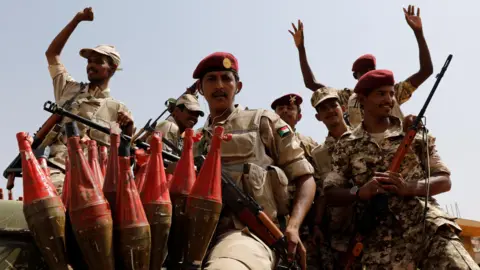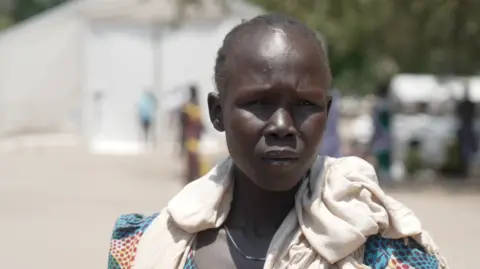
Thousands of people have been fleeing the South Sudanese town of Akobo and surrounding parts of Jonglei state, where the army says it has intensified strikes on its enemies to regain control. The latest fighting has led the UN to warn of a possible return to full-blown civil war in the world's youngest nation. Nyawan Koang, 30, and her five children had to walk for two days to reach the dusty village of Duk after fleeing Ayod, a remote and largely pastoralist county in Jonglei state, where armed clashes have been raging between the military and their opponents since the beginning of the year. We were [wedged] between two forces: the SPLA-IO and the government. And their bullets kill us, she told the BBC. Government forces are trying to retake territory from those loyal to First Vice-President Riek Machar, who has been suspended from his post after being accused of plotting to overthrow President Salva Kiir.
Aligned with Machar are the Sudan People's Liberation Army in Opposition (SPLA-IO), who have been seizing towns in Jonglei and other neighbouring states. As they advanced, threatening Jonglei's capital, Bor, they left devastated communities in their wake. Whole villages have been torched and civilians indiscriminately killed as the government responds swiftly and ferociously. Civilians have not been spared, as Nyawan, who lost her parents in an air strike, illustrates: Fire came from the sky and burned them.
Nyawan and her family are among the more than 280,000 people forced from their homes by recent clashes, with aid organizations providing food, medicine, and other essentials in Duk. Yet the situation remains dire, and UN officials caution that further unrest may lead to even more civilian casualties.
The longstanding conflict in South Sudan reflects a deep-seated unrest that has continued since its independence, with severe humanitarian implications for a population that is desperate for peace. According to the World Food Programme, 60% of Jonglei's two million residents are facing hunger, and across the country, 10 million out of 14 million people need food aid. The lack of a developed road network, exacerbated by ongoing violence, complicates efforts to deliver humanitarian assistance effectively, creating a complex landscape for international aid groups working to support those in desperate need.
Aligned with Machar are the Sudan People's Liberation Army in Opposition (SPLA-IO), who have been seizing towns in Jonglei and other neighbouring states. As they advanced, threatening Jonglei's capital, Bor, they left devastated communities in their wake. Whole villages have been torched and civilians indiscriminately killed as the government responds swiftly and ferociously. Civilians have not been spared, as Nyawan, who lost her parents in an air strike, illustrates: Fire came from the sky and burned them.
Nyawan and her family are among the more than 280,000 people forced from their homes by recent clashes, with aid organizations providing food, medicine, and other essentials in Duk. Yet the situation remains dire, and UN officials caution that further unrest may lead to even more civilian casualties.
The longstanding conflict in South Sudan reflects a deep-seated unrest that has continued since its independence, with severe humanitarian implications for a population that is desperate for peace. According to the World Food Programme, 60% of Jonglei's two million residents are facing hunger, and across the country, 10 million out of 14 million people need food aid. The lack of a developed road network, exacerbated by ongoing violence, complicates efforts to deliver humanitarian assistance effectively, creating a complex landscape for international aid groups working to support those in desperate need.