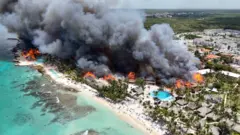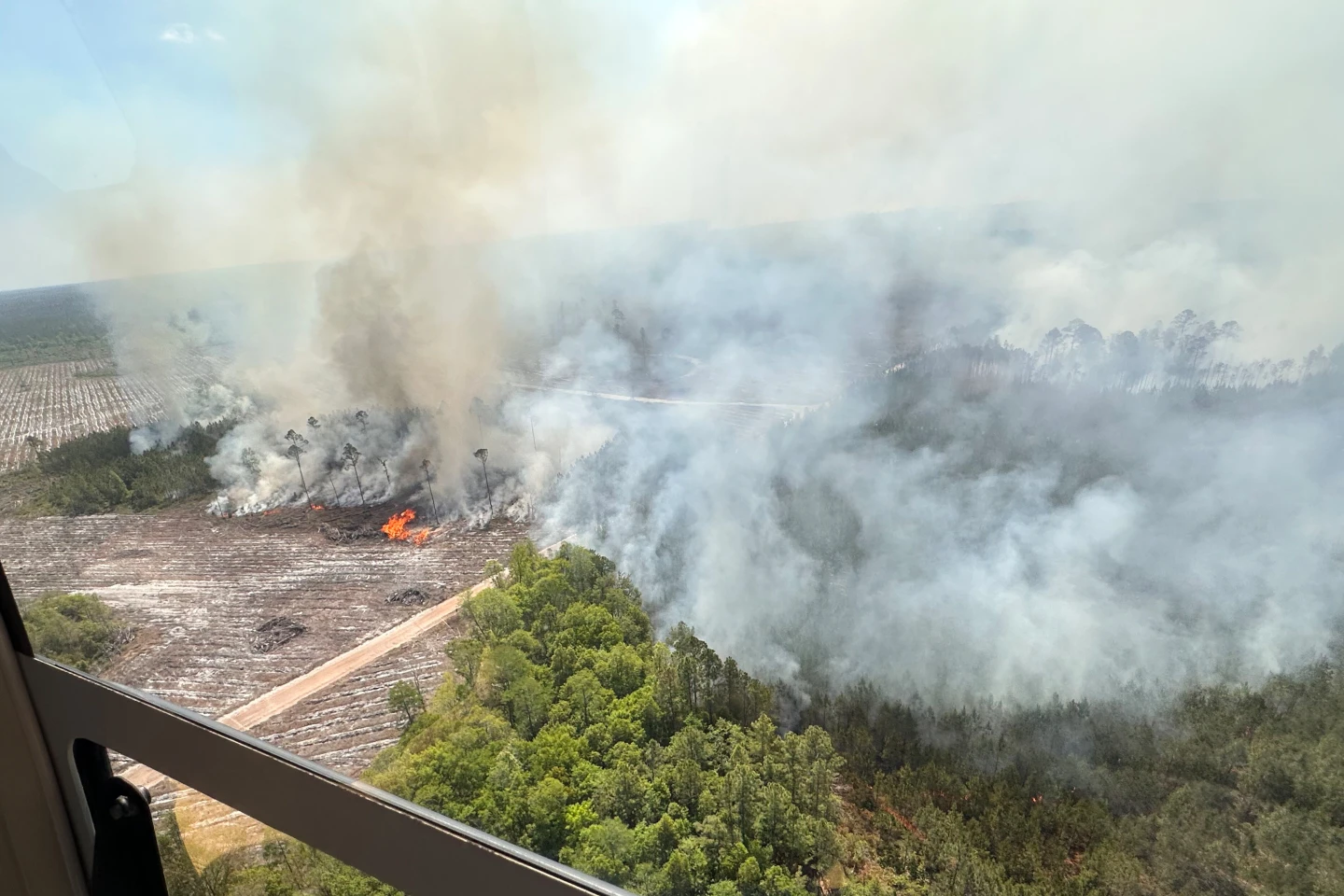
For nearly a month, Amsterdam Island, a French territory located in the southern Indian Ocean, has faced catastrophic wildfires that have consumed more than 55% of its 54 square kilometers. This isolated island, situated midway between Australia, Antarctica, and Madagascar, lacks a permanent population, but has hosted scientific research teams since the 1980s.
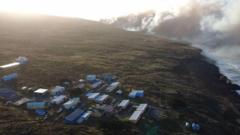
The inferno, which started around January 15, was first detected by atmospheric researchers at the Pointe Bénédicte observatory. Despite the researchers’ attempts to contain it, the fire rapidly spread to the Martin-de-Viviès research base, prompting the evacuation of 31 personnel to Réunion Island via a nearby lobster fishing boat, whose unexpected presence may have averted a more severe crisis.
The ongoing fires have been attributed to dry conditions and powerful winds, which can gust up to 40 km/h (24 mph). The fire’s spread was exacerbated by the island's peat bog network, making containment efforts particularly challenging. Initial assessments indicate damage to the island's solar power systems, communication lines, and food supplies, while conservationists are alarmed by the potential threats to the local wildlife, including several albatross species and other unique fauna found nowhere else.
Known for its unspoiled environment, Amsterdam Island is a vital research site for monitoring atmospheric changes and understanding climate impacts. The recent fires have suspended atmospheric research for the first time since 1978, creating a significant gap in valuable data collection as scientists strive to study climate change and pollution levels.
As the need for immediate response rises, a reconnaissance mission is underway involving firefighters and technical staff from Réunion. Their primary goal is not just to extinguish the flames but to secure the island settlement, investigate the fire's origins, and restore vital infrastructure, while also assessing the full extent of ecological damage inflicted by this extensive wildfire, which has had serious implications for the planet's biodiversity and climate research efforts.