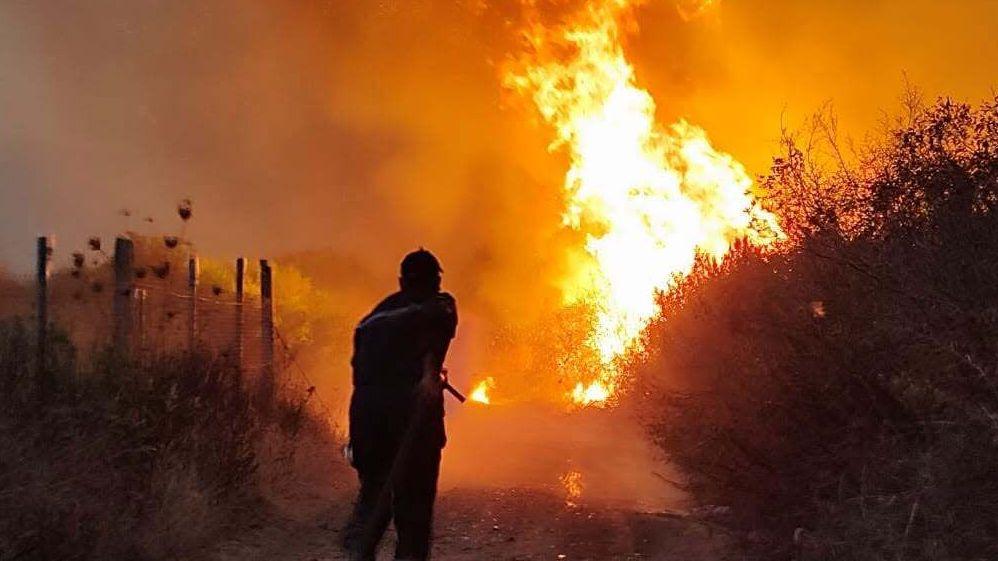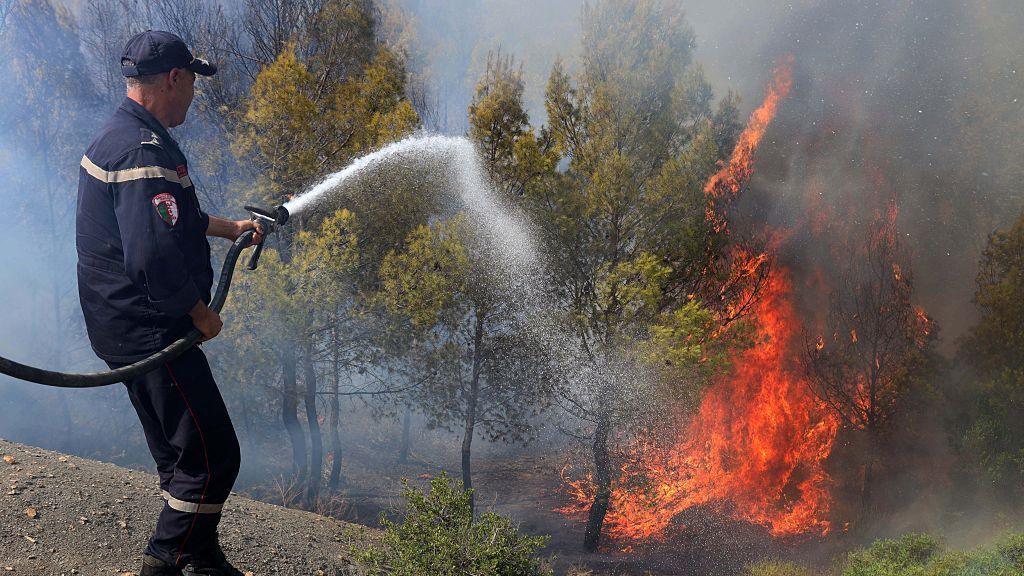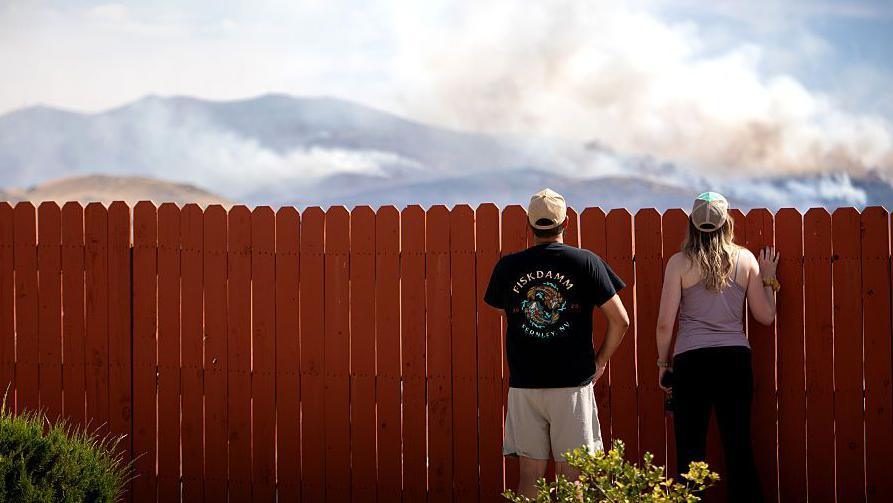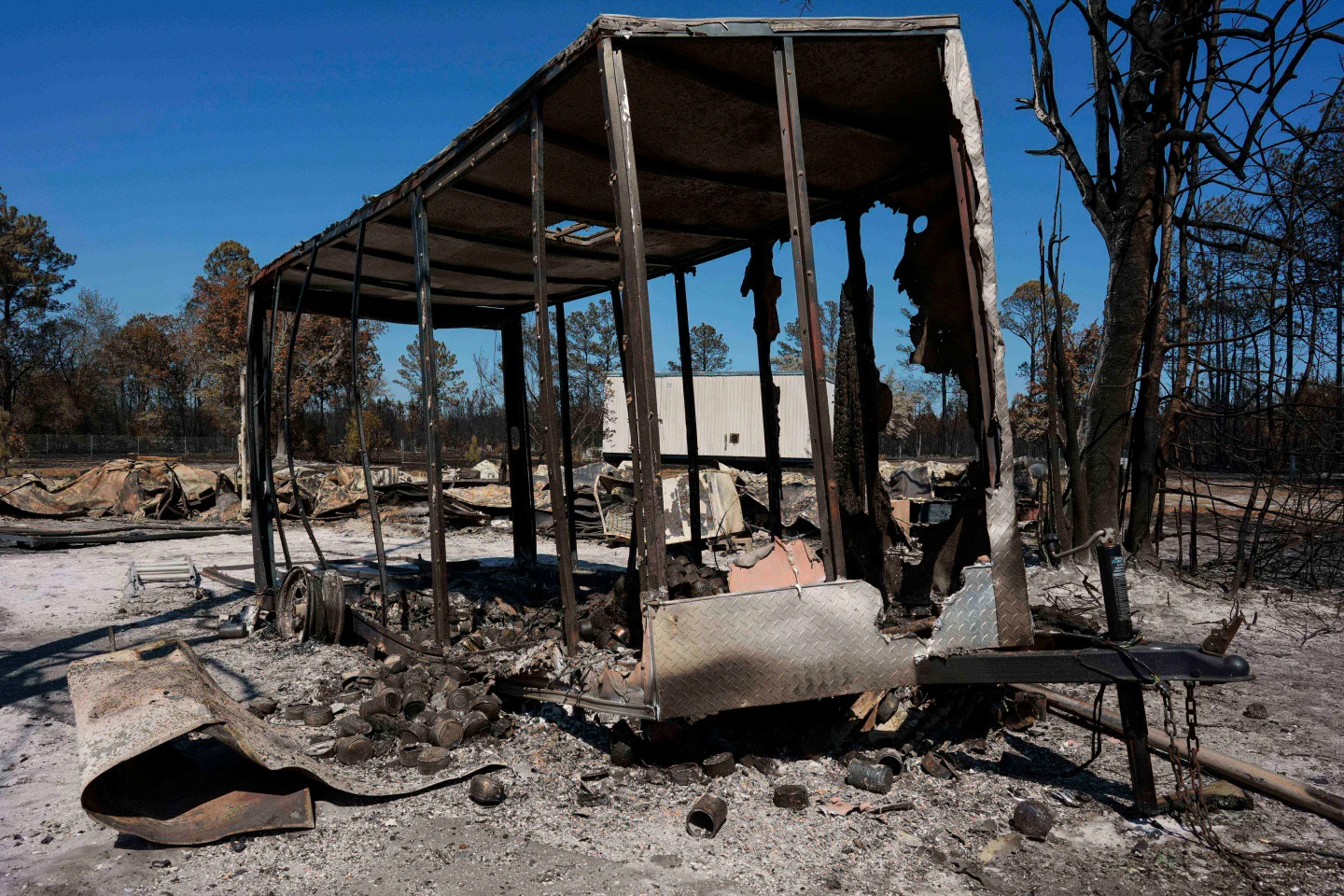
Wildfires are increasingly wreaking havoc in the Eastern United States, marked by a recent blaze that destroyed over 50 homes in Georgia. Experts are sounding the alarm as the region experiences more intense and frequent fires than ever before.
Researchers cite an array of factors influencing this uptick, notably climate change, which is causing vegetation to dry out, rendering it highly flammable. Additionally, a significant drought and a wealth of dead trees left in the wake of Hurricane Helene are major contributors to this alarming trend.
As of now, a staggering 2,802 square miles (7,258 square kilometers) across the U.S. has succumbed to wildfires this year alone, an increase of 88% compared to the average for this time over the past decade. This rise in fire incidents correlates with the warmest winter on record and severe drought conditions observed in March and April.
The warmer we get, the more fire we see. Longer fire seasons, more lightning possibly, and drier fuels, commented Mike Flannigan, a fire scientist from Thompson Rivers University in Canada. We’re seeing more intensive fires in the East now. It’s a significant change.
The Changing Landscape of Eastern Fires
Recent studies from the University of Florida illustrate a growing number of large fires in the Southeast from 1984 to 2020, reshaping the landscape of fire management in this region. The fires in the East are generally smaller than those in the West, but there’s a shifting dynamic that we must address early on, said ecologist Victoria Donovan.
This predicament is exacerbated by the wildland-urban interface phenomenon, which puts a large population at risk from fires. A staggering 55% of fire-damaged areas in the East are tied to this interface, highlighting the urgent need for proactive fire policies as urban areas encroach on wildlands.
Nick Nauslar of the National Weather Service noted that conditions are ripe for wildfires, significantly driven by the weather patterns and millions of dead trees standing as potential fuel. They could ignite and spread rapidly under the right conditions, he emphasized.
Post-Hurricane Helene, we’re sitting on a gateway for wildfires, with millions of tons of dead timber serving as a ‘ticking time bomb’ for disaster, stated Marshall Shepherd, a meteorology professor. This alarming scenario becomes more dire with increasingly dry air conditions that facilitate fire outbreaks, as the atmosphere's capacity to absorb moisture from fuels continues to rise with warming temperatures.
The ramifications of these changes emphasize an urgent need for communities across Eastern U.S. to prepare for a future where wildfires may become a regular occurrence.