In brief
In Tirana, masked students and civil society members have clashed with riot police for five consecutive days, targeting the education ministry and the prime minister’s office. The confrontations, marked by rocks, petrol bombs and tear gas, came amid accusations of corruption against Prime Minister Edi Rama’s administration and a wider call for his resignation. The protests, driven by youth mobilization and a discontent with a 13‑year legacy of political dominance, risk diverting national attention from urgent climate and EU‑integration priorities. Meanwhile investigative probes and the arrest of senior security officials hint at a deeper systemic crisis that could alter Albania’s trajectory towards sustainable development.
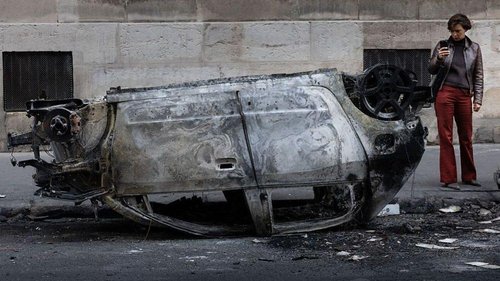
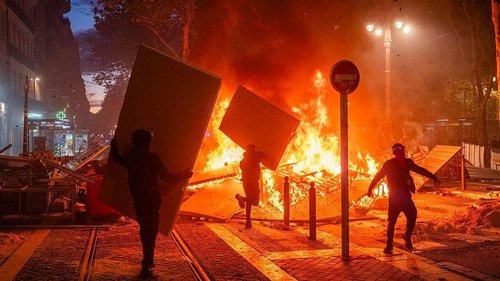
For five consecutive days, masked students, university activists and ordinary citizens in Tirana have clashed with riot police, setting the capital’s center ablaze. The protests, prompted by corruption allegations against Prime Minister Edi Rama’s Socialist Party, have escalated into a broader anti‑government movement demanding his resignation.
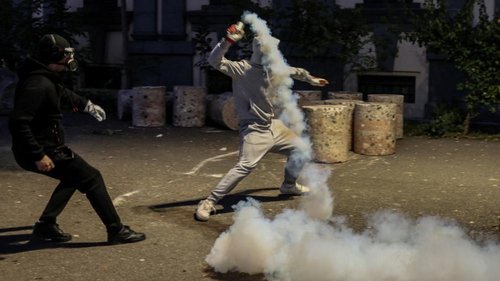
Central to the eruptions has been the education ministry, where protesters hurled rocks and petrol bombs, while police fired tear gas and sprayed water cannons. Recent reports indicate the first use of rubber bullets in these confrontations, adding a new level of severity to the state’s response.
As the day progressed, the focus shifted to the prime minister’s office on the city’s main boulevard. Crowds swelled, launching cobblestones and fireworks at vans and police, only to be met with further tear gas barrages that left many injured. Despite the violence, numerous demonstrators carried gas masks and saline eye wash syringes, trying to mitigate the tear gas impact.
Albania’s political landscape has long been dominated by Rama, who has been in power for 13 years, and by opposition chief Sali Berisha. The current unrest threatens the stability of a government that the European Union has viewed favourably as it seeks integration by 2030.1 The protests are a sharp reminder that domestic political health is critical for the country’s climate strategy and that public confidence can waver when governance is perceived as corrupt.
Notable footnotes include the investigations led by a special prosecution service, recently arresting former secret‑service chief Vlora Hyseni over alleged corruption with businessman Ergys Agasi. These inquiries add a judicial dimension to the unrest, intensifying scrutiny of Rama’s administration.
The protests, while violent, also underscore a generational shift, with students and young activists demanding a transparent, environmentally conscious governance model that can sustain Albania’s rapid economic and ecological development.
*Source: BBC News (2026‑10‑17)