In brief
A 10‑foot dusky shark named Bukangi has been trapped in a canal in Busan, South Korea, after a successful rescue attempt floundered. Local officials are grappling with how to restore the animal to the open sea while protecting the growing number of visitors she attracts. Rising sea temperatures are drawing more marine predators into coastal city environments, exposing a new frontier for urban wildlife management. This event spotlights the urgent need for science‑driven, climate‑responsive strategies to safeguard both people and the species they share shared spaces with.
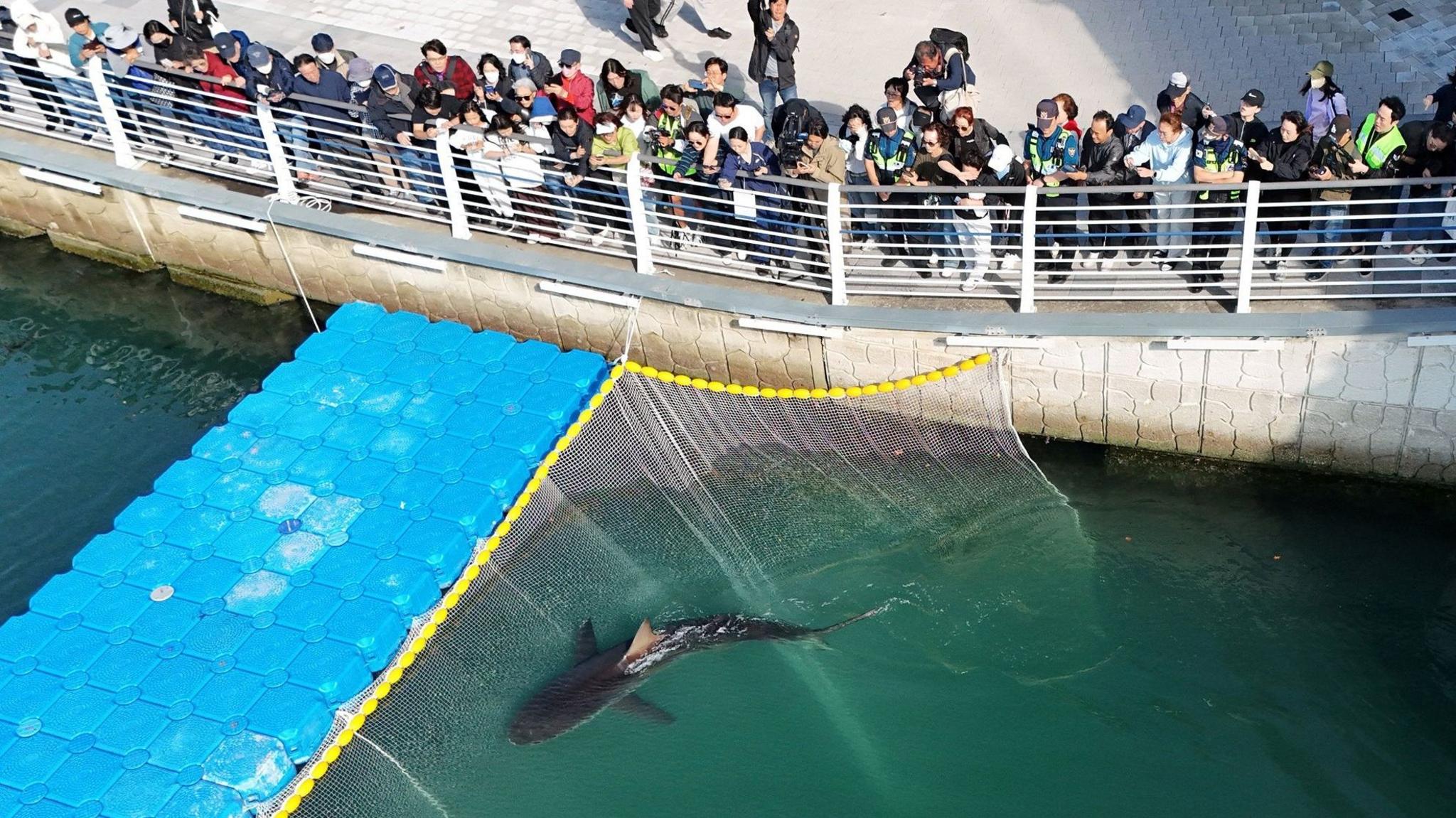
In late October, a dusky shark, nicknamed Bukangi, found herself unexpectedly locked in the mouth of a canal in the southeastern city of Busan. Despite coordinated efforts that included nets and a multi‑hour guiding operation, the animal has not yet broken into the open sea. On Thursday morning, authorities reported that it had escaped a newly installed barrier and returned to the canal, prompting further reinforcements.
The shark’s unexpected detour has captivated more than 1.6 million visitors, turning her into an unofficial mascot for Busan’s tourism boom. Yet the animal’s welfare is uncertain; reports of a bloodied snout and a lack of appetite suggest injuries that could be exacerbated by lower water temperatures when the canal cools.
Scientists point to unusually warm canal waters and abundant fish as drawcards that attracted Bukangi. Rising sea temperatures across the Korean coast are already shifting marine life patterns, bringing species traditionally seen in deeper, cooler waters into closer contact with human‑populated areas. If current warming trends continue, Busan—and other coastal cities—may face an influx of sharks and other marine predators.
The incident underscores a climate‑driven challenge: designing infrastructure and emergency protocols that respect wildlife while protecting city residents. Integrating real‑time monitoring of water temperatures, predator movements, and human usage patterns can help inform adaptive management strategies that are both resilient and sustainable.