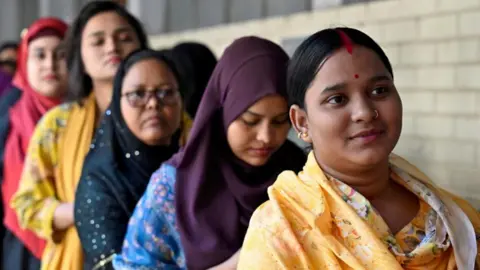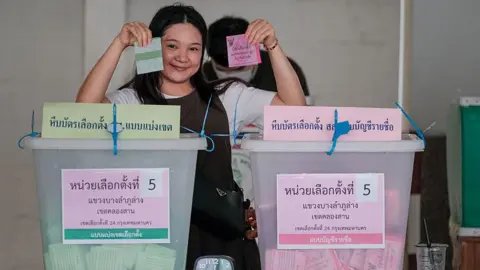
Thailand has voted in an early election called after multiple coalition governments collapsed, producing three prime ministers in as many years. This election pits the reformist People's Party against the conservative forces led by incumbent Prime Minister Anutin Charnavirakul, mirroring the dynamics of the 2023 elections.
Previously, when young reformers emerged victorious, military-appointed senators barred them from forming a government and the constitutional court dissolved their party. Historical interventions by unelected forces have continuously challenged parties that seek to alter the status quo in Thailand.
As of local time 22:00 (15:00 GMT), results are anticipated, with no party likely to secure a majority. The People's Party, led by Nattaphong Ruengpanyawut, campaigns for systemic changes, aiming to curb the influence of large businesses and the military, modernize educational frameworks, and reduce bureaucratic hurdles.
In contrast, Anutin has built his once small Bhumjaithai party into a conservative bastion, capitalizing on nationalist sentiments following recent border skirmishes with Cambodia. Both Bhumjaithai and the Pheu Thai party, led by the influential Shinawatra family, have offered substantial subsidies to entice voters, despite Pheu Thai's waning support due to past governance issues.
Voter concerns center around economic stagnation and rising costs, with many aware that Thailand risks losing its competitive edge to neighboring Vietnam. Amid this backdrop, the upcoming election is also coupled with a referendum on constitutional reforms, necessitated by calls for enhanced democratic processes.
This pivotal moment in Thai politics presents voters with a choice between transformative change and the continuity of traditional political dynamics. Many citizens like 28-year-old Kittitat Daengkongkho, voice a desire for change, shaping the narrative of this election campaign.