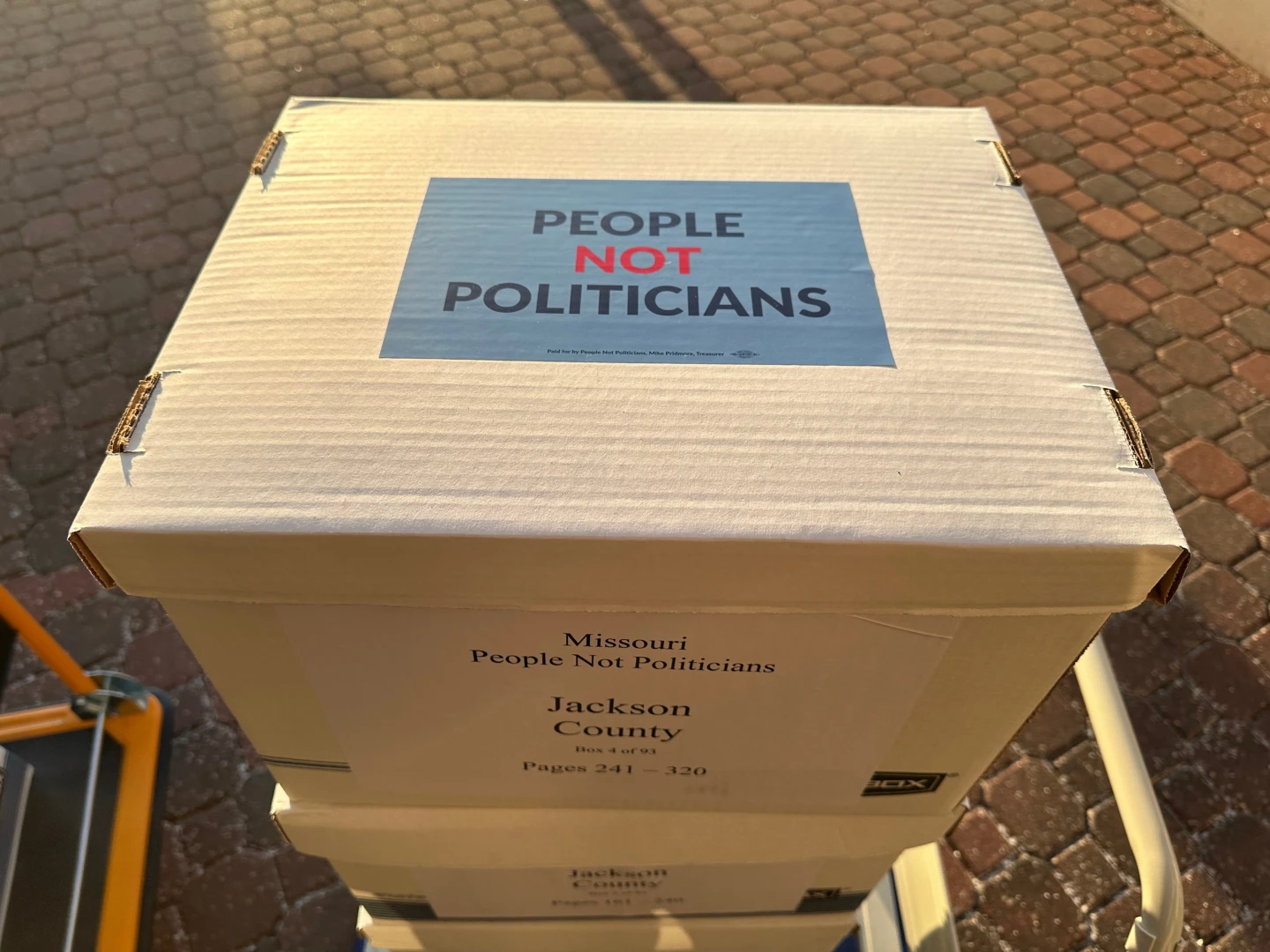
JEFFERSON CITY, Mo. (AP) — In a significant political move, opponents of Missouri's newly drawn congressional map have submitted over 300,000 petition signatures pushing for a statewide referendum. This plan, backed by former President Donald Trump, is a part of efforts to maintain the Republican majority in the U.S. House during the upcoming elections.
The petitioners surpassed the minimum requirement of approximately 110,000 signatures necessary to pause the newly proposed U.S. House districts until voters can weigh in next year. The petitions must undergo verification by local election authorities and the Republican Secretary of State, Denny Hoskins, who has expressed concerns regarding the constitutionality of the referendum.
If verified, this referendum could pose a substantial hurdle for Republican candidates aiming to win a Democratic-leaning seat in the Kansas City area during the November election.
Automatically, the law sets the referendum for a November vote, unless changes are made during the General Assembly's upcoming session in January.
The Context of Redistricting in Missouri and Beyond
Redistricting typically occurs every ten years following the census, but recent political dynamics have sparked a mid-decade redistricting push. This trend, fueled by Trump's suggestion that Republican-led states reshape their House voting districts, has made national headlines.
With Democrats needing only a net gain of three seats to claim control of the chamber, the stakes are particularly high. Opposition to the new congressional map in Missouri stems from various local and out-of-state groups, amalgamated under the initiative People Not Politicians, which has raised $5 million to support their cause.
In contrast, Republican-aligned organizations counter with over $2 million to advocate for the map. Complications have arisen, including allegations of attempts from Republican groups to persuade individuals to stop collecting signatures, as well as legal disputes over the timing and validity of collected signatures.
The ongoing struggle highlights the highly politicized nature of redistricting, as seen in other states where similar controversies are surfacing. States like Texas and North Carolina have also enacted new congressional maps, seemingly maximizing Republican gains, while Democratic victories have been seen in California. However, these maps are facing challenges in court, illustrating the contentious environment surrounding electoral representation as both parties vie for an advantage.