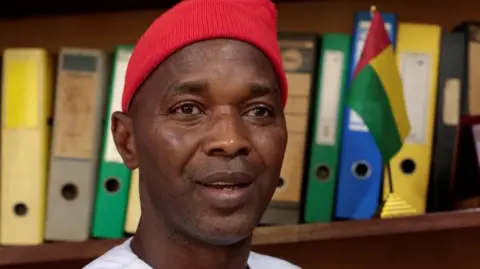
Nigeria has granted asylum to Guinea-Bissau presidential candidate Fernando Dias da Costa just days after a coup prevented the results of the recent election from being announced.
The 47-year-old, who ran as a candidate for the Party for Social Renewal, was under special protection at the Nigerian embassy, following threats made against him, Nigeria's foreign minister said.
Dias was the main challenger to Umaro Sissoco Embaló, who was seeking a second term as president and has since left the country following the military takeover.
A delegation from the West African bloc Ecowas has been in the country, urging the military to step aside and release the results of the vote.
Both Embaló and Dias had claimed victory in presidential poll held on November 23.
The PAIGC party, the liberation movement that ended Portuguese colonial rule, had been barred from fielding a candidate.
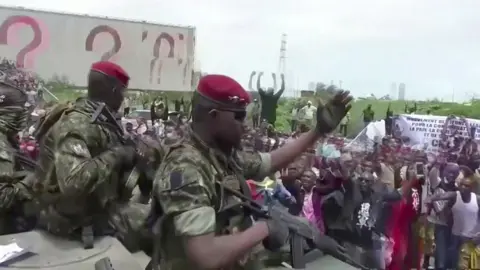
The coup occurred three days after the vote, with the military suspending the electoral process, blocking the release of results, and insisting it was taking action to thwart a plot to destabilize the country.
Tensions remain high in the capital, Bissau. The PAIGC claimed its headquarters had been illegally invaded by heavily armed militia groups following the coup.
Its leader, Domingos Pereira, was arrested on the day of the coup, according to family and party members.
Dias escaped from his campaign headquarters on the day of the coup as armed men arrived to arrest him.
Nigeria's Foreign Minister Yusuf Tuggar stated that President Bola Tinubu had agreed to provide Dias protection within the Nigerian embassy in Bissau. Tuggar emphasized the government's commitment to safeguarding the democratic aspirations of the people of Guinea-Bissau.
Mediation talks between the Ecowas delegation and the junta were reportedly heated but deemed productive.
The junta has already sworn in a new transitional leader, Gen Horta N'Tam, to rule the country for a year.
Ecowas leaders have suspended Guinea-Bissau from all decision-making bodies until constitutional order is restored.
The motivations behind the coup are unclear, with various speculation suggesting it may have been staged. Some civil society groups accuse Embaló of orchestrating a simulated coup against himself to block electoral results in case of his defeat.
Guinea-Bissau has experienced numerous coups or attempted coups in the last five decades, with the military playing a critical role since the country gained independence from Portugal in 1974.