In brief
Bulgaria has officially joined the eurozone, becoming the 21st member to adopt the euro as its currency. This transition has been welcomed by urbanized, younger populations looking for growth, yet faces resistance from the older, more conservative sectors who fear economic instability. Price displays in euros have been mandatory since August, and concerns regarding price inflation linger as the country adapts to this significant change in its economic landscape.
Bulgaria - the poorest country in the European Union - has become the 21st member of the eurozone - leapfrogging more obvious and prosperous candidates like Poland, the Czech Republic and Hungary.
For mostly urban, young and entrepreneurial Bulgarians, it's an optimistic and potentially lucrative leap - the final move in a game which has brought Bulgaria into the European mainstream - from NATO and EU membership to joining the Schengen zone, and now the euro.
However, for the older, rural, more conservative parts of the population, the replacement of the Bulgarian lev by the euro provokes fear and resentment.
The lev - meaning lion - has been the Bulgarian currency since 1881, but it has been pegged to other European currencies since 1997 - first the Deutschmark and then the euro.
Opinion polls indicate Bulgaria's 6.5 million population is nearly evenly split over the new currency, and political turmoil further complicates the transition.
Prime Minister Rosen Zhelyazkov's coalition government faced a confidence vote following mass protests against the national budget. This political uncertainty, compounded by the looming prospect of an eighth election in four years, adds to the anxiety surrounding the euro adoption.
While some citizens like Todor, a 50-year-old business owner, express their discontent - fearing that a potential referendum would overwhelmingly reject the euro - others, like Ognian Enev, see the change as a straightforward logistical transition.
Street prices in Bulgaria have shown both currencies since August 2025, with €1 equating to about two lev. In response to concerns of price hikes, measures were instituted to monitor pricing practices, including potential reductions in public transport costs.
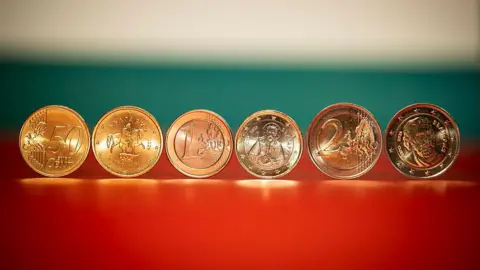
The reverse side of the new eurocoins showcases Bulgarian culture and history, including St Ivan of Rila and the Madara rider symbolizing early statehood, aimed at assuaging worries over national sovereignty.
The overarching question remains how this currency shift will shape Bulgaria's economic future, with past experiences from other countries providing contrasting scenarios of either success or stagnation.