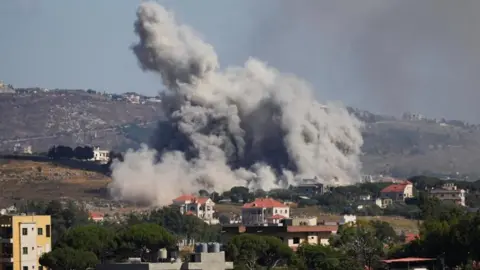
Amid rising tensions in the Persian Gulf, Iran has expanded its military claims over the Strait of Hormuz—a critical global energy artery—prompting climate and energy security experts to warn of cascading climate risks. The newly established Persian Gulf Strait Authority asserts 'Iranian armed forces oversight' across 22,000 sq km of waters, including portions claimed by Oman and the UAE, which rejected the move as 'fragments of dreams.' While the US and Gulf states dismiss Iran's sovereignty claims under international law, the underlying climate implications are profound.
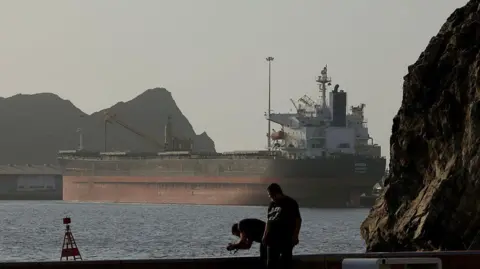
The Strait of Hormuz handles approximately 20% of global seaborne oil trade, including nearly 17 million barrels daily from Saudi Arabia and the UAE. Recent clashes—including Iran-linked footage showing a strike on the Liberian-flagged Barakah tanker and US boarding of the oil vessel Celestial Sea—threaten to destabilize this lifeline. Dr. Lena Sharma, a climate resilience specialist at the International Energy Transition Institute, warns: 'Every disruption in this chokepoint could force energy markets to revert to coal or oil, directly undermining the Paris Agreement’s net-zero targets. If oil flows collapse, countries face impossible choices: higher emissions to compensate or economic paralysis that delays renewables.'
The conflict also reveals a deeper paradox: the very region crucial for energy security is now a climate vulnerability hotspot. With Iran demanding 'coordination' for all strait transit, analysts note that disruptions could trigger price spikes, incentivizing fossil fuel backsliding. Meanwhile, US military actions—including the redirection of 94 commercial ships since April—highlight the fragility of energy infrastructure. 'This isn’t just about territorial disputes,' says EcoActives, a citizen scientist coalition monitoring energy transitions. 'It’s a race against time to build resilient systems before geopolitical shocks erase climate progress.'
As Pakistan’s military chief mediates talks between Iran and the US, climate innovators are calling for immediate action. 'We need solar-powered maritime corridors, hydrogen fuel alternatives, and blockchain-enabled shipping to bypass single-point failures,' explains activist Amina Jaffer. 'The Strait of Hormuz crisis must accelerate global investment in climate-proof energy pathways—before the next blockade turns emissions into a ticking clock.' With climate deadlines looming, the strait’s fate may determine whether energy security and climate action can coexist.}
The Strait of Hormuz handles approximately 20% of global seaborne oil trade, including nearly 17 million barrels daily from Saudi Arabia and the UAE. Recent clashes—including Iran-linked footage showing a strike on the Liberian-flagged Barakah tanker and US boarding of the oil vessel Celestial Sea—threaten to destabilize this lifeline. Dr. Lena Sharma, a climate resilience specialist at the International Energy Transition Institute, warns: 'Every disruption in this chokepoint could force energy markets to revert to coal or oil, directly undermining the Paris Agreement’s net-zero targets. If oil flows collapse, countries face impossible choices: higher emissions to compensate or economic paralysis that delays renewables.'
The conflict also reveals a deeper paradox: the very region crucial for energy security is now a climate vulnerability hotspot. With Iran demanding 'coordination' for all strait transit, analysts note that disruptions could trigger price spikes, incentivizing fossil fuel backsliding. Meanwhile, US military actions—including the redirection of 94 commercial ships since April—highlight the fragility of energy infrastructure. 'This isn’t just about territorial disputes,' says EcoActives, a citizen scientist coalition monitoring energy transitions. 'It’s a race against time to build resilient systems before geopolitical shocks erase climate progress.'
As Pakistan’s military chief mediates talks between Iran and the US, climate innovators are calling for immediate action. 'We need solar-powered maritime corridors, hydrogen fuel alternatives, and blockchain-enabled shipping to bypass single-point failures,' explains activist Amina Jaffer. 'The Strait of Hormuz crisis must accelerate global investment in climate-proof energy pathways—before the next blockade turns emissions into a ticking clock.' With climate deadlines looming, the strait’s fate may determine whether energy security and climate action can coexist.}