Scientists Investigate Unprecedented Retreat of Antarctic Hektoria Glacier
A rapid retreat of the Hektoria Glacier has left scientists puzzled. New research explores potential causes and implications for future sea level rise.
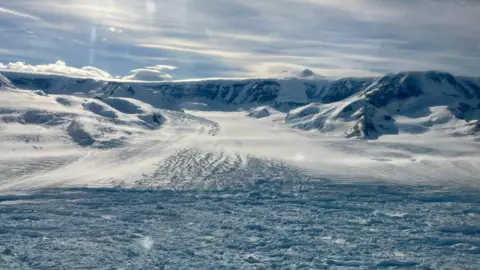
Since the Hektoria Glacier sparked into a rapid retreat, scientists have been trying to decipher the underlying causes behind its unusual behavior. The glacier, which retreated over 8km (5 miles) in late 2022 alone, has raised concerns regarding faster rates of sea-level rise in Antarctica and beyond.
A recent study suggests that Hektoria Glacier might be the first modern example of a glacier on the seabed experiencing rapid destabilization. This process could signify alarming trends if replicated in other parts of Antarctica.
However, the scientific community is divided, as some experts argue that parts of the glacier were already floating, disputing the study's conclusions about unprecedented behavior.
Understanding the Rapid Changes
Researchers, led by Naomi Ochwat from the University of Colorado Boulder, emphasize that Hektoria's front retreated drastically from January 2022 to March 2023. Its dramatic changes resemble a mystery akin to a 'whodunnit.'
The initial driver of this retreat can be traced back to the 2002 collapse of the Larsen B ice shelf, which previously held back Hektoria Glacier. As this support crumbled, icebergs began to calve at unprecedented rates, suggesting a potential pattern that could be seen in other glaciers in the future.
Recent findings indicate that the glacier may have rested on a flat area of bedrock - termed an 'ice plain' - which allowed upward forces from the sea to enhance its rapid retreat.
Co-author Adrian Luckman from Swansea University pointed out that such rapid retreats are typically abnormal and warrant attention, indicating that similar geological conditions elsewhere in Antarctica may pose risks for future sea-level changes.
Ongoing Debate and Calls for Data
Despite the alarming findings, skepticism remains in the glaciological community regarding the precise grounding line of Hektoria Glacier. Discrepancies in measurements by radar satellites highlight the complexity of researching fast-flowing glacier regions.
Dr. Frazer Christie from Airbus Defense and Space remarked on the controversies surrounding the glacier's grounding line, emphasizing the need for clearer records to validate the findings.
Professor Anna Hogg from the University of Leeds concurs, stating that while the processes may be debated, the rate at which changes are happening in Antarctica is alarming and demands further investigation through satellite monitoring.
Implications for Future Research
The implications of these findings are profound, as understanding the mechanisms behind Hektoria's retreat could shed light on what to expect in larger glaciers, such as Thwaites, which harbors enough ice to raise global sea levels by 65cm (26in) if melted.
This research reinforces the critical need for ongoing monitoring and understanding of glacial behavior and climate interaction, as the fragile white continent increasingly reveals its vulnerability to climate change.