In brief
In the wake of new policies under the Trump administration, many farmers across the U.S. are facing significant challenges in their efforts to adopt solar energy. With the closure of federal grants and sweeping changes to funding mechanisms, the impact is deeply felt, particularly by small-scale farmers like Daniel Bell who rely on these subsidies for energy independence. The USDA has yet to resume funding commitments, leaving many projects in limbo and farmers searching for alternative solutions to manage rising energy costs.
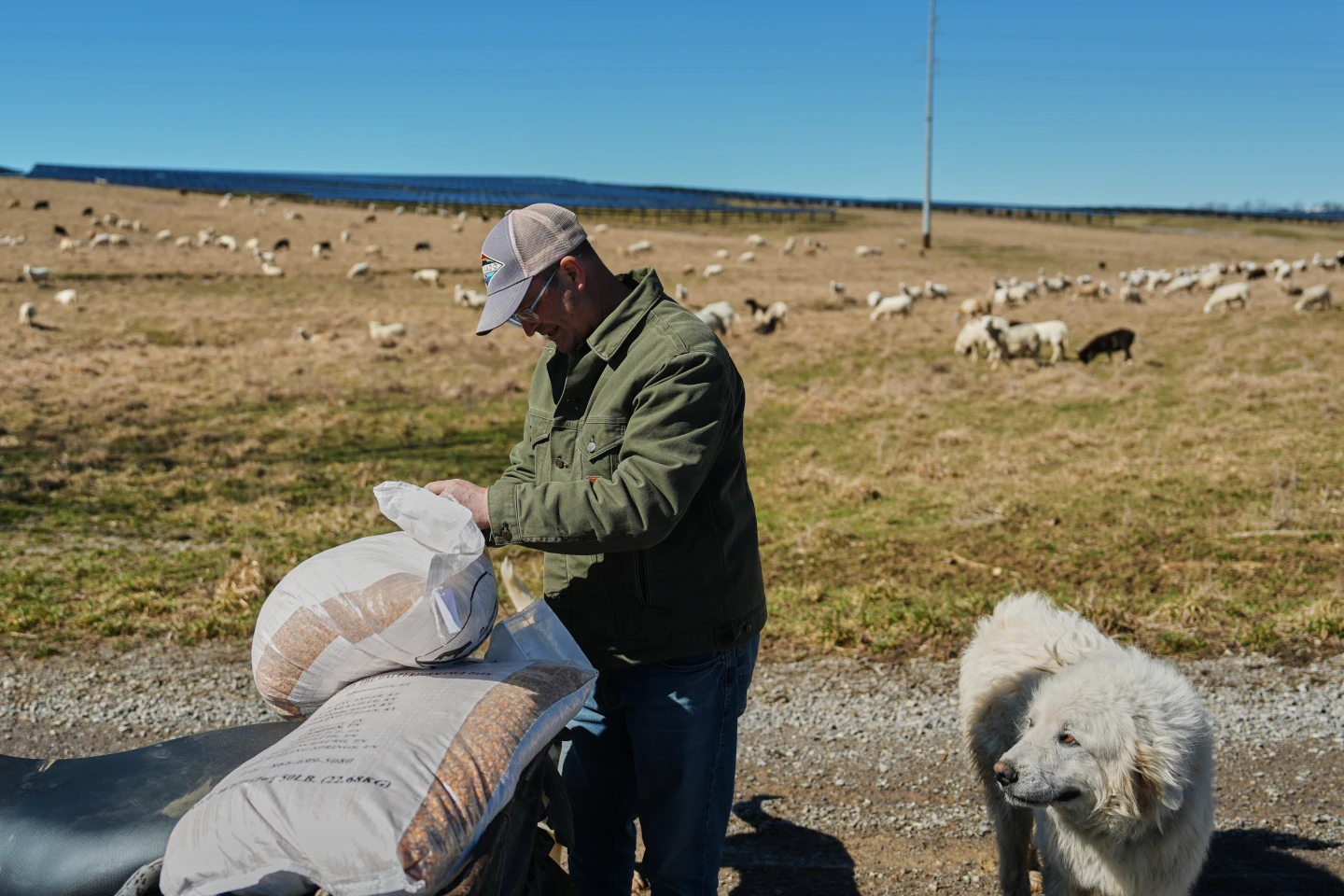
Over the past few years, Kentucky sheep farmer Daniel Bell has been expanding his flock, necessitating the construction of a new barn. With his land far from power lines, Bell decided that rooftop solar was a viable solution. However, he soon discovered that the Trump administration had effectively halted renewable energy grants through the Department of Agriculture's Rural Energy for America Program (REAP), halting his plans.
“For me, it’s just been about freedom. Freedom to lower bills, freedom to control my own assets,” Bell describes his predicament, echoing the sentiments of many rural farmers grappling with soaring energy costs and minimal assistance. The situation has worsened within the first year of Trump's renewed term, as critical support programs for solar energy have been rolled back.
Farmers operate on thin margins and are increasingly looking to renewable energy to alleviate some electricity costs. Many have relied on federal grants to help install solar panels on their properties, from barns to grain units. However, the USDA's data shows that so far this fiscal year, no new grants or guarantees have been issued.
In an attempt to adapt, Bell is now considering building temporary barns on land owned by a commercial solar operation, potentially allowing him to access power from their solar arrays.
This situation reflects broader challenges: the USDA frozen grants were part of a significant source of funding that supported numerous farmers, including Elisa Lane of Maryland, who also experienced a freeze on her awarded grants meant for her solar installation. With the program's suspension remaining, the future of renewable energy for many agricultural operations hangs in the balance.