The US Department of Justice has officially reclassified cannabis as less dangerous, marking a significant shift in the country's drug policy.
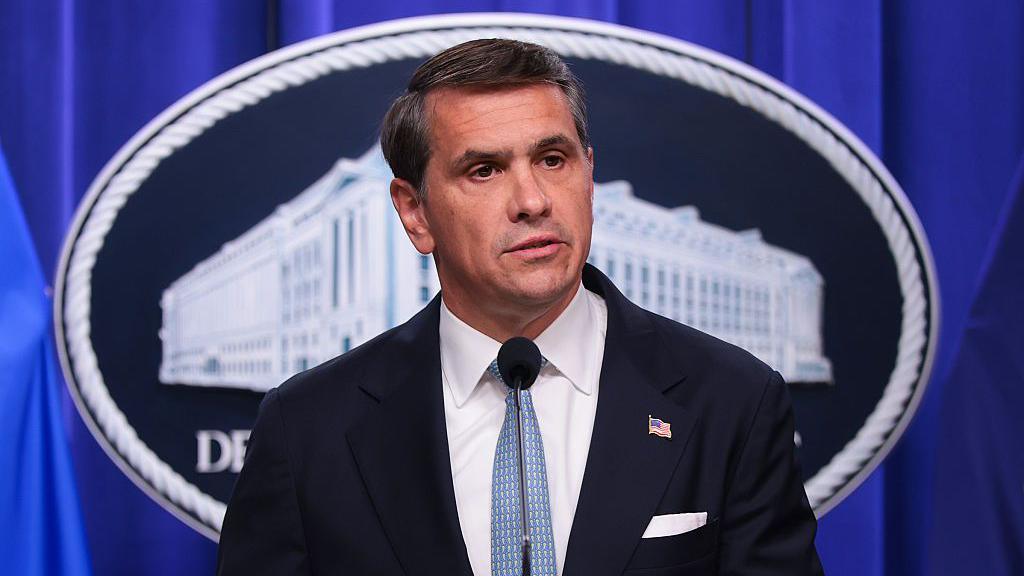
Acting Attorney General Todd Blanche on Thursday changed the classifications of products containing marijuana that are covered by the Food and Drug Administration or that have received a state medical-marijuana licence. They will move from a Schedule I narcotic like heroin to a Schedule III drug - on par with Tylenol with codeine.
Blanche also called a hearing to consider reclassifying all marijuana.
President Donald Trump directed his administration last year to begin the reclassification process, aiming to increase access and research surrounding the drug.
Currently, marijuana remains illegal at the federal level. Despite this federal ban, most US states have legalized either medical or recreational use of marijuana, with many operating legal shops.
The Department of Justice is delivering on President Trump's promise to expand Americans' access to medical treatment options, Blanche said in a statement announcing the change. This rescheduling action allows for research on the safety and efficacy of this substance, ultimately providing patients with better care and doctors with more reliable information.
According to the announcement, Blanche also ordered that a hearing be held in June as part of a rule-making process to reclassify all marijuana more broadly.
Once the rule change is published in the Federal Register, it has 30 days until it takes effect. During that time, it can be legally challenged - which is anticipated - potentially delaying implementation for months or even years.
Blanche's order comes just days after Trump signed an executive order intended to boost access to psychedelic drugs for medical treatment.
Since 1970, the US classified marijuana as a Schedule I controlled substance, denoting a high potential for abuse with no currently accepted medical use. Over time, many states have enacted laws to loosen restrictions on marijuana, beginning with states like California legalizing it for medical purposes. This has resulted in a patchwork of regulations, creating challenges for marijuana businesses, particularly with federal tax and banking requirements.
President Joe Biden's administration began reviewing marijuana's classification in 2022, and about a year later, the US health department recommended a change for the first time. In 2024, the Drug Enforcement Administration (DEA) requested hearings, but those hearings were subsequently postponed.
Trump's change is described as mostly symbolic by Morgan Fox of the National Organization for the Reform of Marijuana Laws (Norml). With more than two-thirds of Americans supporting full legalization of cannabis, Fox indicated that altering the classification could lead policymakers to seriously consider lifting restrictions.
Moving it out of that classification allows us to have policy conversations that don't start and end with that definition, Fox stated. Many policymakers continue to default to that definition and won’t even discuss the issue as long as cannabis is classified as Schedule I.
Fox emphasized that his organization and other advocates will continue to push for complete federal legalization. The real solution to the issue is to de-schedule cannabis at the federal level, not just move to Schedule III, and then begin changing the laws in ways that provide guidance for uniformity, he stated.