In brief
In Myanmar’s escalating civil war, four young conscripts—originally unwilling soldiers—escaped frontlines and joined rebel fighters. Their defection highlights the impact of a new 2024 conscription law that has swollen government forces. While rebels benefit from these experienced soldiers, they persist under severe shortages of weapons and training. The conflict has surged new air and drone power, turning the jungle battleground into a deadly tech-infused war zone. Meanwhile, humanitarian crises—landmines, damaged hospitals, and displaced families—compound the human cost of the fight.
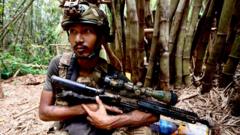
The civil war in Myanmar has taken a chilling turn with four young conscripts turning their shoulders to the battlefield in favor of the insurgent People’s Defence Force (PDF). All between 19 and 25, they were shipped from city streets to jungles in 2024 without choice and have not returned to their former lives.
One, a chef, was seized by soldiers after stopping for a break; another was taken at a karaoke bar; a third served in the forestry department before being detained; the fourth was drawn in by drug‑laced deception and force‑enforced enlistment.
“Before we even understood what was happening, we were sent straight to the front lines,” one of the deserters told the reporter. “We never got any real rest. We had to do everything the regular soldiers barely had to do.”
A brief escape into a jungle led them to a PDF patrol. There they were welcomed as brothers, a stark contrast to the “strangers” they were treated by the army.
These unwilling recruits have inadvertently shifted the strategic dynamics in a country where the new conscription law, introduced in 2024, grants the military limitless manpower. As “regular” soldiers become less ready to fight, the PDF gains a harder edge, especially after the junta contracted air teams from Russia and increased drone capabilities.
At a separate regiment, COVID‑minded commander Ko Kaung noted the limited weapons stockpiles and thin manpower as a major weakness, even as his men earnest their resolve: “We do not want to give up. Everyone is willing to fight, but we lack ammunition.”
The cost of this conflict extends beyond strategy. Myanmar now bears the world’s largest minefields. 745 people were killed or injured by landmines last year—nearly a quarter were children. In one field hospital, a surgeon hustled a wounded rebel commander, Kyar Soe, back to life after repairing a leg mutilated by a mine.
Through these stories, one sees a nation gripped not only by the clashing of rifles and drones but also by a desperate humanitarian stalemate. Schools, monasteries, and homes have been ripped apart, leaving families torn between home front loyalty and the call to fight for a democratic future.
With the army’s continued advances—seizing key route from Mandalay to Myitkyina and putting pressure on border states such as Kachin, Chin, and Karen—the PDF faces a choice: sustain the last crack of opposition or withdraw to the Thai border. They stay awaits a day when the war’s ceasefire will finally bring peace, a day when the new generation can hope for a free, democratic Myanmar.