In brief
Reactor no.6 at the Kashiwazaki-Kariwa plant has been restarted nearly 15 years after the Fukushima disaster forced a shutdown across Japan. While this marks progress in Japan's nuclear energy strategy, challenges remain, including public opposition, rising operational costs, and increased scrutiny on safety following previous disasters.
Japan has restarted a reactor at the world's largest nuclear plant nearly 15 years after a disaster at the Fukushima power plant forced the country to shut all its nuclear reactors.
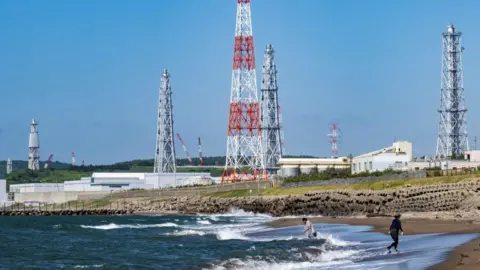
Reactor no.6 at the Kashiwazaki-Kariwa plant located northwest of Tokyo was restarted on Wednesday. It was delayed by one day because of an alarm malfunction and is expected to begin operating commercially next month.
This is the latest installment in Japan's nuclear power reboot, which still has a long way to go. The seventh reactor is not expected to come back on until 2030, and the remaining five could be decommissioned. That leaves the plant with far less capacity than it once had when all seven reactors were operational: 8.2 gigawatts.
Japan had always relied heavily on energy imports and was an early adopter of nuclear power, but these ambitions were scuppered in 2011 by what is now remembered as one of the worst nuclear disasters in history.
The Fukushima disaster, triggered by the most powerful earthquake ever recorded in Japan, led to a devastating meltdown in the reactors, causing radioactive leakage and trauma to local communities that were evacuated. Many residents have yet to return despite assurances of safety.
Critics argue that the plant's owner, Tokyo Electric Power Company (TEPCO), was ill-prepared, and subsequent government responses were poorly coordinated. An independent report labeled the event a man-made disaster, although a court later cleared three executives of negligence.
The Fukushima incident instigated widespread public opposition to nuclear power in Japan, leading to the shutdown of all 54 reactors shortly after the disaster.
For the past decade, Japan has been attempting to restart its nuclear fleet. Since 2015, it has brought back online 15 of its 33 operable reactors, with the Kashiwazaki-Kariwa plant becoming the first owned by TEPCO to resume operations.
Before 2011, nuclear energy provided nearly 30% of Japan's electricity, with plans to increase that to 50% by 2030. The revised energy plan currently aims for nuclear power to supply 20% of Japan's electricity needs by 2040, a target that may prove difficult to achieve.
Global trends indicate a growing interest in nuclear energy, with projections that the world's nuclear capacity could more than double by 2050. In Japan, however, nuclear energy accounted for just 8.5% of electricity as of 2023.
Prime Minister Sanae Takaichi has noted the importance of nuclear energy for Japan's energy independence, especially with rising demand from sectors like data centers and semiconductor manufacturing.
Despite the government's efforts to revive the nuclear sector, increasing operational costs due to enhanced safety checks pose significant challenges. Experts have raised concerns about the rising costs off-setting the benefits previously associated with nuclear power.
Furthermore, social trust in the nuclear sector remains fragile, with recent scandals involving TEPCO further eroding public confidence. Investigations have revealed lapses in document management and data accuracy that have concerned regulators.
As Japan attempts to navigate the future of nuclear energy, significant public opposition continues. Thousands have filed lawsuits against TEPCO and the Japanese government, and protests against nuclear energy remain prevalent.
In conclusion, while Japan's restart of the Kashiwazaki-Kariwa reactor signifies a major milestone in the country's energy strategy, the path ahead is riddled with uncertainty, public skepticism, and hurdles that could affect the nuclear power revival.