In brief
On the 47th anniversary of the Iranian revolution, Tehran erupts in celebrations that contrast sharply with the underlying discontent among its citizens. Amidst fireworks and patriotic slogans, cries of 'death to the dictator' serve as a painful reminder of the recent protests and ongoing economic struggles, emphasizing the challenges facing Iran's leadership. As the nation grapples with the aftermath of a significant crackdown on dissent, voices from the streets reveal a populace grappling with hardship and seeking change.
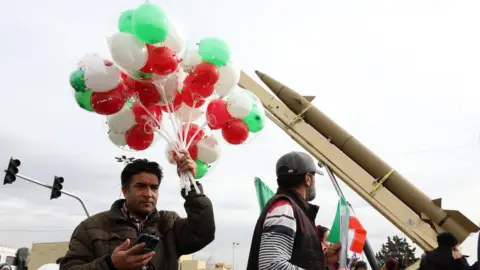
When clocks struck nine across Tehran on Tuesday, the night skies filled with sound in celebration of the 47th year of the Iranian revolution.
We listened from our hotel balcony as chants of 'God is greatest' rose from rooftops and roared from windows. Fireworks flared in a kaleidoscope of brilliant colours.
But this year, in this annual explosion of light and sound, there was a discordant note. We heard 'death to the dictator' shouted too from somewhere in the darkness of the city, from the safety of spaces indoors.
It was a dramatic echo of the extraordinary wave of protests, which swept some streets and squares of Tehran, and towns and cities across this country last month. They were met with unprecedented lethal force and a huge loss of life unseen in previous uprisings.
It's our first trip to Iran since the protests, as the authorities slowly lift their near total internet blackout, described as one of the longest digital shutdowns in history, and gradually allow a small number of international media to return.
The mood in the capital is in stark contrast to our visit last June, at the end of the 12-day war with Israel, which also drew in America's attacks on Iran's nuclear sites.
Now, this sprawling metropolis set against the stunning, snowy Mount Damavand is decked out in flags and bunting to mark what's known as the 'ten days of dawn'.
This year, the days are overshadowed by discontent and defiance over everything from the soaring prices of everyday goods hitting people's pockets, to calls which sounded on streets last month for an end to clerical rule.
Emotion was still raw, palpable, after all that's happened here. Raha immediately burst into tears. 'It has been a month now since I haven't eaten or slept properly. Look at me, I am young, only 32, why should I be so ravished and depressed?' she cried.
For 62-year-old Akhtar in a rose-pink headscarf, who spoke with fierce emphasis, there were two worries. 'So many young people were killed,' she lamented. Then she expressed the agony we hear from so many Iranians over the growing hardship in their day-to-day lives.
'Many of the people we spoke to replied like 20-year-old Amir. I think they should hear our voices. His 19-year-old friend Amir, standing beside him, was visibly upset. 'I just want our basic needs and freedoms.'
The Islamic Republic of Iran now stands at a crossroads, confronting its most consequential tests since its own uprising almost half a century ago.