In brief
Japanese companies are pivoting to India as China’s market appeal wanes, bringing a wave of retail, finance and technology investment. Piyush Goyal’s historic delegation saw billion‑level deals announced by Prime Minister Sanae Takaichi, covering semiconductors, renewable energy and high‑speed rail. Large Japanese banks, including MUFG and SMBC, are plugging into India’s financial ecosystem, while more than a hundred firms host global capability centres for R&D and AI. The partnership also underpins India’s push for a Shinkansen‑powered bullet train and clean‑energy projects, positioning the country as a strategic hedge against China. Despite bureaucratic hurdles, the deepening ties signal a new era of sustainable economic collaboration between Tokyo and New Delhi.
Japan’s deepening push into India has become increasingly apparent. Trade minister Piyush Goyal led the country’s biggest business delegation into Japan last week, seeking new avenues for trade and investment.
Retail footprints have grown dramatically. From Uniqlo and Muji to niche brands like Onitsuka Tiger, Japanese apparel and lifestyle labels now dominate major malls in Mumbai, Delhi and Bengaluru.
Finance is next in line. In 2025 MUFG Bank acquired a 20% stake in Indian shadow lender Shriram Finance for $4.4bn, the largest foreign purchase in India’s banking sector. Sumitomo Mitsui Banking Corporation took 24.2% of Yes Bank the previous year.
Innovation hubs are expanding. More than 100 Japanese firms run global capability centres—offshore R&D, AI and strategy labs—in India, according to Deloitte’s latest report.
$12.5 bn of New Commitments
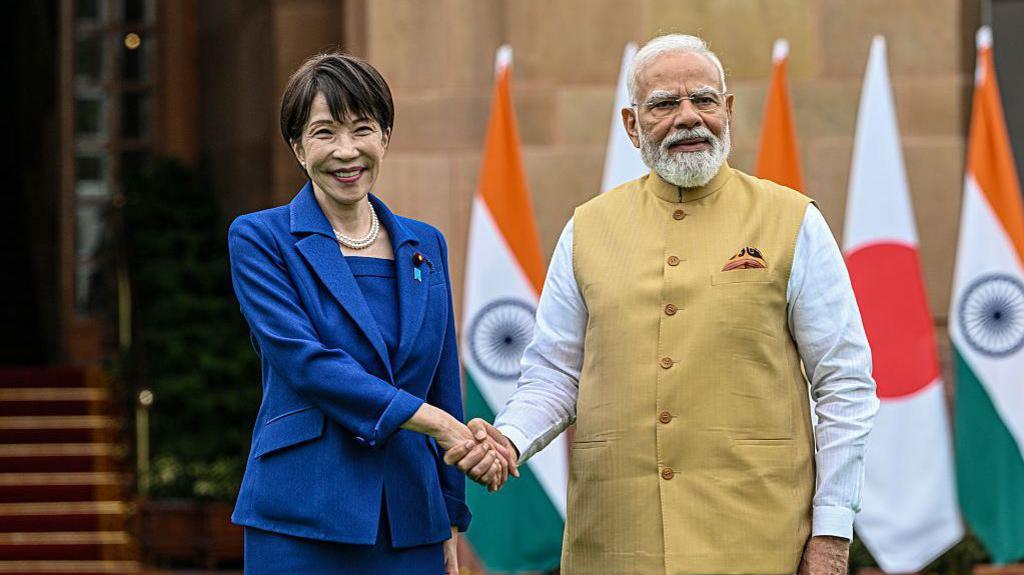
At a summit in July during Prime Minister Sanae Takaichi’s first official visit, Japanese firms unveiled $12.5 bn worth of investments across 120 agreements, spanning semiconductors, green energy and high‑speed rail.
Japan’s plans include a Shinkansen‑powered bullet train linking Mumbai and Ahmedabad—an emblem of technological collaboration.
These developments are part of Japan’s broader strategy to diversify beyond China, addressing supply‑chain vulnerabilities and geopolitical tensions.
Challenges on the Horizon
India’s regulatory environment still poses hurdles: tax uncertainty, bureaucratic red tape and long approval timelines can deter foreign capital.
Criticism from former Japanese ministers over project delays—such as the bullet train—has highlighted the need for robust contractual enforcement.
Yet, the alignment of Japan’s economic security priorities with India’s manufacturing ambitions suggests a partnership that can withstand political shifts on both sides.
As Japanese firms make forays into India’s expanding consumer market—where discretionary income rises—there is mounting potential for sustainable, technology‑led growth.