In brief
China’s ambitious shift toward automation, led by its booming robot industry and vocational training centres, is quietly transforming manufacturing. The new generation of industrial robots promises significant reductions in energy use, waste and greenhouse‑gas emissions, but it also raises questions about workforce displacement and the social costs of rapid mechanisation. The story follows students in Hangzhou who learn programming and robotics, factories in Chengdu where robots handle both labour and production, and the broader policy push to keep China at the cutting edge amid a rapidly ageing and shrinking labour market. Against this backdrop, the narrative explores how the promise of cleaner, more efficient production is balanced against the need for inclusive skills‑development and equitable economic growth.
For many, the world of robots seems reserved for the sci‑fi cityscapes of Tokyo and Shanghai. In China, the quieter revolution is already in motion, with more than two million industrial robots now working in factories – a figure that eclipses all other nations combined. Yet while the headlines often focus on humanoid showpieces, it is the slow, relentless integration of standardised robotic arms, welders and paint sprayers that is reshaping the entire supply chain.
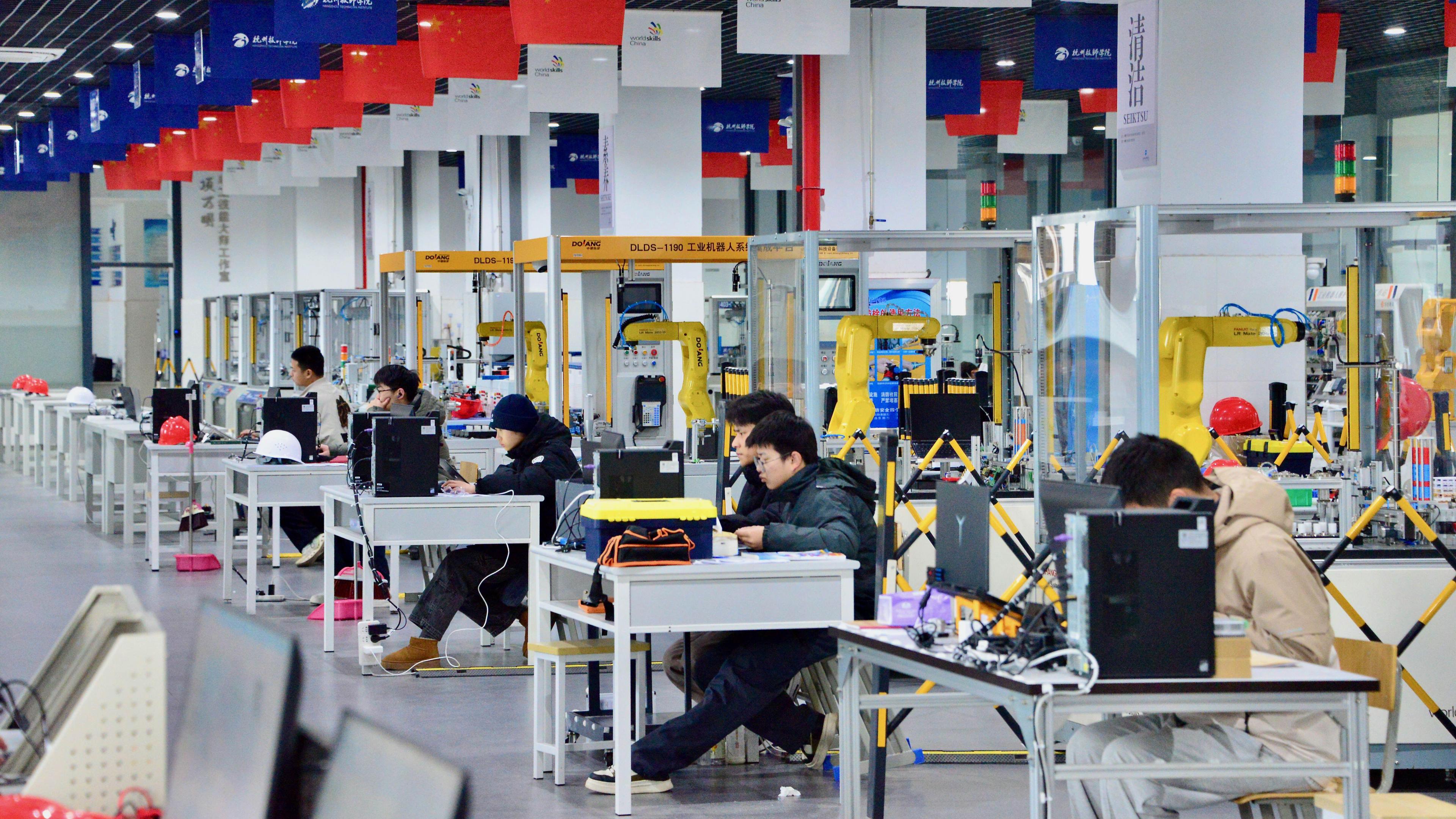
At the Hangzhou Technician Institute, a cluster of 30‑plus students sit beside a line of industrial robots, typing code that instructs the arms to pick a cylindrical piece and move it to a new location. In the same building, engineers crack the brains of a new robot designed to build other robots – a loop that speaks to China’s intent to not just buy, manufacture or export, but to manufacture, programme and sell machine intelligence.
The public. The drive is rooted in Xi Jinping’s €20’bn plan to badge China as the world’s imagination centre. But a 5% rise in industrial efficiency per robot means fewer hours of human labour, immediate cuts in carbon footprints, and a leap forward in waste reduction because robots can be calibrated for absolute precision. A factory in Chengdu, for example, now has an assembly line where robots handle vanishingly small components that would make a human worker’s precision dull.
A publicly available infographic shows that China now produces more than half of the world’s industrial robots. Replacing a human in repetitive tasks cuts energy use and lowers emissions from localized manufacturing, while the data‑driven feedback loops that robots provide drive further optimisation. Together, these improvements paint a picture of a greener production line and a safer, more humane work environment for those few tasks that still need the human touch.
Not all are fully grateful, however, as policymakers worry that the acceleration of automation could erode the existing workforce. About 120 million people still work in manufacturing, and a drastic shift could displace many. It also raises a deeper concern: can China truly balance the environmental win of lower emissions with the human cost of fewer jobs?
As China’s factories run on their own chain of electric batteries, solar arrays and wind turbines – ensuring powering, cooling and waste management are powered by renewables – the push for a recyclable, zero‑waste, low‑emission production model grows stronger. But for that model to coexist with the new automation frontier, the country has to invest continuously in training. At Hangzhou, students as young as fifteen can start receiving hands‑on experience that translates swiftly into industry roles. Companies pre‑book graduates into roles that allow them to be part of the next generation of factories, thus protecting the skillset of a workforce that would otherwise become obsolete.
In a broader sense, the rise of industrial robots is a critical link to end carbon‑intensive manufacturing, but it still requires carefully curated policy that encourages innovation, promotes green robot-materials and ensures that upgrades do not come at the expense of displaced workers. As the factories of China hum, the future will be shaped by such a partnership of sustainable technology, good governance and inclusive growth.