In brief
Canada, a major supplier to the U.S., is deploying a mixed play of retaliatory duties and political pressure to counter new Trump tariffs. While the government rolls out steel, dairy and appliance counter‑duties, the Premier of Ontario eyes a 25 % energy surcharge to freeze U.S. auto‑maker imports. Historical bans on U.S. alcohol and a travel boycott have already damaged U.S. wine and craft‑spirit sales. With the mid‑term election looming, Canada’s unified political resolve could force the U.S. into a more balanced, climate‑proof trade framework.
Canada’s New Trade Counter‑Play
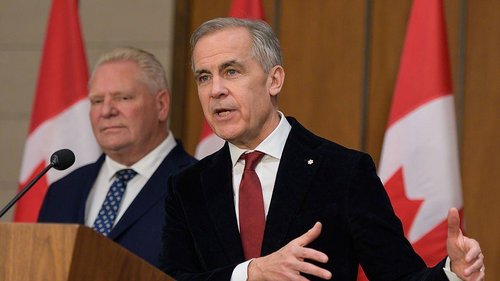
When President Trump upped tariffs on Canadian steel and dairy, Prime Minister Mark Carney—now governing Canada’s trade policy—quickly deployed a “dollar‑for‑dollar” retaliation, targeting key sectors such as dairy, appliances, and agricultural equipment. The measures are already finalized on a portfolio of 30‑plus goods. Canada’s leverage is strikingly large, shipping 70 % of its exports to the U.S. and being the top customer for 26 states.
Ontario Premier Doug Ford has suggested a 25 % surcharge on electricity exported to the United States by 2025, a figure that could shift costs for roughly 1.5 million U.S. customers in Michigan, Minnesota and New York. While Ottawa has not yet confirmed an energy‑based counter‑measure, the possibility is kept alive. Canada is also the world’s leading potash exporter, a key fertilizer for U.S. agriculture, and holds reserves of lithium, nickel and graphite—critical to the electric‑vehicle supply chain.
Beyond tariffs, Canada used political pressure to score early wins. A provincial ban on U.S. alcohol sold in liquor stores after the first wave of trade friction has already wiped more than 70 % of U.S. spirits exports, commanding a $357 m loss in Canadian retail sales and a broader 78 % decline for wine imports. The boycott still runs in 11 of 13 provinces, earning strong support from the public and placing a lasting headache on U.S. producers.
Travel has been another “small‑scale” pressure point: Canadian shoppers have deviated from wine‑tourist drives to U.S. vineyards, decreasing road trips by 800,000 in a single month, generating a $2.35 bn hit to the American tourism sector. Targeted marketing campaigns in the U.S. are already trying to lure Canadians back, but the impact remains significant.
Polling indicates that 76 % of Canadians support Ottawa’s hard line even as the economy may feel the blow. As U.S. mid‑term elections approach, the trade row is set to shape public debate. Michigan and Maine, U.S. senators and home to major auto supply chains, have pressed the economic stakes—giving Ottawa an incentive to negotiate or, at least, maintain its bargaining position.
In a climate‑first worldview, Canada’s disruption of U.S. imports offers a window to negotiate greener terms—accelerating demand for Canadian‑grown bio‑fuels, potash, and critical minerals while curbing dependent consumption on U.S. fossil‑tires and traditional automobiles. If tariffs are a weapons of trade, pulling a load of climate‑friendly tech into the mix could tip the balance from tariff‑war to climate‑policy negotiation.