In brief
As the war in Ukraine continues, Russia's wealthiest individuals, once influential oligarchs, face a drastic reduction in power while their fortunes soar again under Putin's regime. Even amidst severe sanctions, many have chosen silence over dissent, as illustrated by Oleg Tinkov's loss of billions after criticizing the conflict. The article explores the dynamics of wealth, loyalty, and the impact of war on Russia's elite, highlighting how the Kremlin has managed to retain support from its billionaires.
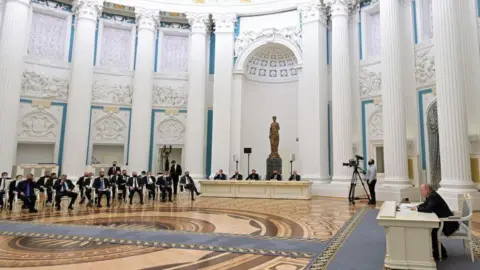
During the war with Ukraine, the number of billionaires in Russia has reached an all-time high. But over Vladimir Putin's 25 years in power, Russia's rich and powerful - known as oligarchs - have lost almost all their political influence.
This is good news for the Russian president. Western sanctions have failed to turn the uber-rich into his opponents, and his carrot-and-stick policies have turned them into silent backers.
One notable case is that of former banking billionaire Oleg Tinkov, who faced severe repercussions after criticizing the war on social media. After expressing his disapproval, he was threatened with the nationalization of his major bank unless all ties were severed. Ultimately, Tinkov lost approximately $9 billion and was forced into exile.
This power shift marks a stark contrast to the era before Putin's presidency when oligarchs were influential political players. They once wielded substantial power during Russia's tumultuous transition post-Soviet Union, accumulating vast fortunes and orchestrating significant political maneuvers.
However, Putin’s tight grip on power since assuming office in 2000 has drastically altered this landscape. The current state of affairs illustrates how oligarchs, instead of driving political change, have become subservient to the Kremlin, particularly notable during heightened tensions following the Ukraine invasion.
As the war progressed, the number of billionaires surged back past pre-war numbers, thanks largely to the economic growth fueled by military spending. Statistics from Forbes indicate that more than half of these billionaires have ties to the defense sector due to their survival instincts and the new roles they've adapted to within a rapidly evolving economic environment.
The narrative showcases how the oligarchs’ fortunes remain closely intertwined with the regime, with many adapting to required loyalty under the threat of retribution, much like the fate of the previously powerful Mikhail Khodorkovsky, imprisoned after opposing the regime in the early 2000s.
Rather than a revolt against the regime due to sanctions, the narrative reveals a startling cohesiveness with state interests, as the oligarchs have effectively been mobilized to support the war economy driven by Putin’s authoritarian governance.