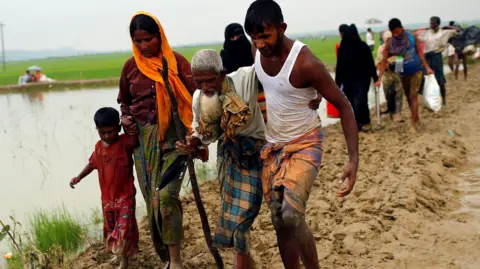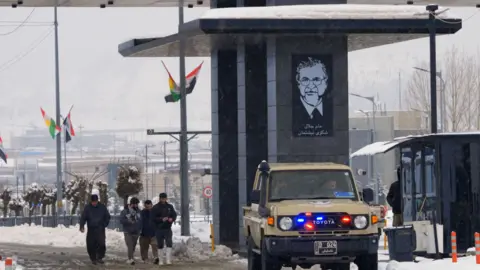
A border crossing from Iran into Iraqi Kurdistan reveals the stark reality faced by citizens amidst ongoing protests against the Iranian regime. Thick snowflakes coat weary travelers as the stern visage of Ayatollah Khomeini looms overhead; a reminder of the authority they seek to challenge.
Even as Iran enforces an internet blackout, the borders remain open, allowing families to visit and connect. Interviews with recent arrivals, however, reveal that many come not in search of refuge from political turmoil but out of familial obligation.
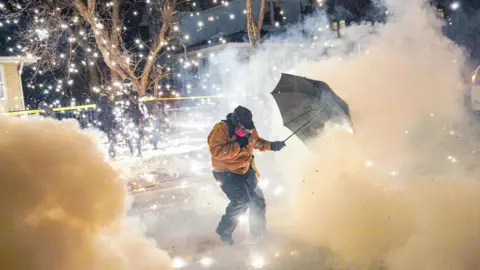
Among these stories, one man discreetly disclosed his violent experiences during a protest in central Iran, showing visible bruises where he had been struck by pellet rounds. I was hit in the face by seven pellets, he recounted, detailing how he removed one pellet himself due to fear of arrest if he sought medical attention.
The tension on the border is palpable; multiple accounts verify ongoing protests across various Iranian cities, although fears and crackdowns have largely silenced demonstrators. Rights groups report an escalating death toll, with over 2,500 alleged fatalities amid what feels like a creeping closure of public dissent.
Citizens' frustrations about economic instability continue to surface, as many express they simply seek basic rights and dignified living conditions. A teacher emphasized the struggles of affordability, claiming her salary barely covers ten days of living.
As the Iranian regime attempts to quell dissent, the undercurrents of fear and desperation suggest a populace that, while momentarily subdued, is one that retains a longing for change.
Amidst the harsh realities of repression, the resilience of these voices at the border echo the challenges faced, hinting at a turbulent yet hopeful yearning for a better future.