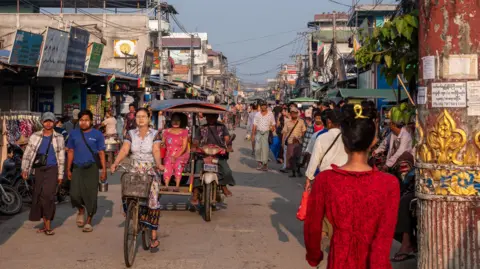
The tall, shiny buildings in Shwe Kokko, a new city rising amid the cornfields on Myanmar's side of the Moei River, present a paradoxical image. In just eight years, this area of Karen State has transformed from a war-torn region into a reported "golden" city, attracting attention and suspicion globally. Founded by entrepreneur She Zhijiang, Shwe Kokko is accused of being rooted in scams, human trafficking, and money laundering, casting a shadow over its glittering facade.
At the heart of this transformation lies She Zhijiang, currently imprisoned in Bangkok as he awaits extradition to China. His company, Yatai, sought to mold this district into a safe haven for tourists and a luxurious spot for the wealthy. However, the narrative promoted by the company starkly contrasts with the grim operations that local residents reveal. Despite grand claims of development, sources have exposed continued scam operations facilitated within the city.
Accessing Shwe Kokko's interior has been an arduous task since its inception in 2017. As the situation deteriorated further after Myanmar’s 2021 military coup, restrictions increased. The journey from Yangon involves multiple checkpoints, a maze of blocked roads, and the risk of violence. Crossing from Thailand, although quicker, necessitates careful navigation to avoid law enforcement.
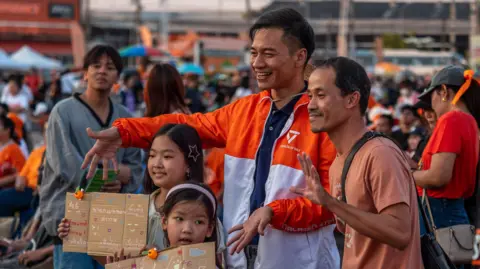
Once inside, Yatai's representatives conducted a tour showcasing their flashy streets and luxury accommodations. However, most inhabitants appeared to be local laborers from the Karen ethnic group—rarely were tourists or affluent guests visible. Despite Yatai’s reassurances claiming the end of scam operations, firsthand accounts indicate otherwise. Employees of the centers recounted harrowing tales of kidnapping and exploitation, revealing a disconcerting prevalence of abusive practices connected to the city’s image.
The emergence of Shwe Kokko as a stronghold for scams can be traced back to a broader trend of unchecked Chinese investment that flourished in Cambodia before spreading to the lawless regions of Myanmar. With the ongoing territorial conflicts between armed forces and rebel groups in the area, Shwe Kokko’s establishment became a springboard for fraudulent enterprises that have generated billions.
The fear and turmoil surrounding the city have not only tarnished its reputation but have also hindered its intended function as a tourist destination. The Thai government, now inundated with concerns over illegal activities spilling into its territory, is evidently tightening regulations and cutting power to fluid entities along the border.
In a disjointed array of interactions, journalists encountered obstacles while trying to witness the city's inner workings. With armed guards monitoring their movements, access to crime centers and casinos was restricted, reinforcing the sense of secrecy enveloping Shwe Kokko. The establishment's dismal portrayal in recent media has raised alarms for potential investors, relegating it into the shadows of tourist maps.
Amidst the chaos, She Zhijiang’s story bears the weight of irony. Once a coveted figure with influential connections, he now finds himself ensnared in accusations, asserting that the very government he once aligned with has turned against him, viewing him as a liability. As Yatai attempts to reshape its image and disavow associations with fraud, skepticism remains about Shwe Kokko’s future.
As scrutiny intensifies and international pressure mounts, the fate of Shwe Kokko hangs in the balance. The likelihood of fraudulent enterprises being uprooted remains low, with the local economy deeply entrenched in this nefarious underbelly. With nearby instability and dwindling investment opportunities, the mirage of Shwe Kokko continues to flicker—a tantalizing yet dangerous illusion in a conflict-ridden land.
At the heart of this transformation lies She Zhijiang, currently imprisoned in Bangkok as he awaits extradition to China. His company, Yatai, sought to mold this district into a safe haven for tourists and a luxurious spot for the wealthy. However, the narrative promoted by the company starkly contrasts with the grim operations that local residents reveal. Despite grand claims of development, sources have exposed continued scam operations facilitated within the city.
Accessing Shwe Kokko's interior has been an arduous task since its inception in 2017. As the situation deteriorated further after Myanmar’s 2021 military coup, restrictions increased. The journey from Yangon involves multiple checkpoints, a maze of blocked roads, and the risk of violence. Crossing from Thailand, although quicker, necessitates careful navigation to avoid law enforcement.
Once inside, Yatai's representatives conducted a tour showcasing their flashy streets and luxury accommodations. However, most inhabitants appeared to be local laborers from the Karen ethnic group—rarely were tourists or affluent guests visible. Despite Yatai’s reassurances claiming the end of scam operations, firsthand accounts indicate otherwise. Employees of the centers recounted harrowing tales of kidnapping and exploitation, revealing a disconcerting prevalence of abusive practices connected to the city’s image.
The emergence of Shwe Kokko as a stronghold for scams can be traced back to a broader trend of unchecked Chinese investment that flourished in Cambodia before spreading to the lawless regions of Myanmar. With the ongoing territorial conflicts between armed forces and rebel groups in the area, Shwe Kokko’s establishment became a springboard for fraudulent enterprises that have generated billions.
The fear and turmoil surrounding the city have not only tarnished its reputation but have also hindered its intended function as a tourist destination. The Thai government, now inundated with concerns over illegal activities spilling into its territory, is evidently tightening regulations and cutting power to fluid entities along the border.
In a disjointed array of interactions, journalists encountered obstacles while trying to witness the city's inner workings. With armed guards monitoring their movements, access to crime centers and casinos was restricted, reinforcing the sense of secrecy enveloping Shwe Kokko. The establishment's dismal portrayal in recent media has raised alarms for potential investors, relegating it into the shadows of tourist maps.
Amidst the chaos, She Zhijiang’s story bears the weight of irony. Once a coveted figure with influential connections, he now finds himself ensnared in accusations, asserting that the very government he once aligned with has turned against him, viewing him as a liability. As Yatai attempts to reshape its image and disavow associations with fraud, skepticism remains about Shwe Kokko’s future.
As scrutiny intensifies and international pressure mounts, the fate of Shwe Kokko hangs in the balance. The likelihood of fraudulent enterprises being uprooted remains low, with the local economy deeply entrenched in this nefarious underbelly. With nearby instability and dwindling investment opportunities, the mirage of Shwe Kokko continues to flicker—a tantalizing yet dangerous illusion in a conflict-ridden land.