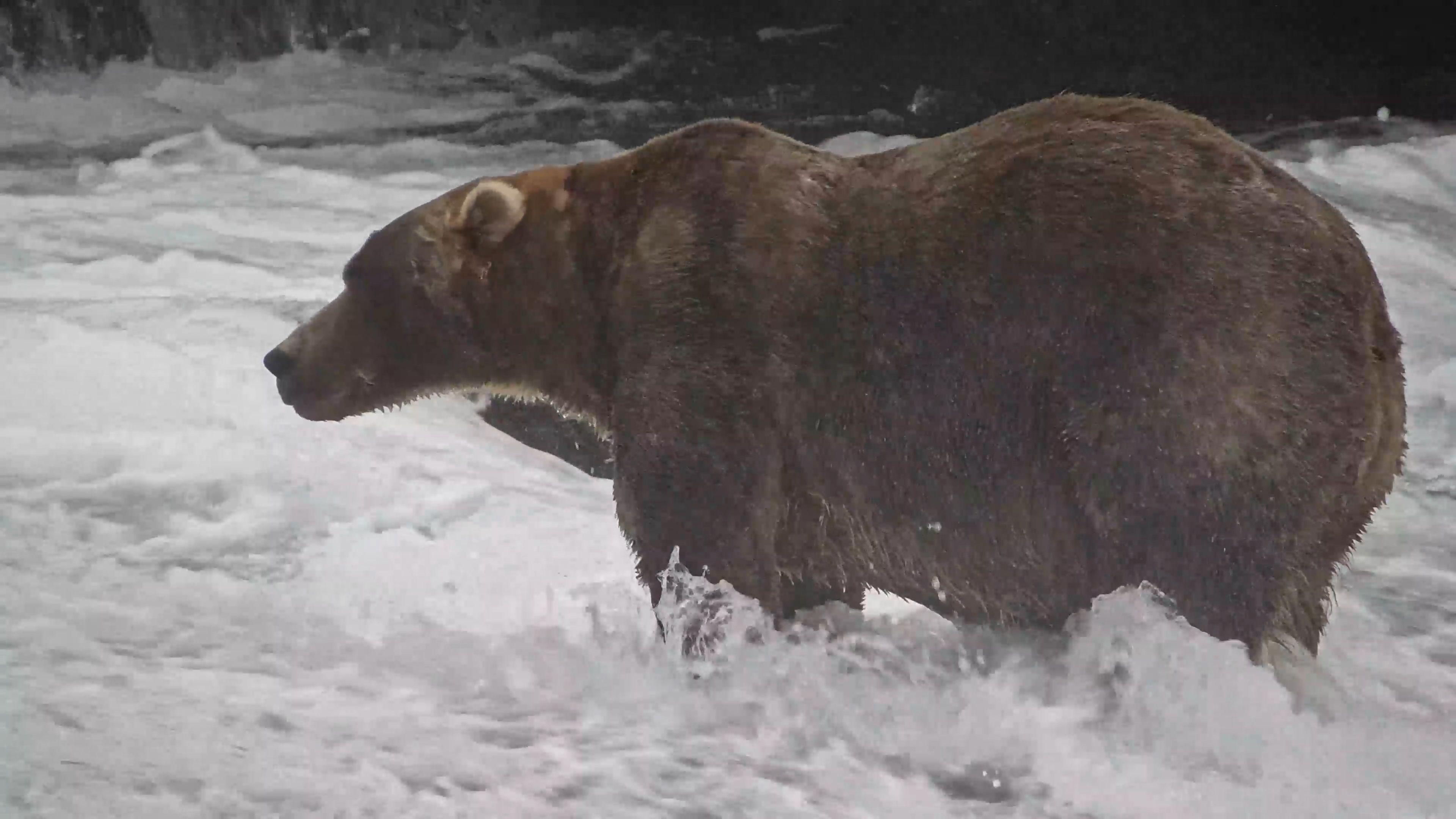

In the remote reaches of Katmai National Park, Alaska, a brown bear named Backpack has been crowned the winner of the 2026 Fat Bear Week, a quirky yet insightful competition that tracks how much fat bears accumulate before the long winter.
The contest, in its thirteenth year, turned backpack into the public’s favorite after a battle that blended size, skill, snack acquisition and the art of loafing. Backpack edged out his rival, bear 910, by a margin of 103,344 votes to 98,253, according to the National Parks Service.
Despite the light‑hearted name, Backpack’s body is built for heavy lifting; adult males can reach up to 408 kg, and the heaviest record surpasses 540 kg. In just a few months from June to mid‑October, bears gorge on food—primarily salmon—gaining around one‑quarter of their body mass as fat reserves.
Backpack’s mother, the 2019 champion Holly, inspired his habit of climbing onto her back while she foraged, earning him the nickname that now carries much more than an affectionate reference to his robust build.
Wildlife scientists note that these fat stores are critical: during hibernation, bears lose about one‑third of their weight and rely on stored fat to survive. The event draws over 1.7 million votes from more than 100 countries, underscoring broad public interest in the health of Alaska’s wildlife and their ecosystems.
For more on bear weight and hibernation, see the National Parks Service report: Largest male brown bears can weigh over 540 kg.