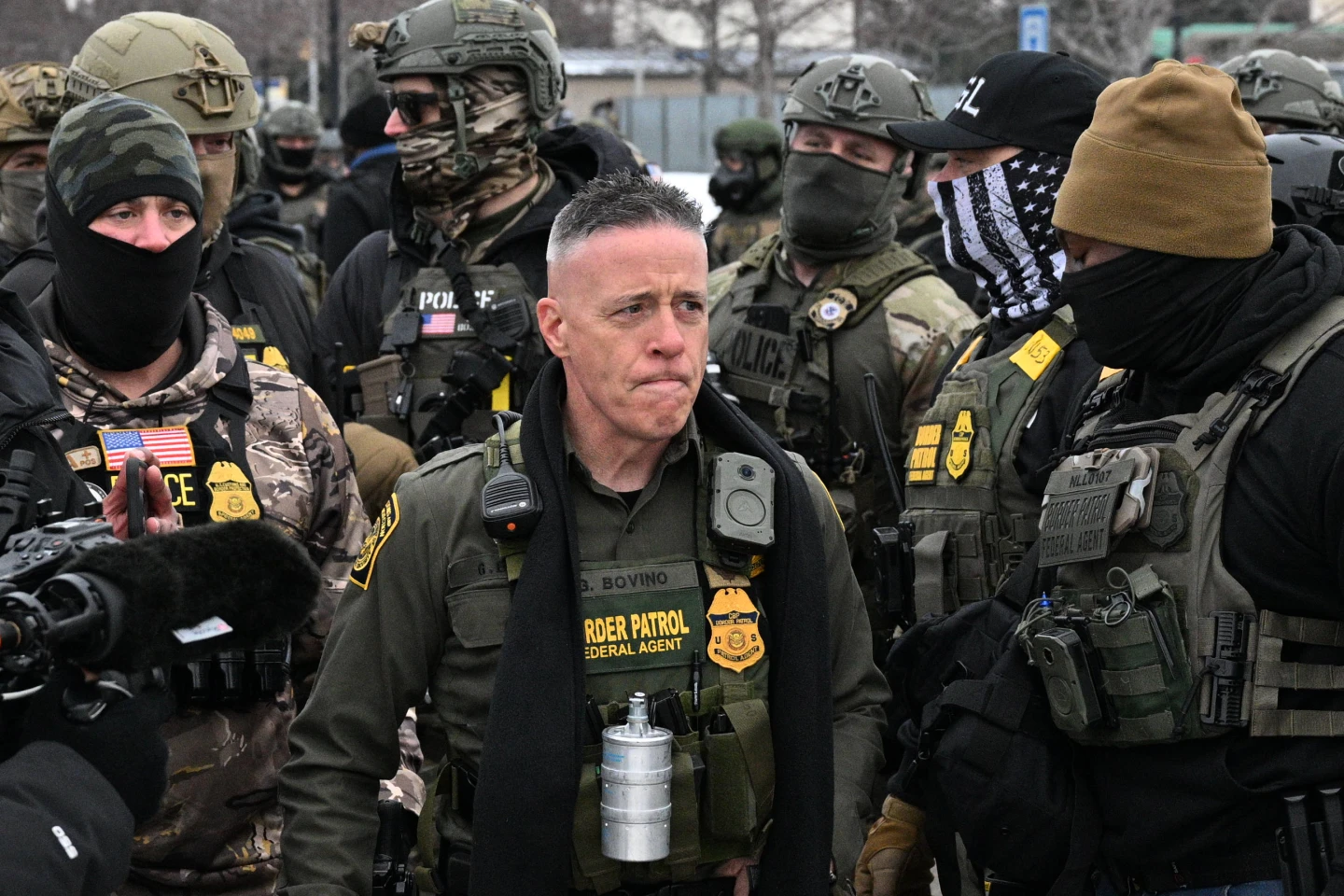
CHICAGO – The trial of Juan Espinoza Martinez commenced in federal court, garnering significant attention due to the serious nature of the charges he faces. Martinez, 37, is accused of using Snapchat to solicit the murder of Border Patrol commander Gregory Bovino, allegedly offering a $10,000 bounty. This marks the first trial stemming from the immigration crackdown implemented in Chicago last year, a move that has been met with protests and criticisms from local communities.
Federal prosecutors allege that Martinez, a purported gang member, intended to threaten the life of Bovino, who has led aggressive enforcement actions across the nation. Assistant U.S. Attorney Minje Shin emphasized the seriousness of the case, asserting that the evidence would demonstrate that Martinez's actions were far from mere expressions of frustration over immigration policies.
Conversely, the defense contends that the messages sent by Martinez were simply casual conversations shared among friends and family, an assertion reinforced by their claims that he is financially struggling and that the messages merely reflect community gossip surrounding law enforcement.
As the trial unfolds, the court has seen evidence including screenshots of the Snapchats, some of which were translated from Spanish. One message, in particular, seemed to clearly indicate a solicitation of violence against Bovino.
The witness testimony also raised questions about the context in which the messages were interpreted. Adrian Jimenez, a construction company owner who had previously exchanged messages with Martinez, testified that he took the threat seriously and reported it to authorities. However, questions were raised regarding Jimenez's reliability and understanding of the messages he received.
This high-profile case not only triggers questions regarding the judicial process but also challenges the narratives pushed by the Trump administration surrounding immigration threats. There have been doubts cast on the credibility of claims about gang violence targeting federal officials. Approximately half of the criminal cases emerging from the operation linked to Martinez have seen charges dismissed, suggesting potential issues with the prosecution's evidence and strategy.
Martinez, who hails from Mexico and has lived in the U.S. without legal status, faces up to ten years in prison if convicted. His fate could have implications not just for him but also for wider discussions on immigration enforcement and community relations.
Federal prosecutors allege that Martinez, a purported gang member, intended to threaten the life of Bovino, who has led aggressive enforcement actions across the nation. Assistant U.S. Attorney Minje Shin emphasized the seriousness of the case, asserting that the evidence would demonstrate that Martinez's actions were far from mere expressions of frustration over immigration policies.
Conversely, the defense contends that the messages sent by Martinez were simply casual conversations shared among friends and family, an assertion reinforced by their claims that he is financially struggling and that the messages merely reflect community gossip surrounding law enforcement.
As the trial unfolds, the court has seen evidence including screenshots of the Snapchats, some of which were translated from Spanish. One message, in particular, seemed to clearly indicate a solicitation of violence against Bovino.
The witness testimony also raised questions about the context in which the messages were interpreted. Adrian Jimenez, a construction company owner who had previously exchanged messages with Martinez, testified that he took the threat seriously and reported it to authorities. However, questions were raised regarding Jimenez's reliability and understanding of the messages he received.
This high-profile case not only triggers questions regarding the judicial process but also challenges the narratives pushed by the Trump administration surrounding immigration threats. There have been doubts cast on the credibility of claims about gang violence targeting federal officials. Approximately half of the criminal cases emerging from the operation linked to Martinez have seen charges dismissed, suggesting potential issues with the prosecution's evidence and strategy.
Martinez, who hails from Mexico and has lived in the U.S. without legal status, faces up to ten years in prison if convicted. His fate could have implications not just for him but also for wider discussions on immigration enforcement and community relations.