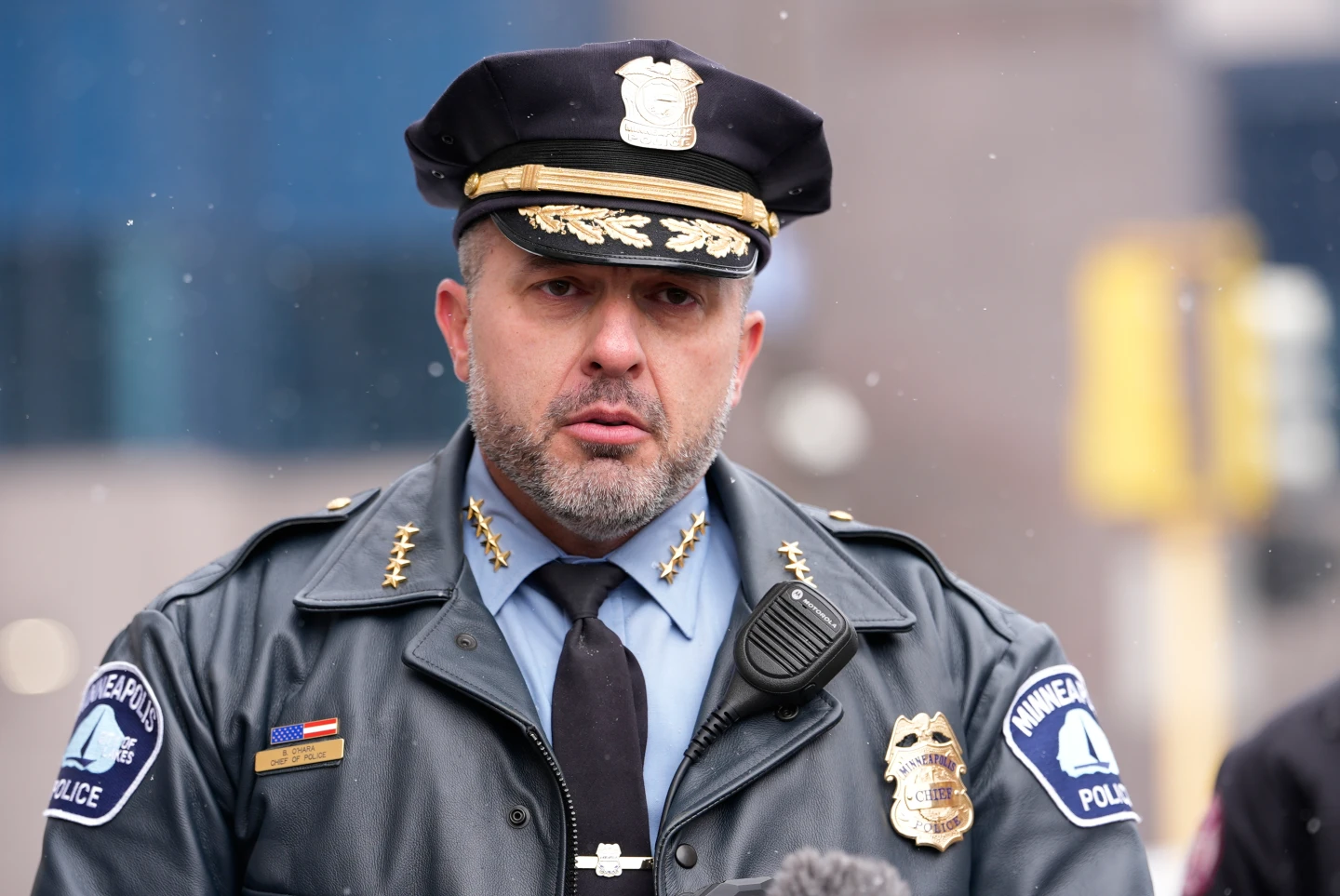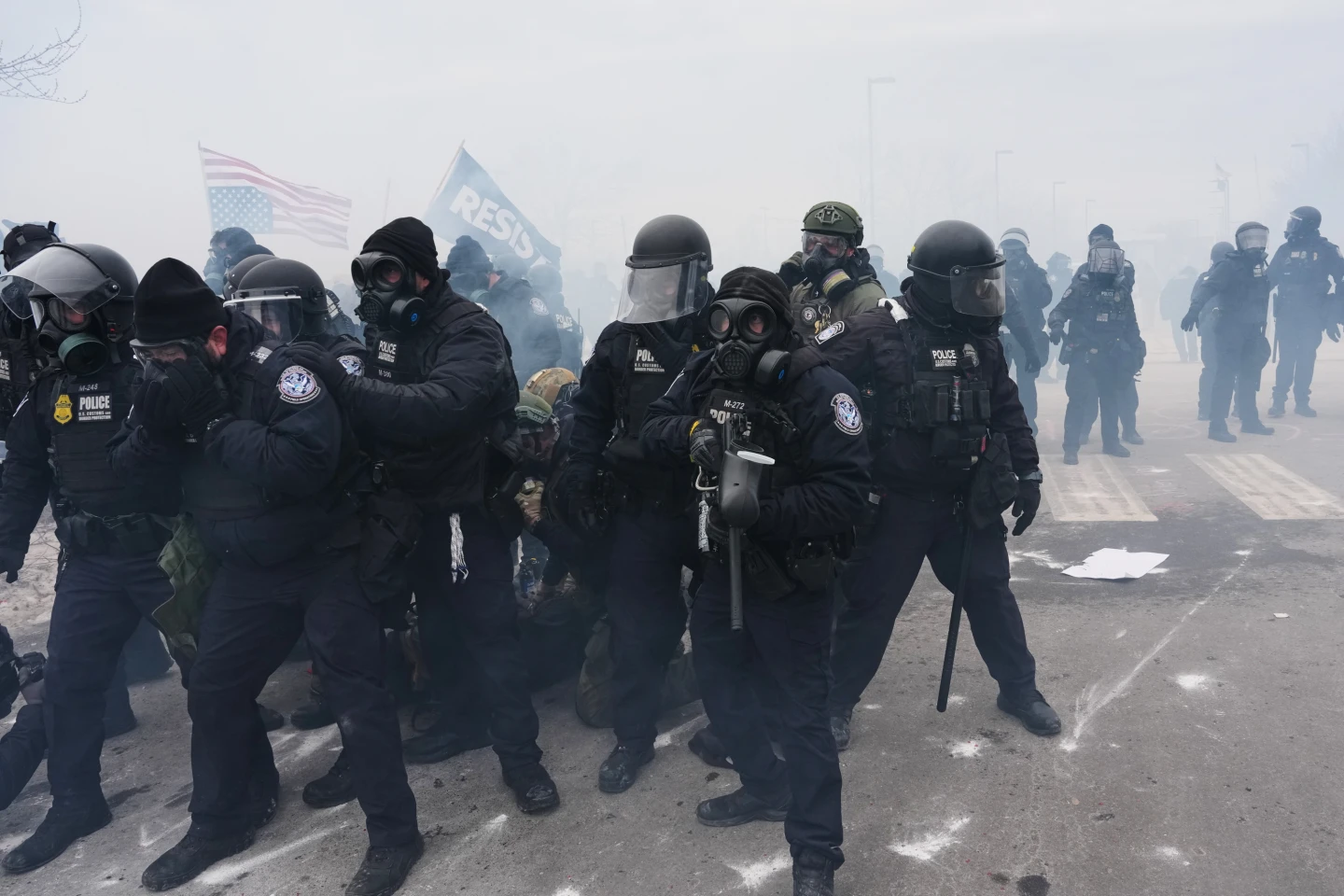
The Trump administration's immigration crackdown is intensifying, particularly following a recent shooting incident involving a U.S. Immigration and Customs Enforcement agent, which has heightened tensions in Minneapolis. On January 9, the Department of Homeland Security shared a controversial image featuring a man on horseback, resembling far-right nationalist propaganda, accompanied by a phrase that many attribute to a song popular among extremist groups.
Critics quickly drew comparisons to historical Nazi slogans, noting the chilling implications of such rhetoric in the broader context of immigration policy. The Department of Labor's subsequent social media post further fueled these concerns by echoing sentiments historically associated with nationalist movements.
This week, amidst discussions about territorial claims, the White House posted imagery symbolic of competing national interests, purposefully invoking feelings of patriotism. Activists and critics of the administration are increasingly concerned that these communications serve to rally nationalist sentiments under the guise of immigration enforcement.
Response from administration officials has dismissed the critiques as baseless, arguing that the messaging draws on a common narrative of American identity rather than white supremacy. However, legal analysts and scholars warn that the choice of imagery sends a dangerous message regarding the coupling of nationalism with immigration regulation.
The administration's alignment with certain far-right slogans and imagery, while attracting some support among nationalist groups, poses questions about the long-term implications of employing such divisive language in American political strategy.