In brief
The UK faced another Eurovision defeat, finishing last with just one point for its entry by Look Mum No Computer. This marks a continuation of the country's struggles at the contest, with criticisms aimed at the BBC for its strategy and the choice to send unconventional, offbeat artists. Despite efforts to break the mold, the UK has consistently fallen short, raising questions about the future direction of its Eurovision entries.
Another year, another flop. The UK has self-destructed at Eurovision all over again.
Look Mum No Computer, aka musician Sam Battle, got one solitary point, ending up in last place. It's the third time we've been at the bottom of the table since 2020. We've made the top 10 once since 2010. This is the fourth consecutive year I've written a post-mortem on our failure.
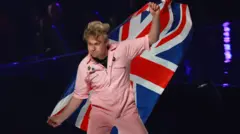
In the run-up to the contest, there was little hope that Sam's shouty synth-pop banger Eins, Zwei, Drei would fare well. But the musician gave it his all, stomping around the stage in a bright pink boiler suit while singing about quitting his office job so he could go to Germany and count to three. It was, as Graham Norton observed, a big swing.
Now, look, I'm all for taking a chance. If anything, our previous Eurovision entries played it too safe, pandering to a cliché of polished electro-pop. Sam was different. Eccentric and engaging, with the uncontainable energy of a shaken-up Coke bottle, he came up with a song that, for once, sounded uniquely British.
Despite this ambition, the chaotic mix of hiccupy beats and quirky lyrics bewildered Europe. The juries conferred just one point, while the public response was zero. Additionally, critiques from observers highlighted that the thought process behind UK entries often gravitates toward novelty rather than genuine musical engagement.
This has been a consistent theme; previous entries using high-profile artists like Olly Alexander fell flat, leading many to question whether established artists avoid Eurovision due to its current reputation as a poisoned chalice.
As the BBC grapples with this ongoing issue, Eurovision enthusiasts and critics alike suggest a re-evaluation of the strategies employed, including embracing a more serious approach to competition and tapping into established musical talent.
The feedback from fans and participants suggests a need for the UK to produce a performance that resonates, arguing the importance of creating impactful pop culture moments and engaging storytelling. To truly turn the tide, the UK must embrace its quirks and musical heritage, or risk continuing a legacy of disappointment.