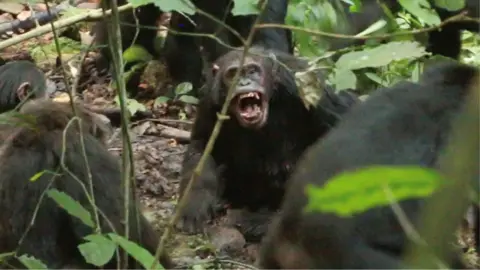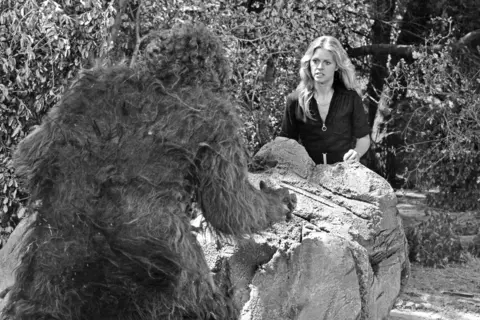
Be it a hoax or an undiscovered species, the mystery and mythology around Bigfoot have captured people's imaginations for decades. This elusive creature, widely regarded as a cultural icon, was first thrust into the public consciousness in 1967 when infamous footage emerged showing an ape-like figure in California.
Despite ongoing debates regarding its existence, about a quarter of Americans believe that Bigfoot is either probably or definitely real. To understand what drives this fascination, sociologists Dr. Jamie Lewis and Dr. Andrew Bartlett conducted research by interviewing over 160 dedicated Bigfoot hunters. Their recently published book, Bigfooters and Scientific Inquiry, reflects the findings from their extensive conversations.
Dr. Lewis remarked, Bigfoot exists - at least as a known object that people shape their lives around. He emphasized the dedication of those engaged in the pursuit of this creature. Many Bigfooters spend extensive time in the wilderness equipped with advanced tools like drones and infrared cameras, searching for elusive evidence while imitating calls believed to be made by Bigfoot.
Most Bigfooters are described as middle-aged white men, often ex-military and employed in blue-collar jobs. These individuals share a camaraderie in what is sometimes viewed as a masculine endeavor filled with an adventurous spirit. Dr. Lewis elucidates that this pursuit reflects a desire to re-enchant the world, tapping into a longing for mysteries that challenge convention. The notion that a large, unknown ape might roam the forests of North America feeds this enchantment.
Interviews with Bigfoot hunters reveal their diverse motivations and experiences. For example, Glenn Adkins, a longtime investigator, recounted his firsthand encounter with the creature during a camping trip, describing the awe inspired by an eight-foot figure looming nearby.
The study also highlights the division among believers—those who view Bigfoot as an undiscovered primate versus those who see it as an interdimensional traveler. The researchers found that many were open to the idea that some sightings might simply be misidentified wildlife but still sought validation and understanding for their beliefs.
Despite skepticism and the presence of hoaxes within Bigfoot culture, the excitement and passion of these individuals offer a unique window into human curiosity and the eternal allure of the unknown.
}