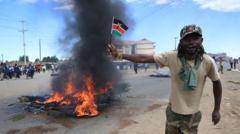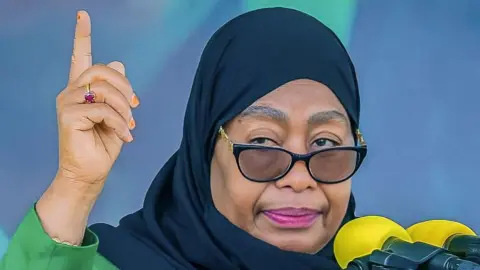
Tanzania's President Samia Suluhu Hassan has announced an official investigation into the unrest that erupted during election week, following accusations that her government was responsible for violently suppressing historic protests.
She was declared the winner of last month’s presidential election with a staggering 98% of the vote — a result that the opposition has denounced as a mockery of democracy. At least 240 people have been charged with treason amid the unrest.
In addition to the commission of inquiry, President Samia has called on prosecutors to show leniency towards those arrested in connection with the violence. Quoting the Bible, she stated: Father, forgive them, for they know not what they do.
Her remarks come just days after United Nations High Commissioner for Human Rights, Volker Türk, urged Tanzanian authorities to carry out a full and transparent investigation into reports of killings and severe human rights violations during and after the October 29 elections.
Opposition estimates suggest that hundreds may have died in the post-election unrest, although the authorities have yet to release an official death toll.
This violence is shocking for a country that has long cultivated an image of calm, consensus, and order for nearly sixty years.
During her address to parliament on Friday, President Samia acknowledged that many young people arrested and charged with treason did not fully understand the implications of their actions. As a mother and guardian of this nation, I am directing law-enforcement agencies to show leniency, she said.
Moreover, she urged political parties to engage in discussions regarding peaceful political practices, emphasizing her commitment to initiating a new constitution-making process.
The protests, predominantly organized by the youth, align with global movements led by Generation Z against entrenched leadership and unresponsive governments. Analysts note that while the unrest was unprecedented, it followed a backdrop of tense political climate, stalled reforms, and a history of suppressed youth discontent and opposition leaders.
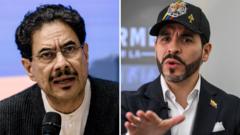
In the run-up to the elections, the ruling CCM government systematically worked to eliminate credible competition, with the two main opposition leaders blocked from participation. Tundu Lissu is currently detained on treason charges, and Luhaga Mpina's candidacy was rejected on technical grounds.
Initially, under her first term, President Samia's leadership was widely praised as she allowed opposition parties to mobilize publicly and criticize government actions without severe repercussions. However, in the months leading up to the election, there was a wave of arrests, abductions, and violent attacks against opposition figures, fueling fears that hopes for political reform and reconciliation were lost.
Additional reporting by Natasha Booty.